
On November 9, 2026, U.S. antidumping and countervailing duty (AD/CVD) orders took effect on crystalline silicon solar cells from India, Indonesia and Laos, and the combined rate reaches 268.06% for one Indonesian producer (Federal Register, 2026). These solar panel tariffs leave batteries and inverters untouched, but they reset module landed cost for every U.S. distributor quoting 2027 work. The operative detail is not the headline rate — it is the scope test, which decides whether a container clears at normal duty or at two to three times its entered value.
What the November 2026 orders actually cover
The orders apply to crystalline silicon photovoltaic (CSPV) cells of 20 micrometers or more in thickness with a p/n junction, and to modules, laminates, panels and building-integrated products made from those cells (91 FR 70862, November 9, 2026). Two scope sentences carry more commercial weight than the rate tables:
- Parts are covered. Merchandise “described at the time of importation as parts for final finished products that are assembled after importation” remains inside the order. Laminating imported cells into modules in the United States does not move the goods outside scope.
- Kits do not shelter modules. The scope covers cells and modules “whether or not partially or fully assembled into other products,” so a panel boxed inside a larger system shipment is still subject merchandise.
The procedural chain matters for one reason: the entry date, not the invoice date, decides which regime applies. Commerce published preliminary determinations on April 28, 2026 (91 FR 22794, 22798 and 22802), the U.S. International Trade Commission issued its determinations on November 5, 2026, and the solar panel tariffs became applicable on November 9, 2026.
The solar panel tariffs by country: rates, cash deposits and retroactive exposure
Antidumping and countervailing duties are assessed separately on the same entry, so the table below shows the two rates and their arithmetic sum for comparison only; CBP collects each program under its own liquidation instructions. Rates are as published in the two November 9, 2026 orders, expressed as a percentage of entered value for the 2026 order year.
| Origin (2026 orders) | Producer / exporter | AD margin (%) | CVD rate (%) | Combined, illustrative sum (%) | Retroactive exposure |
|---|---|---|---|---|---|
| India | All producers (incl. Mundra Solar PV, Mundra Solar Energy, Premier Energies, Kowa) | 123.04 | 126.09 | 249.13 | No; provisional deposits refunded for entries Nov 28, 2025 – Feb 25, 2026 |
| Indonesia | PT Blue Sky Solar Indonesia | 94.36 | 173.70 | 268.06 | Yes; duties apply to entries on or after Nov 28, 2025 |
| Indonesia | PT REC Solar Energy Indonesia and all others | 94.36 | 73.20 | 167.56 | Yes; duties apply to entries on or after Nov 28, 2025 |
| Laos | Solarspace Technology (Laos) Sole Co., Ltd. | 65.76 | 82.03 | 147.79 | No; provisional deposits refunded for entries Nov 28, 2025 – Feb 25, 2026 |
| Laos | Vietnam Sunergy Joint Stock Company | 65.76 | 153.67 | 219.43 | No; provisional deposits refunded for entries Nov 28, 2025 – Feb 25, 2026 |
The retroactivity column is the part most buyers miss. The Commission found critical circumstances for Indonesia only, so countervailing duties reach back 90 days before the February 26, 2026 preliminary determination — to entries on or after November 28, 2025 — while India and Laos receive refunds of deposits collected in that same window (91 FR 70843). If you imported Indonesian modules in December 2025 or January 2026 and assumed the matter was closed, that exposure is still open.
Cash flow at the border differs from the headline percentage. For Indian-origin goods the antidumping cash deposit rate is 107.17%, reflecting the subsidy offset, so an Indian entry carries roughly 107.17% plus 126.09% — about 233.26% of entered value — as a cash deposit before the container leaves the port. Those deposits are reconciled at liquidation, which can take a year or more.
How much the solar panel tariffs add to landed cost in 2027
Duties are calculated on entered value, not on your resale price, so the cleanest planning unit is duty dollars per watt of entered module value. The table converts the solar panel tariffs into that unit: each row states what one cent per watt of entered value costs once the duty stack is applied.
| Origin (2026 rates) | Duty per $0.01/W of entered value (USD) | Duty per $0.10/W of entered value (USD) | Duty on a 450 W module entered at $0.30/W (USD) |
|---|---|---|---|
| India | 0.0025 | 0.0249 | 336.33 |
| Indonesia — Blue Sky | 0.0027 | 0.0268 | 361.88 |
| Indonesia — REC and others | 0.0017 | 0.0168 | 226.21 |
| Laos — Solarspace | 0.0015 | 0.0148 | 199.52 |
| Laos — Vietnam Sunergy | 0.0022 | 0.0219 | 296.23 |
The worked column is an arithmetic illustration, not a price quote: a 450 W module entered at $0.30/W carries $135.00 of entered value, and 249.13% of that is $336.33 for Indian origin. Add freight, insurance, merchandise processing fees and any other Chapter 99 program that applies to your HTS line, and the same module that penciled out at $0.30/W now lands above $1.04/W. That is the number a distributor has to defend in a 2027 bid, and it is why the module line item should never be buried inside a single lump-sum system price.
Do the solar panel tariffs apply to portable and folding solar panels?
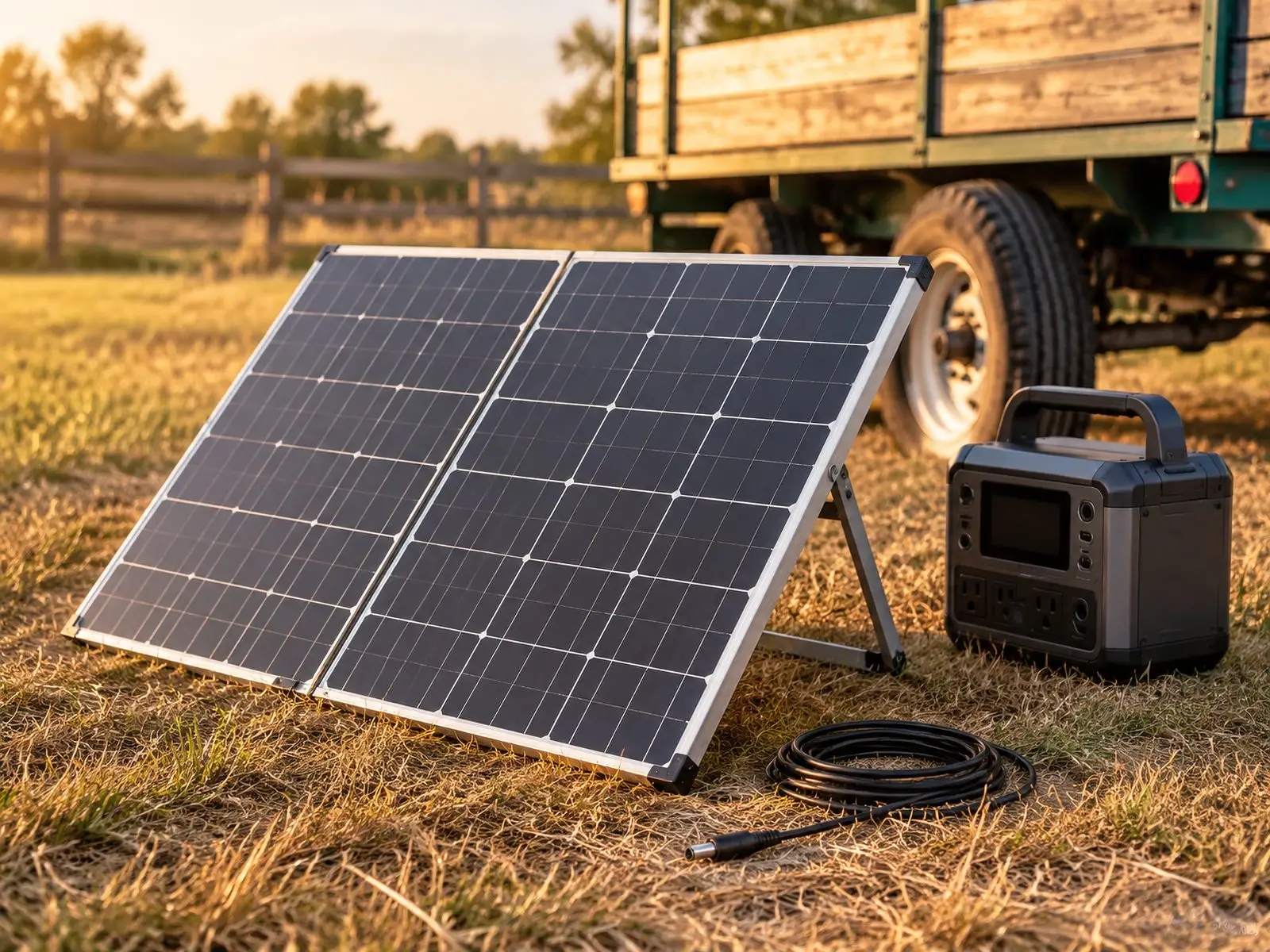
Usually not — but only because the orders carve out narrowly defined portable products, and the carve-out fails if a single element is missing. The exclusion covers off-grid small portable CSPV panels, with or without a glass cover, meeting six conditions at once: 200 W or less per panel; no more than 16,000 cm² of surface area; no built-in inverter; an integrated handle or one attached to the package; one or more integrated kickstands; and a wire of at least 3 meters, permanently connected or attached, ending in an 8 mm diameter male barrel connector (91 FR 70862, Appendix).
The built-in inverter condition disqualifies products in practice. A folding panel with an integrated microinverter or AC output module falls outside the exclusion even at 180 W, because the text requires that the panel “do not include a built-in inverter.” Bundles shipping with a separate MPPT controller and a DC barrel input generally satisfy the element; bundles marketed with a combined AC panel-plus-inverter accessory usually do not. The same appendix excludes cells of 10,000 mm² or less permanently integrated into a consumer good that consumes the electricity.
Product exclusions that survive the solar panel tariffs
Scope in this proceeding turns on product design rather than country of shipment, so read the exclusion list as a design specification. The solar panel tariffs exclude:
- Thin film. Products made from amorphous silicon, cadmium telluride or copper indium gallium selenide are outside scope, regardless of origin.
- Micro-cells in consumer goods. CSPV cells not exceeding 10,000 mm² in surface area, permanently integrated into a consumer good whose function is other than power generation and which consumes the electricity generated.
- Small panels with specific wiring. Panels from 3,450 mm² to 33,782 mm² with one black and one red wire of 22 or 24 AWG, not more than 206 mm long, and not exceeding 2.9 V, 1.1 A or 3.19 W, with no internal battery and no external computer peripheral ports.
- Off-grid panels without glass. Panels of 100 W or less, up to 8,000 cm², without a built-in inverter, carrying visible parallel grid collector lines every 1 to 4 mm, and either permanently integrated into a consumer good, laminated without stitching, or sewn into fabric with a mesh pocket and a permanently attached USB-A lead.
- Rigid glass off-grid panels at the low end. Panels of no more than 80 W, under 5,000 cm², without a built-in inverter, unframed, with a clear glass back and a permanently connected two-port rectangular connector.
- Portable off-grid panels. The 200 W, 16,000 cm², handle-and-kickstand exclusion described above.
Everything else made of crystalline silicon — monofacial, bifacial, TOPCon, heterojunction, full-black or framed — remains CSPV. The orders define scope by cell material and thickness, not by cell architecture, so a technology upgrade does not create an exclusion.
Rule and threshold: testing a SKU against the solar panel tariffs in ten minutes
Most scope errors are documentation errors: the importer reads the rate table and never checks the product description. The test below is mechanical enough for a sourcing coordinator to run without outside counsel.
Rule: a crystalline silicon panel is inside the solar panel tariffs unless the specific product satisfies every element of a published exclusion. Threshold: for the portable off-grid exclusion, all six conditions must hold — ≤200 W per panel, ≤16,000 cm², no built-in inverter, integrated handle, at least one integrated kickstand, and a ≥3 m wire ending in an 8 mm male barrel connector.
- Confirm the cell material and thickness from the supplier’s datasheet. Thin film exits here; everything else continues.
- Measure the panel surface area in cm², not the module’s power rating. The 16,000 cm² ceiling is a physical measurement.
- Check for a built-in inverter, microinverter or AC module. Any of the three ends the portable exclusion.
- Verify the wire: length, termination type and whether it is permanently attached.
- Map the HTS line and confirm whether any other Chapter 99 program applies to the same entry.
- Record the result in the purchase order file with the datasheet page and photograph used, so the position can be defended at liquidation.
For anything falling on the in-scope side of the test, the planning question becomes origin strategy rather than product design: which cell supply chain, which assembly country, and which documentation pack can be defended eighteen months later. That is the same discipline we describe for battery imports in our 2027 tariff calendar, and the same documentation logic that applies to portable power station certifications.
What the solar panel tariffs do to 2027 system pricing and storage attach
The macro backdrop does not soften the module problem. EIA’s November 2026 Short-Term Energy Outlook projects U.S. power-sector generation of almost 4,390 billion kWh in 2026, up 2.7%, slowing to 1.2% growth in 2027, with most of the growth coming from utility-scale solar (EIA STEO, November 10, 2026). Module supply is a grid-scale planning constraint at the same moment distributed buyers face a landed-cost step change.
On the storage side the installed base keeps compounding: U.S. battery storage capacity reached nearly 52 GW by mid-2026, after three years of roughly 70% annual growth (EIA, August 7, 2026). Because the solar panel tariffs do not reach batteries or inverters, the relative economics of a 2027 system shift toward the non-module bill of materials. A project that previously spent, say, 45% of its equipment budget on modules now carries a larger share in LiFePO4 batteries and hybrid inverters — which is exactly why quotes should itemize the two lines separately instead of hiding duty pass-through in a single $/W figure.
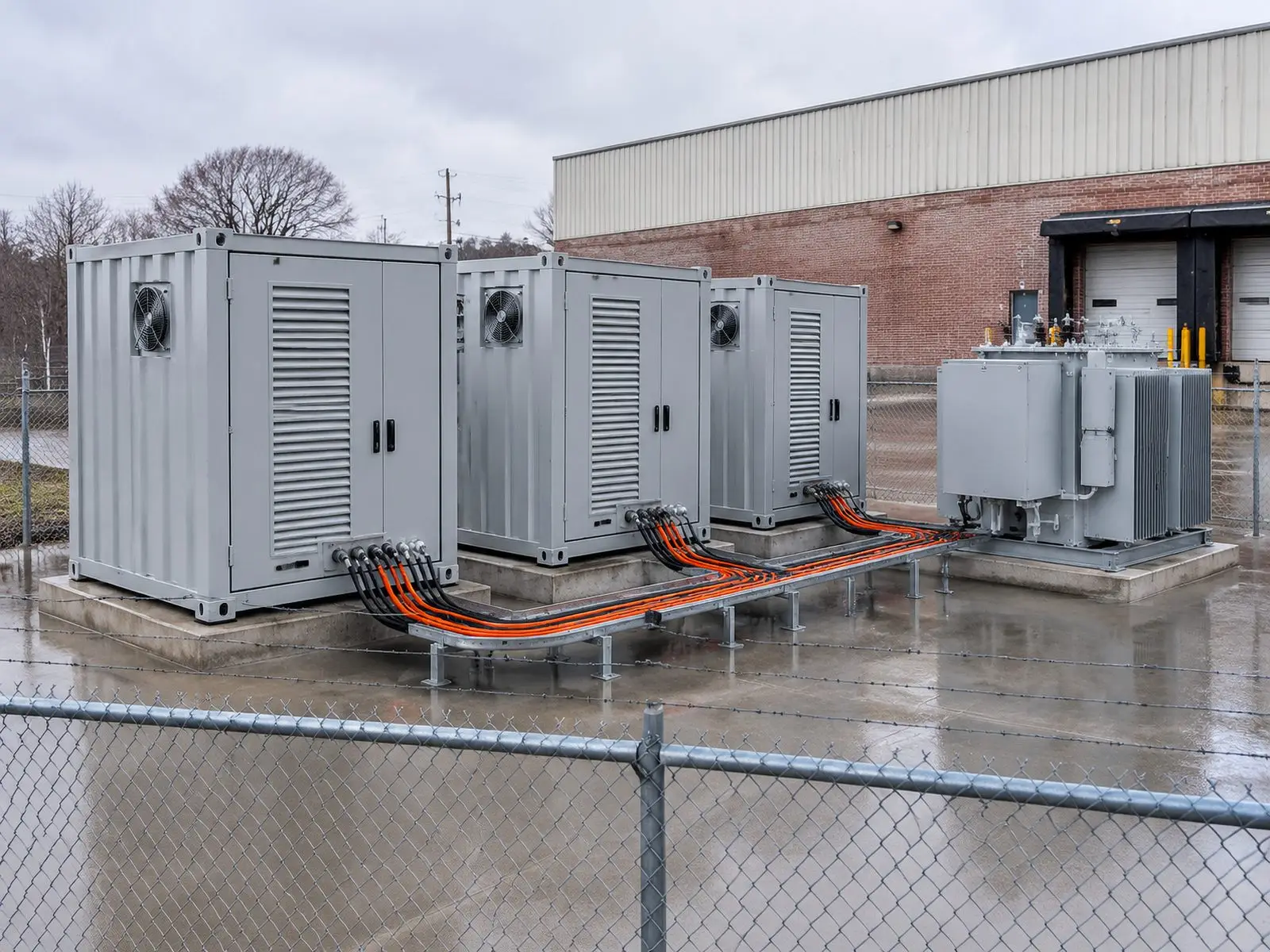
Three commercial consequences follow for 2027 proposals. Self-consumption ratio becomes the dominant variable in residential payback math, because the module cost that once justified exporting surplus generation now carries a duty premium; systems sized around evening load and residential storage absorb that premium better than oversized arrays. For C&I projects, containerized storage and commercial energy systems can be re-quoted without re-pricing the module block, which shortens the bid cycle. And distributors holding pre-November 9 inventory have a legitimate cost advantage for two to three quarters — worth stating in writing rather than letting a competitor’s higher-cost quote set the market price.
Importer checklist before the next purchase order
- Classify, then price. Confirm the HTS line for every SKU, including panels sold inside kits, before the RFQ goes out.
- Run the scope test per SKU. Datasheet, surface area, inverter presence, wire termination — documented, not assumed.
- Budget the cash deposit the solar panel tariffs create, not just the duty. Indian origin: about 233.26% of entered value at the port. Indonesian origin: depends on producer, up to 268.06% combined.
- Audit 2025–2026 entries. Indonesian entries from November 28, 2025 onward face retroactive countervailing duty; Indian and Laos entries in the same window are refundable.
- Fix origin in the contract. Cell origin and module assembly country are separate facts; a bill of materials naming both is the only defensible answer at liquidation.
- Separate duty from price. A pass-through clause citing published order rates survives renegotiation better than a lump-sum adjustment.
- Keep the storage and inverter lines duty-clean. Batteries, inverters and portable power stations sit outside these orders, so their landed cost should not be repriced alongside modules.
- Ask for the manufacturing file. For OEM and ODM programs, it should show cell supplier, cell thickness, assembly location and any exclusion elements claimed.
None of this is tax or legal advice, and duty outcomes depend on the facts of a specific entry; confirm classification and program applicability with a licensed customs broker before committing to a 2027 price list.
Frequently asked questions
Did the solar panel tariffs start in 2026 or 2027?
The solar panel tariffs are applicable November 9, 2026, after the Commission’s November 5, 2026 determinations. The 2027 connection is commercial: contracts priced this quarter will be executed against 2027 deliveries, so the duty stack is already inside next year’s cost basis.
Do the duties apply to modules assembled in the United States from imported cells?
Yes, when the imported cells meet the scope definition. The orders expressly include parts for finished products assembled after importation, so domestic lamination does not by itself remove the goods from scope. Origin analysis for the finished module is a separate question from scope; document both.
Are bifacial or TOPCon modules treated differently?
No. Scope follows crystalline silicon cell material and thickness of 20 micrometers or more, not cell architecture. Thin film is the technology-based exclusion; moving from p-type to n-type TOPCon, or to heterojunction, does not create one.
Can we still import from India, Indonesia or Laos and simply pay the duty?
Yes. AD/CVD is a duty, not a prohibition: entries clear against a cash deposit and reconcile at liquidation. The real constraints are working capital — deposits can exceed twice entered value — and customer price acceptance, which decides whether an origin stays viable for a product line.
Do these orders apply to inverters, batteries or portable power stations?
No. The orders cover crystalline silicon photovoltaic cells and modules. Inverters, LiFePO4 batteries and portable power stations fall under different scope definitions and different trade measures, and should be quoted on their own landed-cost basis.
The 2027 takeaway
For U.S. distributors, the solar panel tariffs turn a sourcing question into a documentation question. The countries changed, the mechanism did not: a 249.13% combined rate on Indian cells and 268.06% on one Indonesian producer mean invoices, datasheets and origin files now carry as much weight as price lists. Storage, inverters and portable power remain outside this action — the part of a 2027 bill of materials still defensible on engineering rather than tariff luck.
If you are rebuilding a 2027 equipment package around home energy systems or commercial storage, request a quote and we will return a line-item BOM with origin, certification and lead-time detail for each block — so the module question stays a separate line rather than a surprise.
Sources
- U.S. Department of Commerce, International Trade Administration — Crystalline Silicon Photovoltaic Cells, Whether or Not Assembled Into Modules, From India, Indonesia, and the Lao People’s Democratic Republic: Antidumping Duty Orders, 91 FR 70862, November 9, 2026. federalregister.gov
- U.S. Department of Commerce, International Trade Administration — Crystalline Silicon Photovoltaic Cells, Whether or Not Assembled Into Modules From India, Indonesia, and the Lao People’s Democratic Republic: Countervailing Duty Orders, 91 FR 70843, November 9, 2026. federalregister.gov
- U.S. International Trade Commission — Crystalline Silicon Photovoltaic Cells, Whether or Not Assembled Into Modules From India, Indonesia, and Laos; Determinations, November 5, 2026. federalregister.gov
- U.S. Energy Information Administration — Short-Term Energy Outlook, released November 10, 2026. eia.gov
- U.S. Energy Information Administration — Battery storage capacity averaged 70% growth over the last three years, August 7, 2026. eia.gov