
Commercial & Industrial Energy Storage
Battery storage for factories, warehouses, hotels, hospitals and data centres, specified from a measured load curve and a demand analysis rather than from a capacity figure.
- 15 minInterval data we size from
- 10-100KWSystem class range
- 6,000+Cycles on Grade A LiFePO4 cells
- 24hEngineering response to quotes
Capacity is the last question, not the first
A proposal that opens with a capacity figure will be challenged the moment the client’s finance team reads it. Capacity only makes sense once the load curve is understood and the site has decided which job the battery is doing.
- Sizing from an average daily figure instead of the load curve
- Mixing peak shaving and backup duty in one calculation
- Ignoring the contracted maximum demand, often the largest line in the bill
- Assuming discharge power suffices when the limit is energy
Step one: the load curve and the demand analysis
A monthly bill says how much energy a site consumed, not how quickly, and the case lives in the shape of the curve rather than the area under it. From those records we build the site profile: a base load that never drops, a working-hours load that varies with shifts, and the short peaks that drive each month’s maximum demand.
- Twelve months of half-hourly or 15-minute consumption data
- Contracted maximum demand and the recorded monthly maximum
- Full tariff structure with peak, flat and off-peak windows
- Operating calendar, shift patterns and large load inventory
Step two: how a peak-valley arbitrage case is built
Arbitrage has a fixed structure, and it only becomes credible when every input traces back to the client’s own data. Identify the charge and discharge windows from the tariff schedule. The energy the charge window can absorb is limited by the spare capacity of the site supply at that time, not by the battery. The energy the site needs to remove from the discharge window comes from the load curve, not the nameplate. Take the smaller of the two, the only figure the system can deliver day after day. The value is the peak-window energy avoided plus any demand charge avoided, minus off-peak energy bought to recharge, minus round-trip losses.
Reducing a maximum demand charge is a second calculation. The battery must cover the load above a target threshold when that threshold is crossed, so discharge power must exceed the load above the target, and the battery must hold that output for as long as the peak lasts.
We do not publish payback periods or return figures; they depend on tariffs, load shapes and capital costs that vary by site.
Step three: the trade-off between backup and arbitrage
Backup and arbitrage pull the specification in opposite directions. Backup wants capacity held in reserve for an event that may not arrive, which means protecting usable energy and limiting depth of discharge. Arbitrage wants that same capacity cycled hard every day. If the reserve is not defined at design stage, arbitrage quietly consumes the backup and the failure appears in the first real outage.
Three-phase supply, paralleling and expansion headroom
Most industrial sites are three-phase, and phase behaviour matters more than the total: a system specified on the total can still overload one phase. Expansion is designed in from the start: parallel-capable units let a site begin smaller and add capacity later, with switchgear, cable routes and floor space planned for the next units.
Working with the generator already on site
Many industrial sites already have a standby generator, and it should stay where it is: as the long-duration backup behind the battery, not a participant in the daily cycle. Changeover and interlocking decide which source feeds the site, and the battery carries the load through the transfer so production equipment sees no gap.
Grid connection approval and site conditions
The electrical design is only half of a commercial project. The other half is paperwork and the physical site, and both have long lead times if left until the equipment is ordered. The interconnection application and metering arrangements usually decide whether the project is energised on schedule.
- Interconnection application and approval with the network operator
- Protection settings, anti-islanding and metering arrangements
- Transformer and switchgear capacity for the extra connection
- Floor space, floor loading, ventilation and cable routing
What a complete C&I storage system includes
We supply commercial systems as a matched package, commissioned as one installation.
- Three-phase capable hybrid inverter or PCS with pure sine wave output
- LiFePO4 battery bank sized from the interval data and duty cycle
- Integrated BMS with cell balancing and peak discharge management
- Control logic for peak shaving, tariff scheduling and reserve protection
- Changeover and generator interface for coordinated operation
- Monitoring and reporting access for the operator, the EPC and the distributor
Standard export configurations are built for 220V/50Hz markets in Europe, Africa and Southeast Asia. For North American projects, contact our engineers so the correct configuration can be confirmed for your order.
Recommended commercial and industrial configurations
Three packages cover most of the C&I enquiries we receive, each supplied under your own brand.
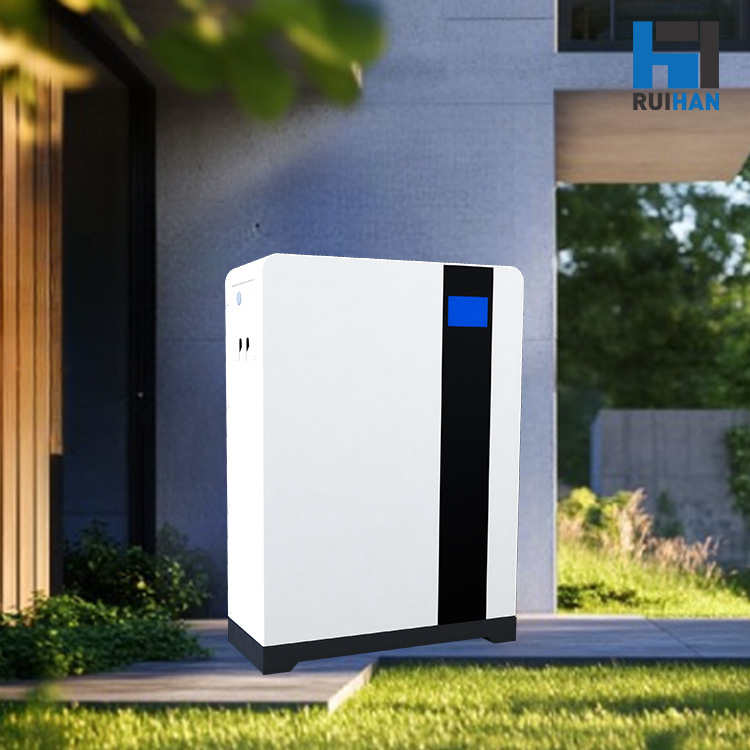
30-100KW
30-100KW All-in-One PV Hybrid
Container-class package for plants, warehouses and commercial buildings where demand reduction and PV self-consumption are both on the table.
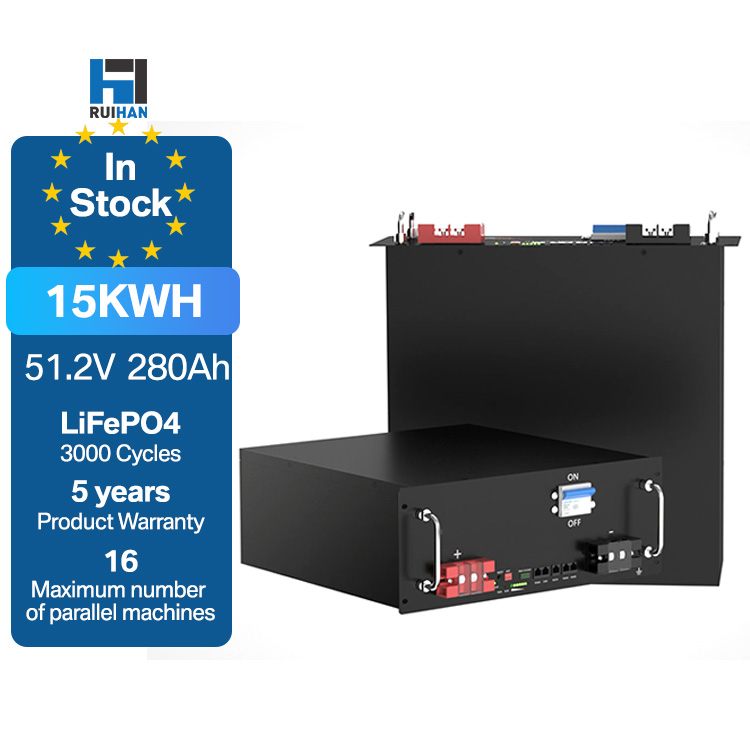
15KW / 280Ah
15KW Energy Storage System 51.2V 280Ah
High-capacity reserve where continuity comes first, including hospital departments, data rooms and process control loads.
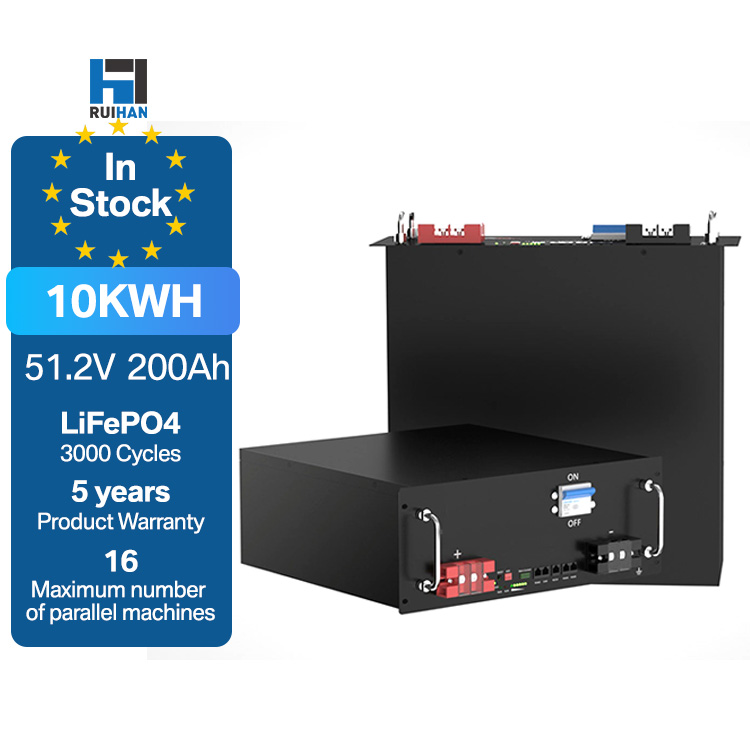
10KW / 200Ah
10KW Energy Storage Battery 51.2V 200Ah
Rack-mounted bank for smaller commercial buildings and branch sites where a compact footprint and staged expansion matter.
Application, typical capacity and priority objective
The table maps the three common commercial profiles onto capacity class and objective. It is a starting estimate, to be confirmed against the load curve before you quote.
| Application | Typical capacity class | Priority objective |
|---|---|---|
| Hotel, hospital or data centre needing continuity | 15-50 KWh class | Backup |
| Factory, warehouse or cold store with a tariff spread | 30-100 KWh class | Peak shaving |
| Mixed site with interruption risk and time-of-use tariffs | 50-100 KWh class and above | Both |
Starting estimate only, to be confirmed against the load curve before ordering.
Why distributors and installers buy from Ruihan
We are an OEM/ODM manufacturer and wholesale supplier, not a retail reseller, so engineering support sits at the specification stage.
- Grade A LiFePO4 cellsRated for 6,000+ cycles under our manufacturing specification.
- Certified productionISO 9001 and ISO 14001 manufacturing, with CE, FCC, UN38.3 and RoHS compliance.
- Full portfolio, one supplierPortable power stations, LiFePO4 batteries, inverters and all-in-one systems from 200W to 5000W+.
- OEM and ODM supportYour branding, packaging and documentation on production runs.
- Volume pricing tiers50-100, 100-500 and 500+ unit tiers for distribution programmes.
- Reliable deliverySamples in 2-3 weeks, 95%+ on-time shipment rate and a 24-hour response window.
Projects start with a technical qualification and a sample unit, then move to volume once the first site is live. See wholesale distribution, OEM and ODM manufacturing, performance cases, the battery range and PV accessories.
Frequently asked questions
What data do you need from us to size a system?
Send twelve months of half-hourly consumption data, the tariff schedule with peak, flat and off-peak windows, and the contracted and recorded maximum demand.
Can the system be paralleled and expanded later?
Yes. We design with parallel-capable units and plan the switchgear, cable routes and floor space so capacity can be added later. Battery racks accept further modules without a new cabinet.
How does storage work with our existing diesel generator?
The battery handles daily peaks and short interruptions while the generator stays reserved for outages that outlast the reserve. Changeover and interlocking decide which source feeds the site, and the battery covers the transfer.
What are your lead times and minimum order quantities?
Minimum order quantities start at the 50-100 unit tier, with 100-500 and 500+ tiers above. Samples are typically ready in 2-3 weeks, quotations within 24 hours, and our on-time shipment rate is above 95%.
Do you provide on-site installation and commissioning support?
We supply commissioning documentation, wiring and labelling schedules and configuration guidance so a local electrician or EPC can complete the work. Our engineers support the design review and configuration remotely.
Send your interval data and tariff schedule – our engineers will return a sized configuration and wholesale pricing within 24 hours.