
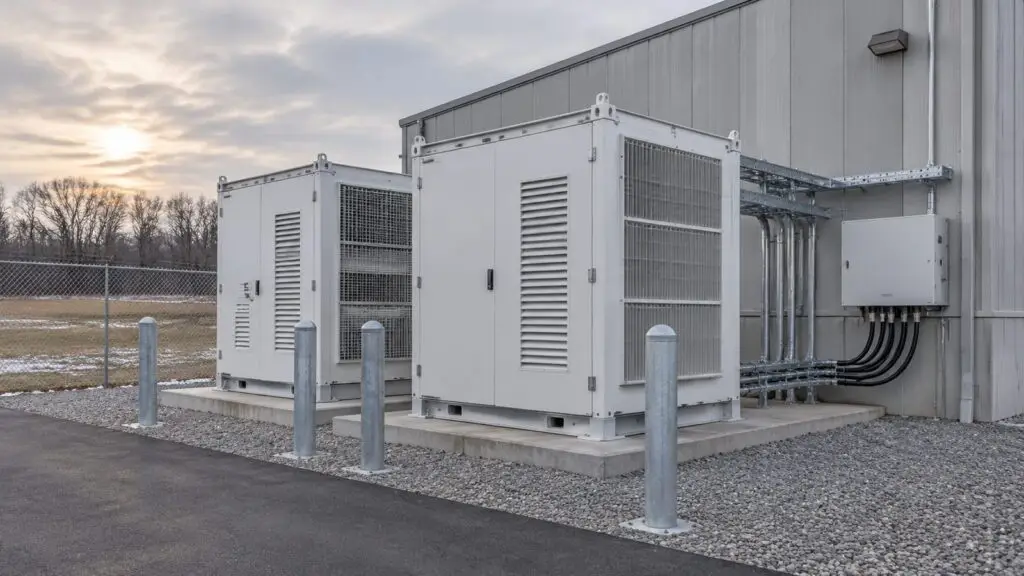
EIA counted 52 GW of U.S. battery storage in mid-2026 and 26 GW planned for 2027, so commercial buyers now bid against utility projects for factory slots (EIA, August 2026). The real constraint is not cells: global battery and solar manufacturing capacity is roughly twice 2025 deployment (IEA, November 2026). What fails commercial battery storage procurement in 2027 is paperwork — the certificate set, test scope and dated delivery commitments a supplier must prove before a unit is allowed on site.
This guide is written for the people who sign the purchase order: EPCs, distributors, facility owners and OEM buyers who need a system that survives plan review, clears customs and starts up without a change order. It comes from the factory side of the table, and it assumes you would rather lose a week to verification than a quarter to a rejected submittal.
Why 2027 Battery Storage Procurement Is a Document Problem, Not a Supply Problem
Three data points describe the market a buyer enters this winter.
First, utility-scale storage is compounding: EIA’s Preliminary Monthly Electric Generator Inventory shows U.S. battery capacity growing at an average of 70% a year over three years — 43.6 GW at the end of 2025, nearly 52 GW by June 2026, and plans for 26 GW in 2027 alone (EIA, August 2026). Second, the cell supply behind those projects is abundant; the IEA finds global manufacturing capacity for solar PV and batteries at roughly twice the volume deployed in 2025, which it links to intense competition and falling prices (IEA, November 2026). Third, demand is localizing: NERC’s 2026–2027 Winter Reliability Assessment raised the demand forecast in 21 of its 23 assessment areas, driven mainly by data center expansion and electrification, while warning that extreme wide-area winter conditions can still produce shortfalls (NERC, November 2026).
Cells are therefore not scarce, projects are numerous, and the scarce item is a fully documented unit delivered on a date a utility or an authority having jurisdiction (AHJ) will accept. Battery storage procurement in 2027 rewards buyers who schedule documentation like hardware.
The table below sets the demand backdrop in utility-scale nameplate terms, the segment EIA tracks monthly; behind-the-meter commercial systems are reported separately and are excluded. Treat the numbers as the queue you are competing in, not as your addressable market.
| Period (year) | U.S. battery storage capacity (GW, nameplate) | What the figure represents |
|---|---|---|
| End of 2025 | 43.6 | Operational utility-scale capacity |
| Mid-2026 | 52.0 | Operational after 8.3 GW added in the first half of 2026 |
| Second half of 2026 | 14 | Planned additions reported by operators |
| 2027 | 26 | Planned additions reported by operators |
| 2028 | 14 | Planned additions reported by operators |
Source: EIA, Preliminary Monthly Electric Generator Inventory, via Today in Energy, August 7, 2026. The last three rows are operator plans, not commissioned capacity — they move when projects slip, which is exactly why a buyer should ask for a dated production slot rather than a promise.
Fifty-four gigawatts of planned additions between mid-2026 and 2028 is the queue a single commercial container stands in — the honest framing for a CFO who asks why a 500 kWh order cannot ship in three weeks.
The Eight-Document Pack That Makes a C&I System Buyable
In storage, “buyable” means a system that can be permitted, shipped, insured and energized without anyone signing a waiver. Eight documents carry that definition, and every one must name the exact hardware revision you are buying: a certificate that describes “the RX series” is not evidence about the unit in your submittal.
| Document | What it proves | Who issues it |
|---|---|---|
| UL 9540 certificate of compliance | The battery, inverter and controls are listed as one assembly, not as separate parts | A nationally recognized testing laboratory (NRTL) |
| UL 9540A test report | Thermal runaway behavior at cell, module, unit and installation level | Accredited test laboratory |
| UL 1741 SB inverter certificate | Grid-support functions and ride-through for the interconnection application | NRTL |
| NFPA 855 compliance statement | The code path for the site, including a hazard mitigation analysis where required | Supplier, reviewed by AHJ |
| UN 38.3 test summary | The cells and packs can move as Class 9 dangerous goods | Cell manufacturer |
| CEC listing, where a state program applies | Eligibility for state storage programs | California Energy Commission |
| Cell and BMS traceability file | Chemistry, cell origin, firmware version and chain of custody | Supplier |
| Factory acceptance test protocol and witness report | The shipped unit matches the approved design | Factory, optionally third party |
Two of these decide most schedules. UL 9540 is a system listing, so a buyer who pairs one supplier’s battery with another’s inverter does not inherit a listing; that combination needs its own listing or an engineering judgment, and the second path is slow. UL 9540A is a test report rather than a certificate, with four levels — cell, module, unit, installation — and only the installation level speaks to the clearances and unit count in your design.
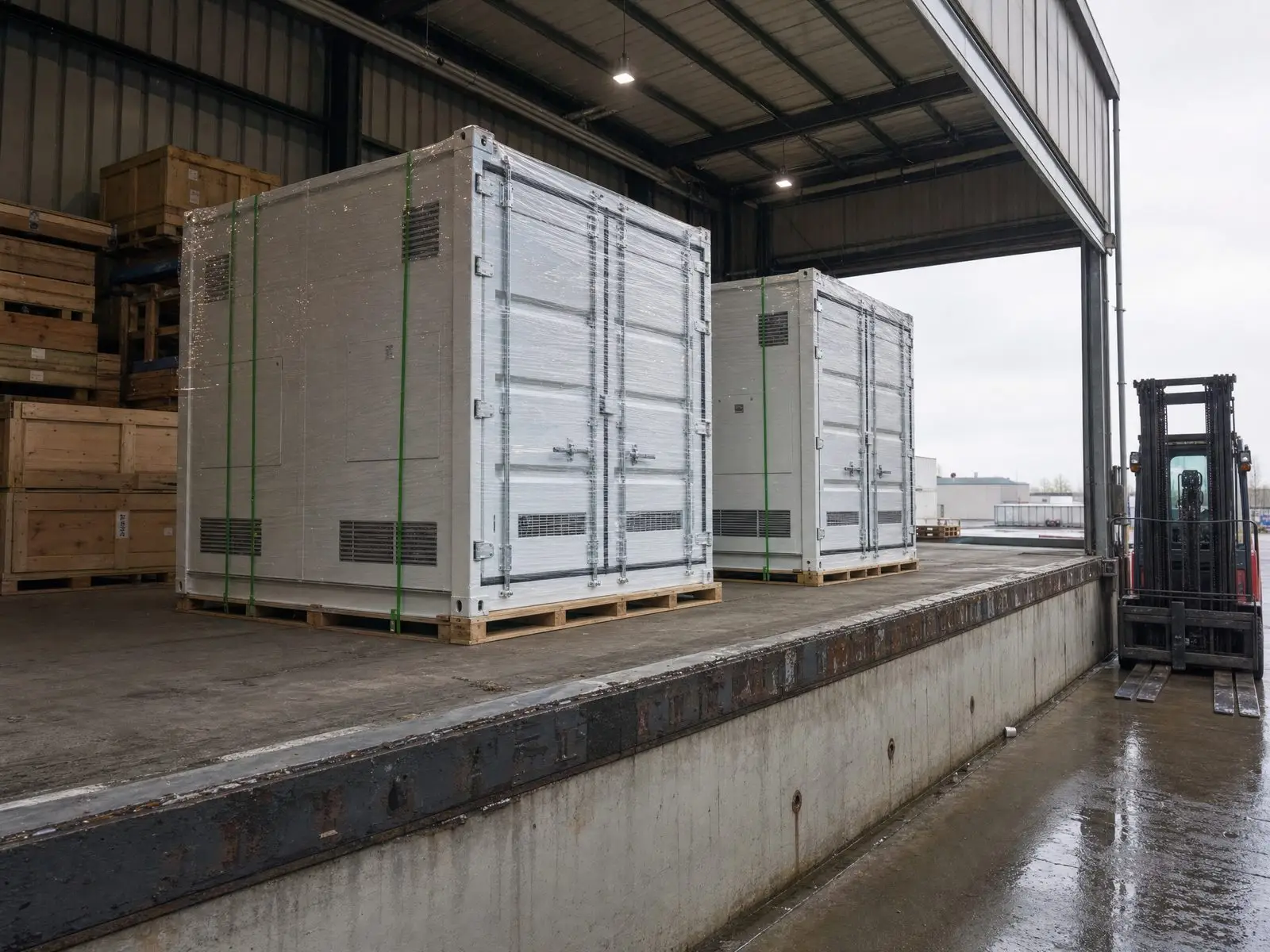
What Documents Should a Battery Storage Supplier Provide Before Shipment?
The eight above, in one indexed PDF set, with the model string on every certificate matching the nameplate, the purchase order and the shipping invoice character for character. The pack must also be verified in order, because later checks are worthless if an earlier one fails.
- Match the model string first. Compare the UL 9540 designation against the datasheet, the PO line and the nameplate drawing. A revision letter or a “-US” variant usually means a different listing.
- Check the certificate holder. The entity on the certificate should be the entity that ships. If a trading company resells a factory listing, document the commercial chain or own a compliance gap at resale.
- Confirm the 9540A scope against your layout. Installation-level results are tied to spacing, mounting and enclosure; two units closer than the tested configuration are outside the report.
- Confirm the inverter settings file. Certification is the entry ticket; the utility needs the actual trip and ride-through values in the interconnection application.
- Confirm the firmware version. A BMS or inverter update after testing can invalidate protection assumptions. Ask for the version hash that will ship, plus a written notice obligation for later updates.
- Confirm the transport file. UN 38.3 summaries, the dangerous goods declaration and the state-of-charge shipping limit belong with the shipping documents, not in a folder opened after the container is booked.
The failure mode is a pack that looks complete: forty pages of certificates, all genuine, none about the revision being shipped. Verifying in this order catches it in an afternoon; verifying by page count catches it at plan review.
Rule and Threshold: How to Test a UL 9540A Report in Ten Minutes
Rule: a UL 9540A report is evidence about a configuration, not a product family. Accept it only when the report names the enclosure, unit count, spacing and mounting arrangement in your design; otherwise request the matching installation-level test or a written engineering judgment from the AHJ.
Threshold: if your layout reduces clearance below the tested spacing, or adds a unit inside a tested array, the report no longer covers the installation. That is a design change with a compliance cost, and it should be priced before the equipment is ordered rather than discovered during commissioning.
The same logic applies to NFPA 855, which sets installation requirements and can require a hazard mitigation analysis that references the 9540A results. A supplier who cannot say which clause your layout triggers has not read your site drawing.
How Long Does Commercial Battery Storage Procurement Take in 2027?
Longer than the factory’s cycle time, because three dependencies sit outside the factory: document approval by the AHJ and utility, the interconnection or permit queue, and allocation of a production slot inside a utility-scale delivery wave. The IEA’s estimate that at least 25 million kilometres of new power lines are needed over the next ten years, plus 15 million kilometres of replacement or upgrade, is a reminder of which of those sets the pace (IEA, November 2026). Grid work and paperwork are the long poles; assembly is not.
That changes the useful question. Instead of asking for “lead time”, ask for three dates: the production week reserved for your order, the certificate revision that will ship with it, and the factory acceptance test date relative to the ship date. A supplier who can answer all three has a schedule; a supplier who answers with a number has a marketing line.
Rule: any lead-time figure that is not tied to a reserved production week and a named certificate revision is a placeholder, and should be treated as such in the project schedule. Threshold: if the FAT date is not at least ten working days before the planned ship date, a failed test has no recovery window.
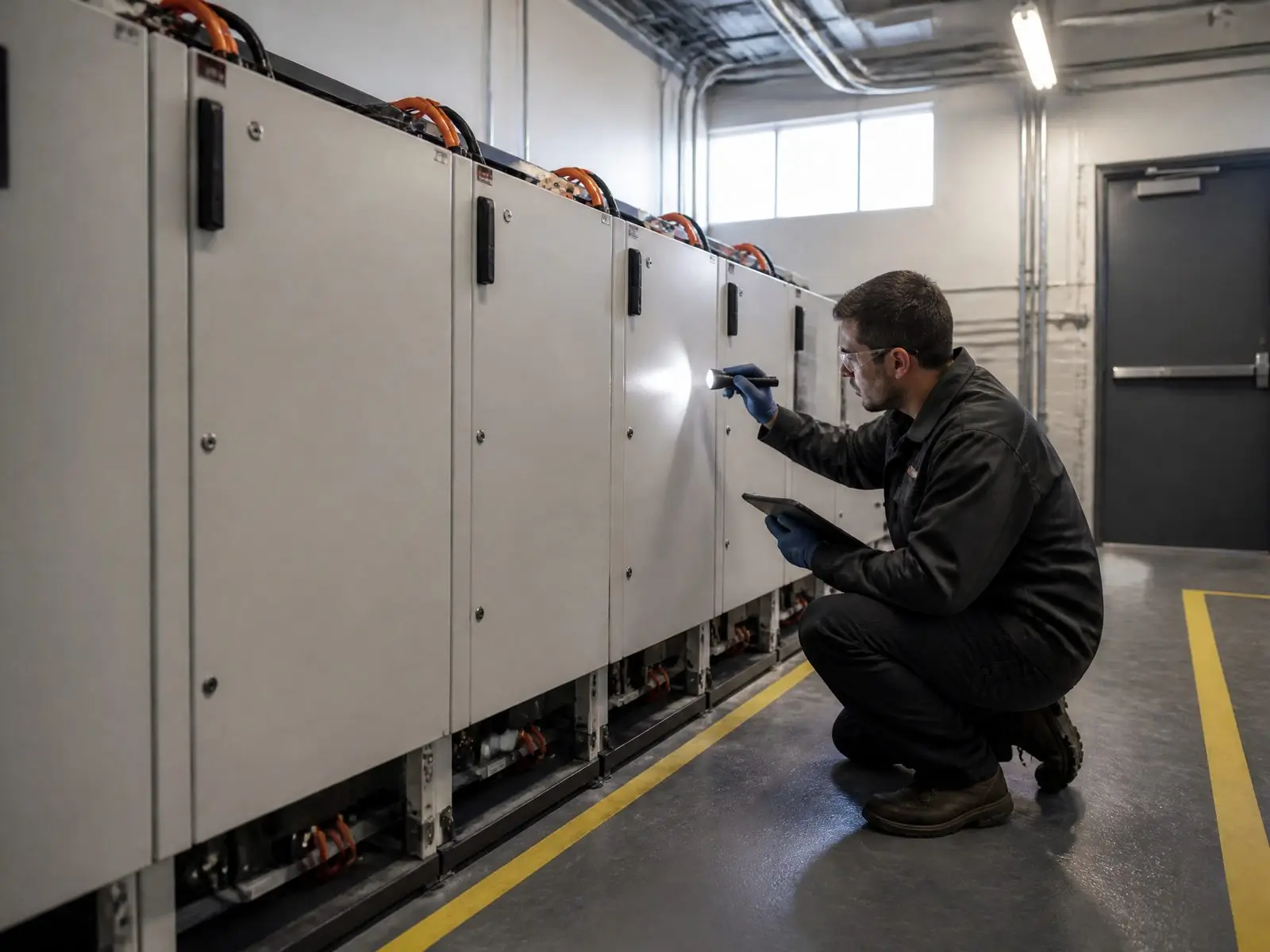
The Factory Acceptance Test: Twelve Items to Witness
Battery storage procurement has exactly one moment when the buyer sees the hardware before freight is paid. Twelve items cover the failure modes that matter:
- Nameplate and certificate cross-check, photographed with the serial number in frame.
- Insulation resistance and dielectric results, recorded per unit rather than per batch.
- BMS cell voltage and temperature spread, at rest and under a defined load.
- Capacity or energy check at the agreed rate, with the method written into the protocol.
- Charge and discharge at rated power, with thermal performance logged inside the enclosure.
- HVAC verification at rated ambient temperature, not at a comfortable one.
- Protection coordination settings file, exported and versioned.
- Inverter grid-support settings, matched to the interconnection application.
- Communications point list and register map, tested against the site EMS or SCADA.
- Torque marks on DC busbar and power connections, with values documented.
- Firmware version hash, repeated on the witness report and the packing list.
- Spares kit, as-built drawings, O&M manual and warranty registration, packed and itemized.
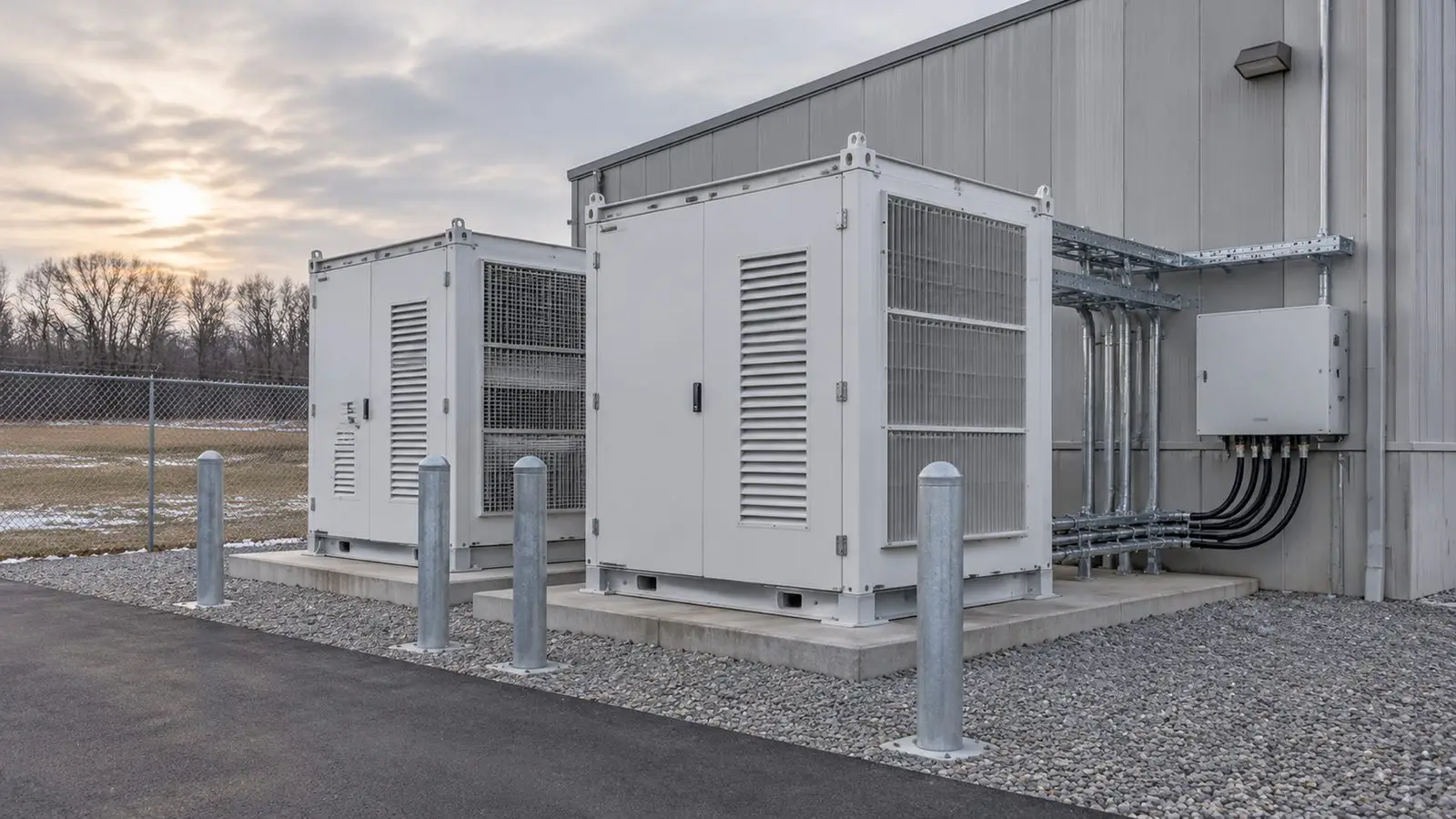
Ask for a signed witness report with serial numbers rather than a photo set. That report is what an insurer, a lender’s engineer and a commissioning agent will ask for later, and it separates a warranty claim that is processed from one that is argued.
Contract Terms That Move Risk Off the Buyer’s Balance Sheet
Documentation gets a system onto the site; contract language decides who pays when it underperforms. Five clauses matter more than the discount:
- Performance guarantee with a test method. Capacity and round-trip efficiency guaranteed at defined conditions, with the measurement method named. A guarantee without a method is a negotiating position.
- A degradation curve, not one end-of-warranty number. The curve gives the year-five value that a project financier actually models.
- Warranty transferability. For distributors and OEM buyers this is the product: if the warranty cannot be assigned to the end user, resale value collapses at the first ownership change.
- Delay liquidated damages tied to the in-service date. Storage economics depend on a placed-in-service date, and the contract should say who carries a slip that moves it.
- Firmware and cybersecurity obligations. Who patches, how fast, and what happens to certification if a patch changes protection behavior.
None of this is exotic. It is simply easier to negotiate before the container is on the water, when the supplier still has a reason to say yes. For a line-item view of what a quotation should contain, see our breakdown of commercial battery storage cost per kWh.
Distributor and OEM/ODM Procurement: Where Margin Leaks
Distribution and private-label programs fail on four predictable edges, and none of them is the unit price.
Listing ownership. If the factory holds the UL 9540 listing and the distributor sells under a private label, the certificate must name the private-label model, or the distributor is selling an assembly whose listing does not match the nameplate. Fixing that after inventory lands is expensive; fixing it at program design is one line on a form.
Minimum order quantity against container loading. A cabinet system quoted at a comfortable MOQ can still be an uneconomic shipment if the pallet configuration leaves dead space. Ask for the loading plan with the quote, not after the deposit.
Dead-on-arrival handling. Who pays freight on a failed unit, and how many days does the replacement take? For a distributor, a DOA unit is a customer relationship problem before it is a warranty problem.
Documentation in the buyer’s name. Datasheets, O&M manuals, warning labels and the declaration of conformity all have to carry the seller’s identity for a private-label program to be defensible. That is a factory capability question to ask before signing, not a design preference afterwards.
For readers building a distribution line, the sequence is set out in our guide to wholesale distribution programs and in the OEM/ODM manufacturing process; both describe the document set that ships with a first order.
Frequently Asked Questions
What documents should a battery storage supplier provide before shipment?
A UL 9540 system certificate, a UL 9540A report covering the installation configuration, a UL 1741 SB inverter certificate with settings, an NFPA 855 compliance statement, UN 38.3 summaries and dangerous goods paperwork, a cell and BMS traceability file, and a signed factory acceptance test report — each naming the exact model and revision being shipped.
How long does commercial battery storage procurement take in 2027?
The calendar is driven by permit and interconnection review plus production slot allocation, not by assembly time. Ask for a reserved production week, the certificate revision that will ship and the FAT date instead of a generic lead-time figure, then build the schedule backwards from the in-service date the economics depend on.
Does a UL 9540A report cover any installation?
No. It covers the configuration tested: enclosure, unit count, spacing and mounting. Tighter clearances or extra units inside a tested array fall outside the installation-level result, so you need a matching test or an engineering judgment from the AHJ.
Can a private-label system reuse the factory’s UL 9540 certificate?
Only if the certificate names the private-label model as listed equipment or the listing is extended to cover it. Otherwise the documentation gap surfaces at inspection, resale or insurance review.
Is a system-level certificate enough to get a permit?
It is necessary, not sufficient. Permits also depend on the local installation standard, the hazard mitigation analysis where required, the interconnection settings the utility accepts, and the structural and fire-clearance details of the site.
Conclusion: Buy the Proof, Not the Promise
The 2027 market is unusually kind to buyers on price and unusually unforgiving on paperwork. Cells are abundant, manufacturing capacity is roughly double recent deployment, and 26 GW of utility-scale additions are queued for the same year your project needs a slot. The supplier who wins is not the one quoting the shortest lead time, but the one who hands over a certificate revision, a production week and a signed FAT report without being asked twice.
Build the file before the purchase order: eight documents in one indexed PDF, model strings matched, 9540A scope checked against the layout, FAT scheduled with a recovery window, and clauses that assign the risk you cannot absorb. That file is what makes a commercial battery storage procurement defensible to an AHJ, a lender and a customer at the same time.
If you are specifying a commercial or industrial system for 2027 delivery — containerized or cabinet, grid-tied or hybrid — send your load profile and site constraints through our request a quote form. We return a document pack index and a dated production slot with the quotation, so compliance review can start on day one. Product families are listed under commercial and industrial energy storage and LiFePO4 battery systems, and the field side of the same project is covered in our BESS commissioning checklist.
This article is editorial analysis, not tax, legal or engineering advice. Confirm permit, code and incentive questions with your authority having jurisdiction and a qualified advisor.
Sources
- U.S. Energy Information Administration, Battery storage capacity averaged 70% growth over the last three years, August 7, 2026.
- International Energy Agency, World Energy Outlook 2026, November 2026.
- North American Electric Reliability Corporation, Increasing Demand and El Niño Challenge Winter Grid Reliability (2026–2027 Winter Reliability Assessment), November 18, 2026.
- U.S. Department of Energy, Federal Energy Management Program, Battery Energy Storage System Procurement Checklist, July 2024.
- UL Solutions, UL 9540A Test Method for Battery Energy Storage Systems, accessed November 2026.