
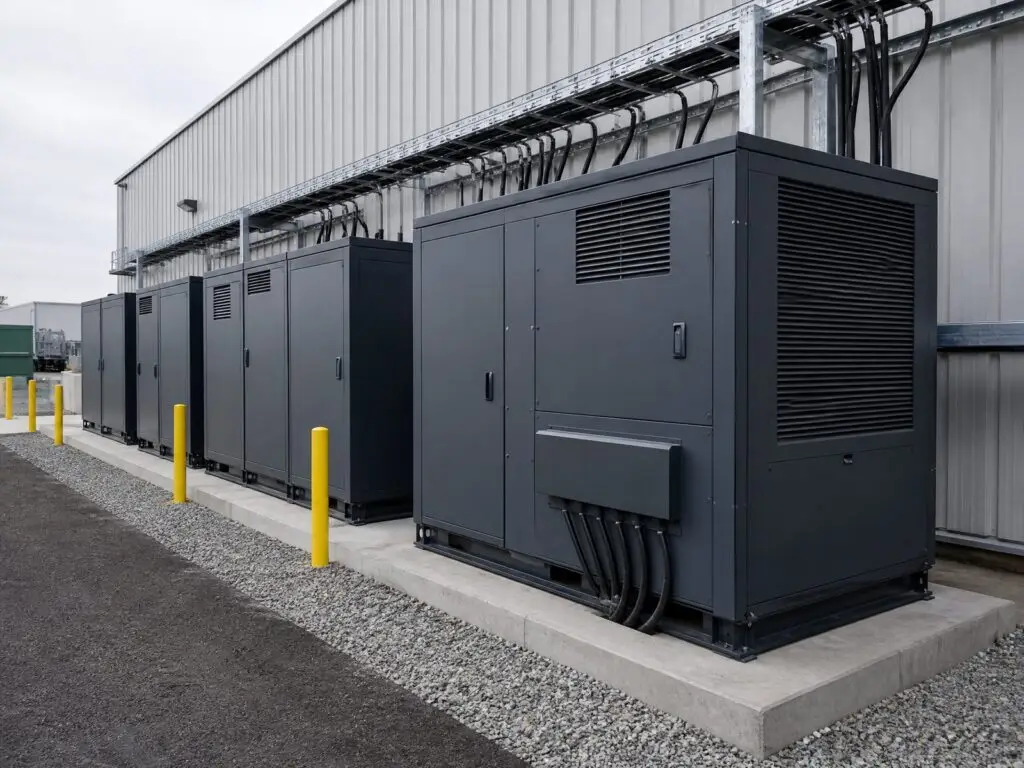
UL 1741 SB is the certificate that decides whether a storage inverter can legally interconnect in most U.S. markets — and, increasingly, whether it can earn revenue in a virtual power plant. IEEE 1547-2018 defines the grid-support behaviour; UL 1741 Supplement SB is how an accredited lab proves the product actually performs it. In 2026 the buyer’s question is no longer “is it listed?” but “do the listing, the firmware version and the shipped settings profile match what the utility will commission?”
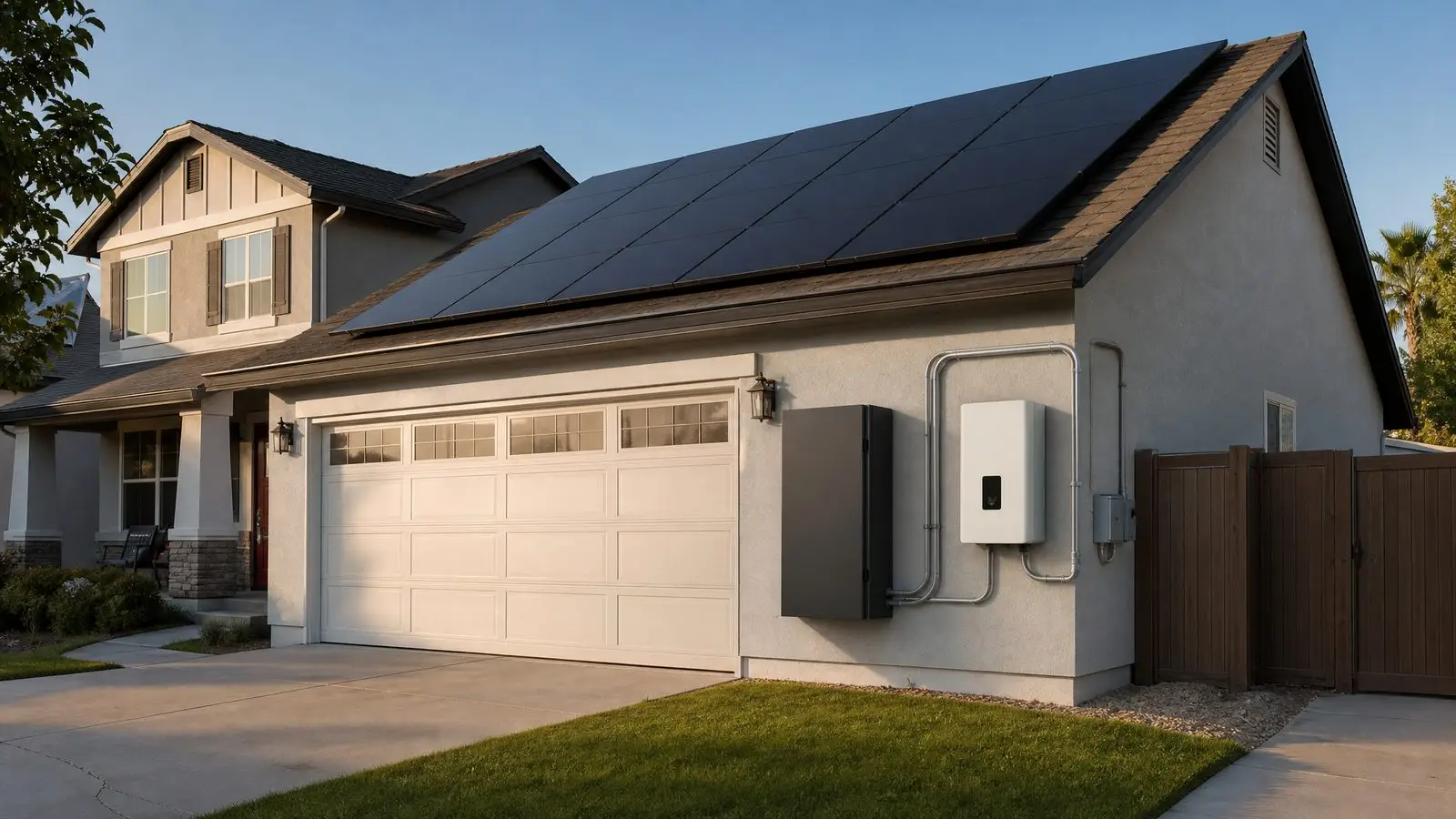
What UL 1741 SB Certifies — and What It Leaves Out
UL 1741 is the North American safety standard for inverters, converters, controllers and interconnection system equipment. Supplement SB adds a second layer: evaluation of the grid-support functions that IEEE 1547-2018 requires of a distributed energy resource (DER). A product that carries UL 1741 SB has been tested both for electrical safety and for the ride-through, voltage-regulation and frequency-response behaviour the standard describes.
That certificate is narrower than most sales sheets imply. It covers specific model numbers, at a specific firmware revision, tested to a specific edition of the underlying standards. It does not cover:
- The battery or the enclosure. System-level fire and electrical evaluation sits with UL 9540 and UL 9540A, a separate scope we covered in our UL 9540A Edition 6 buyer’s guide.
- The site design. Conductor sizing, disconnect placement, rapid shutdown and power-control-system logic are code questions, not certificate questions.
- The utility’s settings. The lab verifies that the inverter can implement the functions. The interconnecting utility decides which voltage and frequency curves you must actually run.
Two labels get confused constantly. UL 1741 SA was the earlier supplement built around advanced-inverter functions for state programmes such as California’s Rule 21. UL 1741 SB is the path aligned with IEEE 1547-2018, the current national interconnection standard. A datasheet that says “UL 1741 listed” without the supplement is not telling you which behaviour was tested.
Why 2026 Raises the Bar for Storage Inverters
For most of the last decade, a residential or commercial battery was sold as resilience: it kept the lights on and shaved a demand charge. Grid-support capability was a permitting checkbox. That is changing as aggregated storage becomes a revenue asset rather than a backup appliance.
The signals in the past week alone are hard to miss. On 21 October 2026, pv magazine USA reported Budderfly’s plan to aggregate municipal energy systems into a 150 MW virtual power plant under a $500 million programme, starting with a 15-year contract in Cadillac, Michigan. On 28 October, the same outlet covered a North Carolina Clean Energy Technology Center webinar on what still blocks VPP adoption, and separately reported that Lunar Energy measured a median $543 August saving for California customers, with $199 of it attributed to software that timed exports into the most valuable hours.
Read those three items together and the engineering requirement becomes obvious. A battery that only performs self-consumption needs a working inverter. A battery that participates in a dispatch programme needs an inverter that accepts external setpoints, exposes telemetry on a documented register map, holds its configured curves without drifting after a firmware update, and can prove all of that to a utility engineer who was not present at commissioning. Those are exactly the capabilities UL 1741 SB testing exercises — which is why procurement teams now ask for the certificate and the settings file.
The Grid-Support Functions That Decide Interconnection Approval
IEEE 1547-2018 was published in April 2018, amended by 1547a-2020, and remains the active standard, with a revision project (P1547) in progress at IEEE SA. Its requirements are what UL 1741 SB testing is built around. In practice, six behaviours account for most of the back-and-forth between an installer and a utility.
| Function | What the inverter must do | Where it is defined and verified |
|---|---|---|
| Voltage ride-through | Stay connected through defined voltage excursions instead of tripping at the first deviation | IEEE 1547-2018; verified under UL 1741 SB |
| Frequency ride-through | Remain online through frequency deviations inside defined bands, and trip only outside them | IEEE 1547-2018; verified under UL 1741 SB |
| Volt-var | Inject or absorb reactive power to support local voltage | IEEE 1547-2018; verified under UL 1741 SB |
| Volt-watt | Reduce active power as voltage rises, protecting the feeder | IEEE 1547-2018; verified under UL 1741 SB |
| Frequency-watt | Modulate output in response to frequency, the behaviour that makes fast ancillary services possible | IEEE 1547-2018; verified under UL 1741 SB |
| Trip settings | Disconnect within the allowed clearing time when a disturbance exceeds ride-through limits | IEEE 1547-2018 with 1547a-2020, which widened the allowable trip-clearing ranges in Table 13 for abnormal operating performance category III |
The U.S. Department of Energy’s explainer on inverters and grid services is the clearest plain-language description of why these functions exist: smart inverters ride through small disturbances, disconnect when a disturbance is large or prolonged, and can supply or absorb reactive power because that service is difficult to move long distances. The same page describes grid-forming operation, where an inverter generates its own reference signal and can support black start — a capability that matters for microgrids and is evaluated separately from interconnection compliance.
Ride-Through and Trip Settings: Where Applications Actually Fail
Almost no storage project fails because the inverter lacks a function. Projects fail because the function is configured for the wrong jurisdiction, or because the evidence does not survive scrutiny.
IEEE 1547-2018 splits abnormal operating performance into categories, and the amendment 1547a-2020 exists precisely because the trip-clearing ranges in category III were too tight for broad adoption — it revised the allowable ranges in Table 13 and the related informative figure. That matters commercially: a product certified to one category may be unacceptable to a utility that has adopted another, even though both are “1547 compliant”.
Three failure patterns show up repeatedly in 2026 specifications:
- Factory profile from the wrong market. Units ship with a 50 Hz profile, a European low-voltage ride-through curve, or an aggressive anti-islanding threshold because that was the default at the factory. The certificate is valid; the as-shipped state is not what the utility approved.
- Firmware drift. The certificate names a firmware revision. A field update that changes the volt-var curve or the trip table voids the tested configuration until the vendor re-confirms it in writing.
- Model-family mismatch. A certificate covers a 5–12 kW family; the project needs the 15 kW variant, which was never on the listing. Utilities check model numbers, not marketing families.
California adds a fourth check that buyers outside the state often overlook. The California Energy Commission maintains a Solar Equipment List that separates grid-support (“smart”) inverters from standard ones, and the list itself warns users to confirm with the applicable utility or authority having jurisdiction whether a specific model carries the level of functionality the project requires. Being on a manufacturer’s brochure is not the same as being on that list.
Interoperability: What “VPP-Ready” Actually Requires
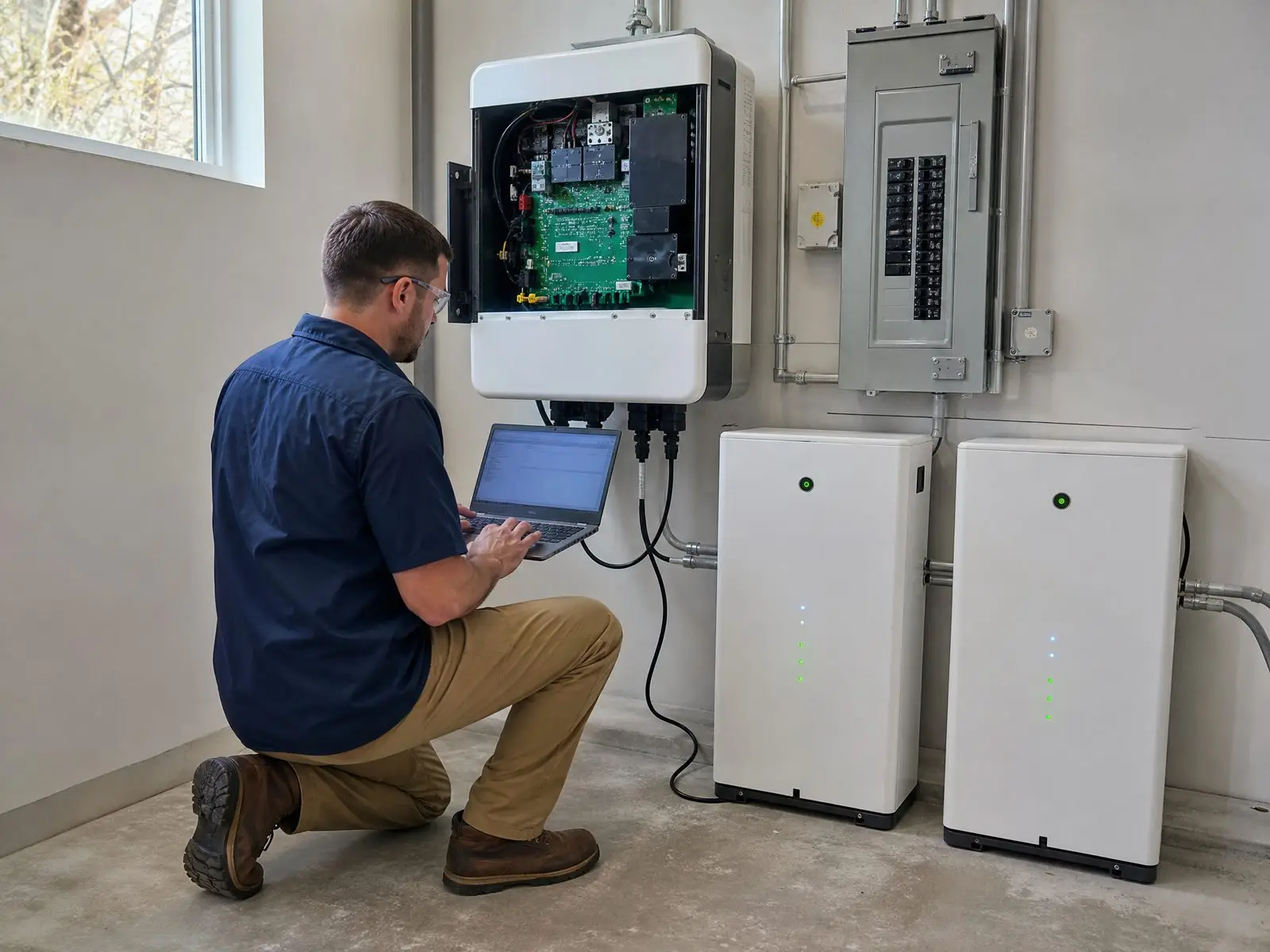
Communication is the layer that separates a compliant battery from a dispatchable one. SunSpec Alliance, which maintains the Modbus interface named in IEEE 1547-2018, has argued that the SunSpec Modbus map is the most direct route to compliance: certifying the communication interface before entering IEEE 1547.1 testing isolates functional defects early, and the same certification supports interoperability with IEEE 2030.5 networks used by utilities.
When SunSpec published that guidance in 2021, it noted that California, Hawaii, New York and Pennsylvania were moving to adopt IEEE 1547-2018, and cited EPRI’s expectation that states with substantial DER markets would mandate compliance starting as soon as mid-2022. Four years on, the practical consequence is that a distributor selling into multiple states needs a product whose communication layer is documented well enough to satisfy the strictest utility in the territory, not the average one.
For a VPP aggregator, the minimum ask is concrete: a published register map, a certified SunSpec Modbus implementation, an IEEE 2030.5 interface where the programme requires it, and a documented command path for charging, discharging and export limits. Without those, the asset is a battery that a software platform cannot safely control.
Where UL 1741 SB Ends and Other Requirements Begin
Compliance is a chain, and each link is owned by a different document. Buyers who treat UL 1741 SB as the whole chain end up with a certificate that satisfies nobody at the permitting desk.
- UL 9540 covers the energy storage system as an assembly; UL 9540A covers the thermal-runaway fire testing that feeds it. Neither is replaced by UL 1741 SB.
- NEC Article 705 and 706, including the power-control-system provisions in 705.13, govern how the system is wired and how export is limited at the service — an installation question, verified by the AHJ.
- State interconnection rules and utility tariffs set the settings profile, the application sequence and the commissioning tests. These differ by jurisdiction and change on their own schedule.
- Local fire and building codes set separation, signage and room requirements that no electrical certificate can satisfy.
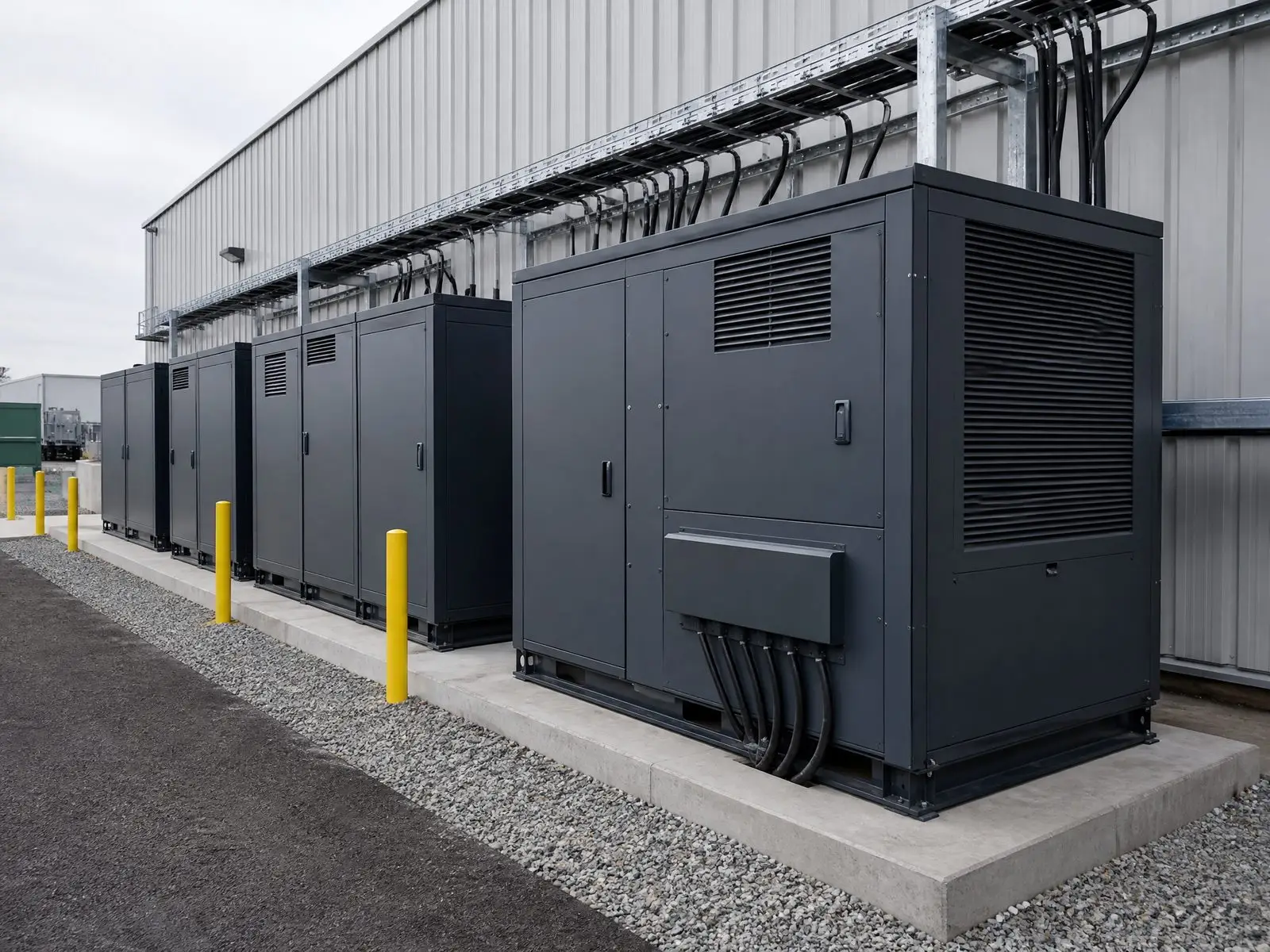
For commercial and industrial projects, this is where a supplier’s documentation quality becomes a schedule risk. A missing settings file delays commissioning by weeks; a missing UL 9540A summary report can stop a project before the equipment ships. Our commercial and industrial storage systems are specified with these documents in the pack precisely because the review happens before delivery, not after.
The Document Pack Every Buyer Should Demand
If you take one thing from this article, take the checklist. Ask for all eight items before you issue a purchase order, and treat a missing item as a schedule risk rather than an administrative detail.
- Certificate of compliance naming the exact model numbers you are buying — not the product family.
- Firmware revision the certificate was issued against, plus the vendor’s written policy for updates that affect grid-support behaviour.
- Utility default settings profile as a document you can hand to an interconnection engineer: voltage and frequency trip points, ride-through curves, volt-var and volt-watt breakpoints.
- SunSpec Modbus register map with model numbers and the points actually implemented.
- IEEE 2030.5 statement if the target utility or programme requires it.
- CEC listing evidence for California projects, captured from the state list rather than from a brochure.
- Label and nameplate photograph showing the listing mark on production hardware.
- Power-control-system and export-limit description for NEC 705.13 reviews, including how the limit is enforced and logged.
Certification Pitfalls We See in 2026 RFQs
Three issues come up often enough to be worth naming. The first is the “SA for SB” substitution: a supplier quotes a UL 1741 SA certificate and describes the product as 1547-compliant. The functions overlap but the certification path does not, and utilities increasingly check the supplement. The second is a certificate that has lapsed or was issued to a superseded edition of the standard, which is easy to miss because the PDF looks official. The third is a certificate held by a trading company rather than the manufacturing entity, which becomes a problem when the utility or the insurer asks who is responsible for the tested configuration.
None of these are exotic. All of them are visible in a fifteen-minute document review — provided the buyer asks for the documents before the deposit, when the leverage still exists.
How to Specify UL 1741 SB in an RFQ
Vague language produces vague answers. A specification clause that actually works looks like this:
“Inverter shall hold a current UL 1741 Supplement SB certificate covering the exact models offered, tested to IEEE 1547-2018 as amended by 1547a-2020. Supplier shall provide the certificate, the tested firmware revision, the utility default settings profile, and the SunSpec Modbus register map with the quotation. Units shall ship configured to the settings profile agreed for the project state, and any firmware change affecting grid-support functions shall be notified in writing before shipment.”
That clause does three things: it ties the certificate to the hardware you receive, it makes the settings a deliverable rather than a phone call, and it creates a notification obligation. For multi-state distribution, add a requirement that the vendor confirm which abnormal operating performance category each profile corresponds to, because that is the detail that decides whether a single SKU can serve California, Texas and New York without re-testing.
Where the inverter is paired with our solar inverter range or a home energy system, the certificate, the settings file and the register map are issued as one pack, and OEM and ODM programmes can carry the buyer’s own model naming without breaking the listing — a detail that matters for distributors building a private label line. Volume buyers working through wholesale and distribution should ask for the pack on the first quotation, not at the first commissioning.
Frequently Asked Questions
Is UL 1741 SB the same as UL 1741?
No. UL 1741 is the base safety standard for inverters and interconnection equipment. Supplement SB adds evaluation of the grid-support functions required by IEEE 1547-2018. A product certified only to the base standard has not demonstrated the ride-through, volt-var, volt-watt or frequency-watt behaviour that most U.S. utilities now require for interconnection.
Do battery-only storage systems need UL 1741 SB?
Any storage system that exports to, or operates in parallel with, the grid through a power conversion system needs an inverter certificate that the utility accepts. A system that never parallels the grid is outside interconnection scope, although it still needs product safety certification.
Can I still install a UL 1741 SA inverter?
Sometimes, depending on the utility’s tariff and system size, but the window is closing. Utilities that adopted IEEE 1547-2018 profiles generally require the newer certification for new applications. Confirm the current rule for the territory in writing before quoting.
What is the difference between UL 1741 SB and UL 9540?
UL 1741 SB evaluates the inverter’s safety and grid-support performance. UL 9540 evaluates the complete energy storage system as an assembly, and UL 9540A evaluates thermal-runaway fire behaviour at cell, module, unit and installation level.
Does UL 1741 SB cover virtual power plant participation?
It covers the grid-support behaviour and, through the associated communication certification, the interoperability that VPP participation depends on. It does not certify the aggregator’s software, the programme telemetry requirements or revenue-grade metering.
Conclusion
UL 1741 SB has become the dividing line between storage hardware that can be interconnected and hardware that can be dispatched. In 2026, with municipal VPP programmes signing 15-year contracts and optimisation software claiming measurable export revenue, the certificate alone is no longer sufficient evidence — the firmware, the settings profile and the communication map have to travel with it. Buyers who make those four items a condition of the purchase order get a system that commissions on the first attempt. Buyers who accept a brochure claim get a schedule problem that surfaces at the worst possible moment.
If you are specifying storage for a U.S. project and need the certificate pack, the settings profile and the register map in one document set, request a quote and tell us the state and utility — we will send the compliance package with the pricing.
Sources
- IEEE Standards Association, IEEE 1547-2018 — Standard for Interconnection and Interoperability of Distributed Energy Resources with Associated Electric Power Systems Interfaces, published 6 April 2018; amendment 1547a-2020. standards.ieee.org
- U.S. Department of Energy, Office of Energy Efficiency and Renewable Energy, Solar Integration: Inverters and Grid Services Basics. energy.gov
- SunSpec Alliance, Get Ready for the Countdown to UL 1741 Certification, 6 July 2021. sunspec.org
- California Energy Commission, Solar Equipment List — grid-support inverter listings. solarequipment.energy.ca.gov
- pv magazine USA, Budderfly plans 150 MW municipal VPP with solar, storage in U.S. cities, 21 October 2026. pv-magazine-usa.com
- pv magazine USA, Embracing the great potential of VPPs, 28 October 2026, and Lunar Energy says it saved California customers a ton of money this summer, 28 October 2026. pv-magazine-usa.com
This article covers engineering and certification practice, not legal, tax or interconnection advice. Utility requirements vary by territory and change frequently — confirm the applicable rule with the interconnecting utility before specifying equipment.