
Last updated: October 21, 2026 · Reflects NFPA 855 (2026) and UL 9540A, 6th edition
UL 9540A Edition 6 moves the decisive fire test to the installation level, and the 2026 edition of NFPA 855 now points code authorities to exactly that data. For anyone specifying, importing, or permitting stationary storage in the United States, the consequence is blunt: a unit-level report from the previous edition no longer answers the question a fire marshal or underwriter will ask about a multi-cabinet site. What follows: what changed, what to demand, how to read the answers.
Ruihan Energy manufactures solar inverters, LiFePO4 batteries, portable power stations and residential and commercial storage systems for the U.S. market, and supports buyers through documentation review during project specification.
What UL 9540A Edition 6 Changes
Start with the distinction behind most procurement mistakes. UL 9540A is a test method, not a listing standard: it prescribes how to measure thermal runaway and fire propagation at four escalating scales — cell, module, unit, installation. UL 9540 is the product safety standard a system is certified against. A supplier can hold a valid UL 9540 certificate and still hold UL 9540A data that no longer matches your installation.
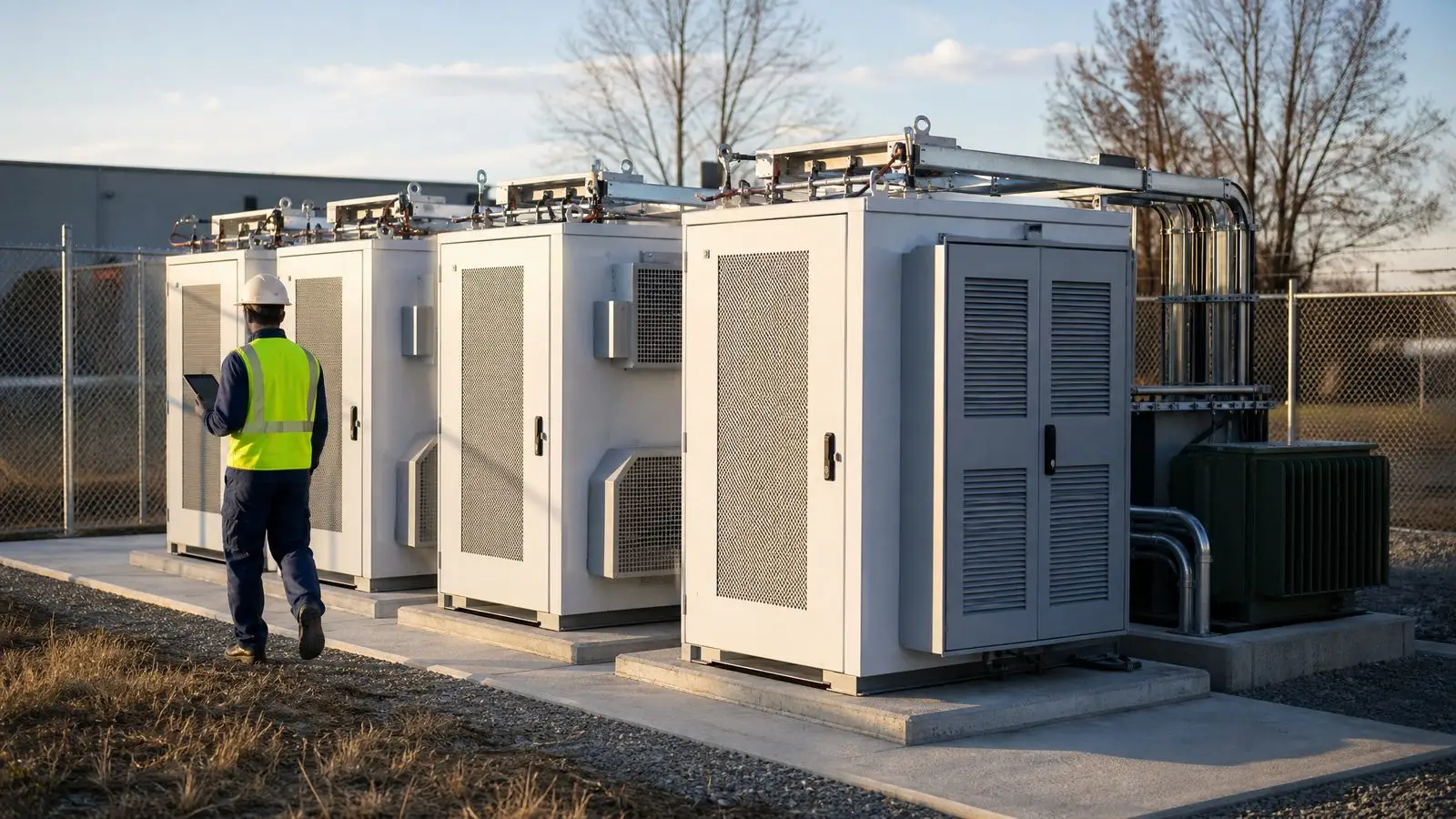
UL 9540A Edition 6 changes the fourth scale. Under the fifth edition, the installation-level test evaluated the performance of the fire protection system along with heat and gas release rates. Under UL 9540A Edition 6, that installation-level step becomes a large-scale fire test, and the method introduces a more demanding fire scenario plus an assumption of a post-deflagration condition. In UL Solutions’ own description, the purpose is to evaluate enclosure design, separation distances, and — for indoor systems — the effectiveness of building-based fire suppression. That is a shift from characterising a product to characterising a layout.
One detail matters commercially because it is often misquoted. UL 9540A Edition 6 does not delete unit-level testing: UL Solutions states it is still required for residential BESS, and for non-residential BESS that rely on an active Thermal Runaway Propagation Prevention System (TRPPS). What changes is that unit-level evidence alone no longer settles larger, grouped, or indoor installations.
| Test level | Fifth edition (2025) | Sixth edition (2026) |
|---|---|---|
| Cell | Thermal runaway characteristics; gas composition and flammability | Same scope |
| Module | Propagation tendency; heat and gas release rate; deflagration risk | Same scope |
| Unit | Fire spread between modules; re-ignition potential | Retained for residential BESS and for non-residential BESS with an active TRPPS |
| Installation | Effectiveness of the fire protection system; heat and gas release; deflagration or re-ignition risk | Large-scale fire test using a more demanding scenario and a post-deflagration assumption; evaluates enclosure design, separation distances, and indoor building suppression |
Read the bottom row as the commercial message: the installation step is no longer a performance check on a protection system but a fire test on a layout.
Source: UL Solutions, UL 9540A Test Method for Battery Energy Storage Systems (accessed October 2026).
UL 9540, UL 9540A and UL 9540B at a Glance
| Standard | What it is | What it gives you |
|---|---|---|
| UL 9540 | Product safety standard for energy storage systems and equipment | A listing for the system as built |
| UL 9540A | Test method for thermal runaway and fire propagation, from cell to installation level | Fire and gas data tied to a specific layout |
| UL 9540B | Test method created for residential BESS at the request of fire service organisations | Residential-specific fire performance evidence |
UL 9540B does not replace UL 9540A for non-residential systems; it covers the residential case fire services found under-served.
Why This Is Landing Now: Rooftop Growth Meets Peak Demand
Compliance cycles rarely tighten in a vacuum. Two conditions are pushing storage closer to people and closer to the meter, and both are visible in this month’s federal data.
On 16 October 2026, the U.S. Energy Information Administration reported that generation from small-scale solar — systems under one megawatt — rose from 18,812 GWh to 92,979 GWh over the last decade, roughly a fourfold increase. California, Arizona, Texas, and Florida account for the largest volumes, with New York ranking fifth on capacity growth driven by technology improvement and state incentives (EIA, 16 October 2026). Every one of those arrays is a candidate for a battery, and a meaningful share of those batteries get mounted on a wall, in a garage, or in a utility closet rather than on an open pad.
On 15 October 2026, EIA reported that PJM, ERCOT, and the Southwest Power Pool all set records for peak hourly load this summer, based on Form EIA-930 data (EIA, 15 October 2026). Record peaks translate into demand-charge pressure, and demand-charge pressure is what turns a warehouse or a cold-storage facility into a battery buyer. Those projects are commercial and industrial, they are frequently multi-cabinet, and a growing number are installed indoors to protect equipment from weather and theft.
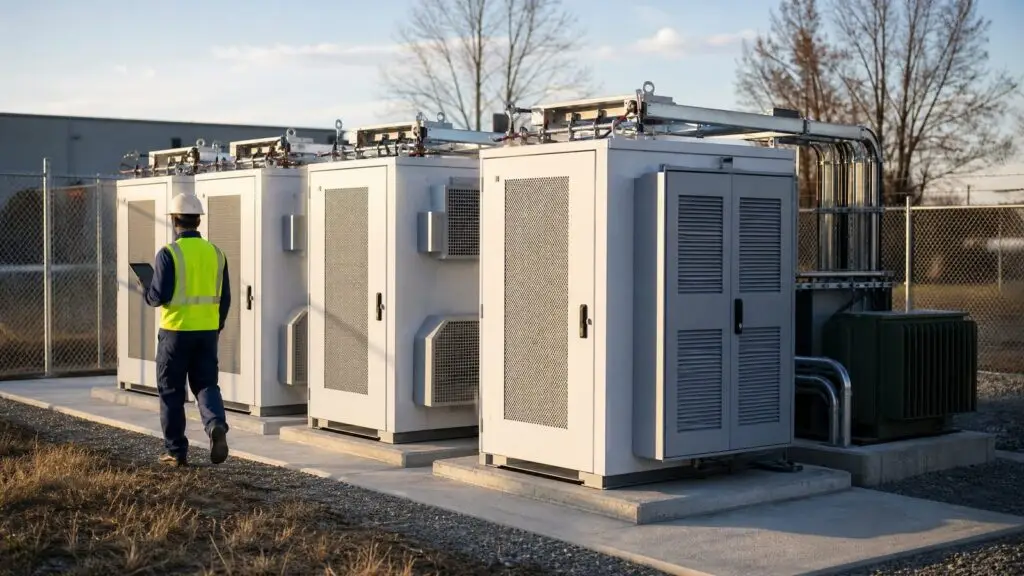
The result is the pattern UL 9540A Edition 6 was written for: more enclosures per site, more indoor rooms, more units grouped within metres of each other. The American Clean Power Association frames large-scale fire testing the same way — assume a full fire in one enclosure, then verify it does not spread to nearby units when the system is installed as the manufacturer instructs (ACP, May 2026).
NFPA 855 (2026) and Annex G.11
NFPA 855, Standard for the Installation of Stationary Energy Storage Systems, is the document that most U.S. fire code adoption routes through. The 2026 edition is the current edition listed by NFPA (NFPA, accessed October 2026). Two features of that edition are worth understanding before you talk to an authority having jurisdiction (AHJ).
NFPA 855 (2026) and UL 9540A Edition 6 move in the same direction, which is why the two are read together. The first feature to understand is Annex G.11: UL Solutions describes it as new guidance on large-scale fire testing for scenarios where fire could spread from one BESS to another, covering how to initiate a developed fire condition, evaluate separation distances, and account for active fire protection. Annexes are guidance rather than mandatory text, but they are what AHJs and fire-protection engineers reach for when they need a defensible method — which is why UL Solutions can call UL 9540A the only consensus standard explicitly cited in NFPA 855 for large-scale fire testing.
The second is adoption arithmetic. A standard being current is not the same as a standard being enforced in your jurisdiction. Errata 855-26-1, issued 13 October 2025, corrects reference rows in Table 9.7.6, the table of electrochemical ESS technology-specific requirements covering exhaust ventilation, spill control, neutralisation, safety caps, thermal runaway, and explosion control and prevention (NFPA errata, 2025). Amendments and errata are exactly the kind of detail that decides whether your submittal matches the edition in force. Ask the AHJ which edition has been adopted, in writing, before you finalise a layout.
What a Test Report Proves — and What It Does Not
A UL 9540A Edition 6 report is evidence about a specific configuration. UL Solutions documents testing that mirrors real installations: outdoor containerised systems, indoor battery rooms, and sites where multiple enclosures are grouped or stacked. The resulting reports are written so that code authorities can evaluate installation proposals, review alternative design approaches permitted under fire and building codes, and judge whether manufacturer-recommended clearances are appropriate (Solar Power World, April 2026).
Three limits follow. The report binds to a tested layout — enclosure count, spacing, orientation, and stacking matter as much as the battery model. It binds to a tested build — a cell supplier change, a module redesign, or a firmware change can invalidate the premise. And it binds to a scope — an outdoor containerised test says little about a basement room with a shared wall. The right first question is not “does it pass” but “does this configuration match mine”.
The Eight-Document Pack to Request Before You Sign
This is the list we send buyers who ask what a compliant submittal contains; every item has a failure mode attached.
- UL 9540 certificate for the exact system model, showing the edition and issue date — not a certificate for a component inside the cabinet.
- UL 9540A Edition 6 report covering cell, module, and the installation-level large-scale fire test, with the tested configuration described in the front matter.
- Unit-level report or TRPPS basis if the supplier markets thermal runaway propagation prevention — the claim needs a test basis, because unit-level testing still applies to non-residential systems with an active TRPPS.
- Layout drawing that matches the test: number of enclosures, spacing, orientation, whether units are stacked, and distance to the nearest occupied structure.
- Installation manual with clearances in the same revision as the tested build, including indoor room requirements if you are installing inside.
- PCS and inverter listing: UL 1741 with Supplement SB, demonstrating compliance with IEEE 1547-2018, plus the default settings the utility will see.
- California Energy Commission listing status if the project is in California — investor-owned utilities require equipment from the CEC solar equipment lists before they will approve a grid connection.
- Change-control statement: cell supplier, module architecture, and detection firmware versus the tested build, signed by the manufacturer’s engineering contact rather than sales.
Residential Versus C&I: Where the Rules Bite Differently
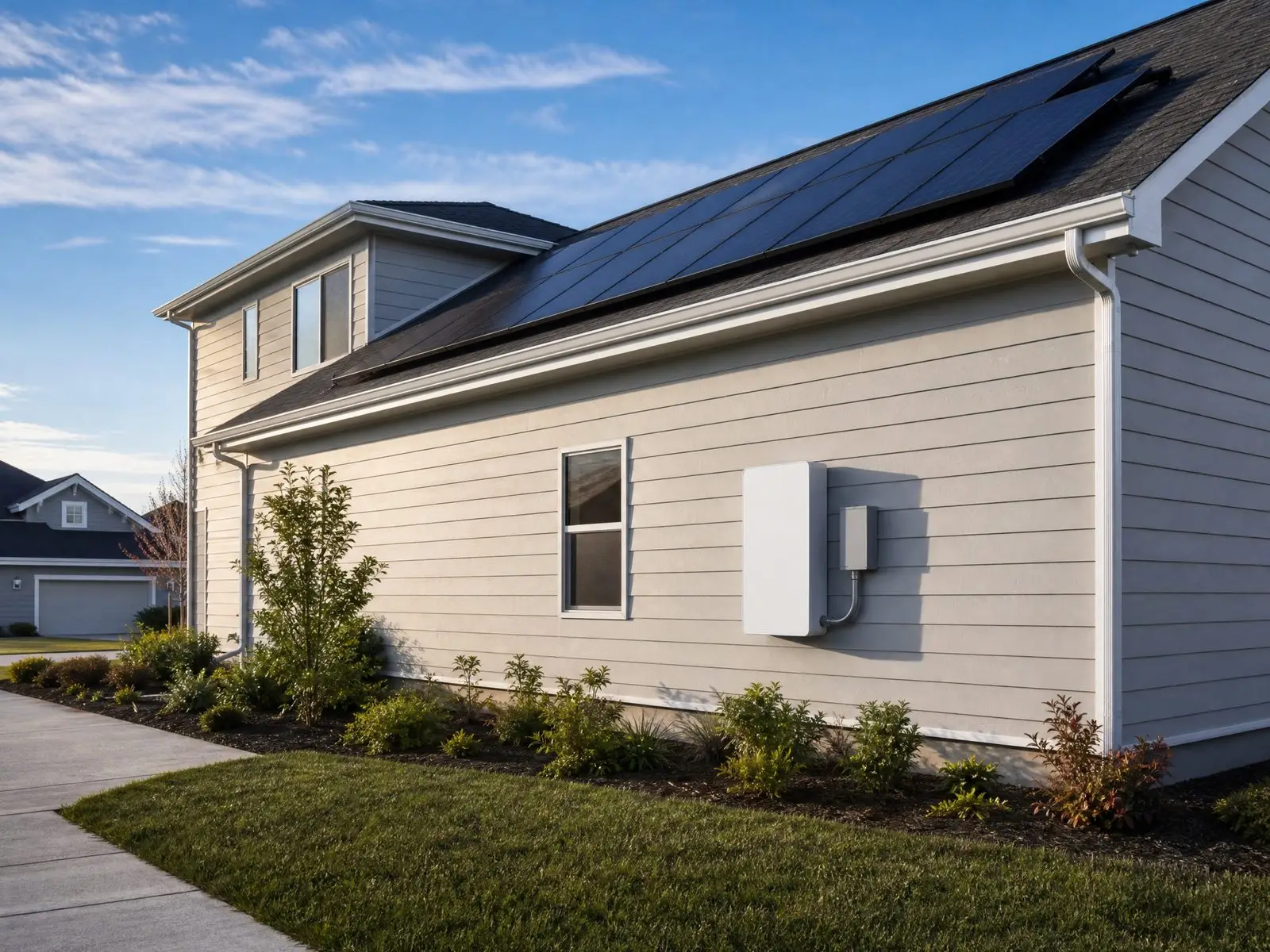
For a single-family retrofit, permitting still centres on unit-level data and manufacturer clearances: mounting surface, egress path, and whether the unit sits against a wall that separates living space — which is why unit-level testing is retained. UL 9540A Edition 6 becomes decisive when units are grouped on one wall, installed in a garage with a shared ceiling, or standardised across a townhome block.
For commercial and industrial projects the sequence flips. Multi-cabinet layouts, indoor battery rooms, and stacked arrangements are precisely the configurations the installation-level large-scale test was written to characterise. A C&I buyer who receives only a unit-level report is holding half the file. Our commercial and industrial storage systems are documented at the system level for this reason and are quoted with the tested enclosure configuration attached.
For Ruihan Energy, that means residential and commercial storage is documented at the system level, so the tested enclosure configuration travels with the quotation instead of being reconstructed at permitting.
How to Read a UL 9540A Report in Ten Minutes
You do not need to be a fire engineer to triage a report. Read six things.
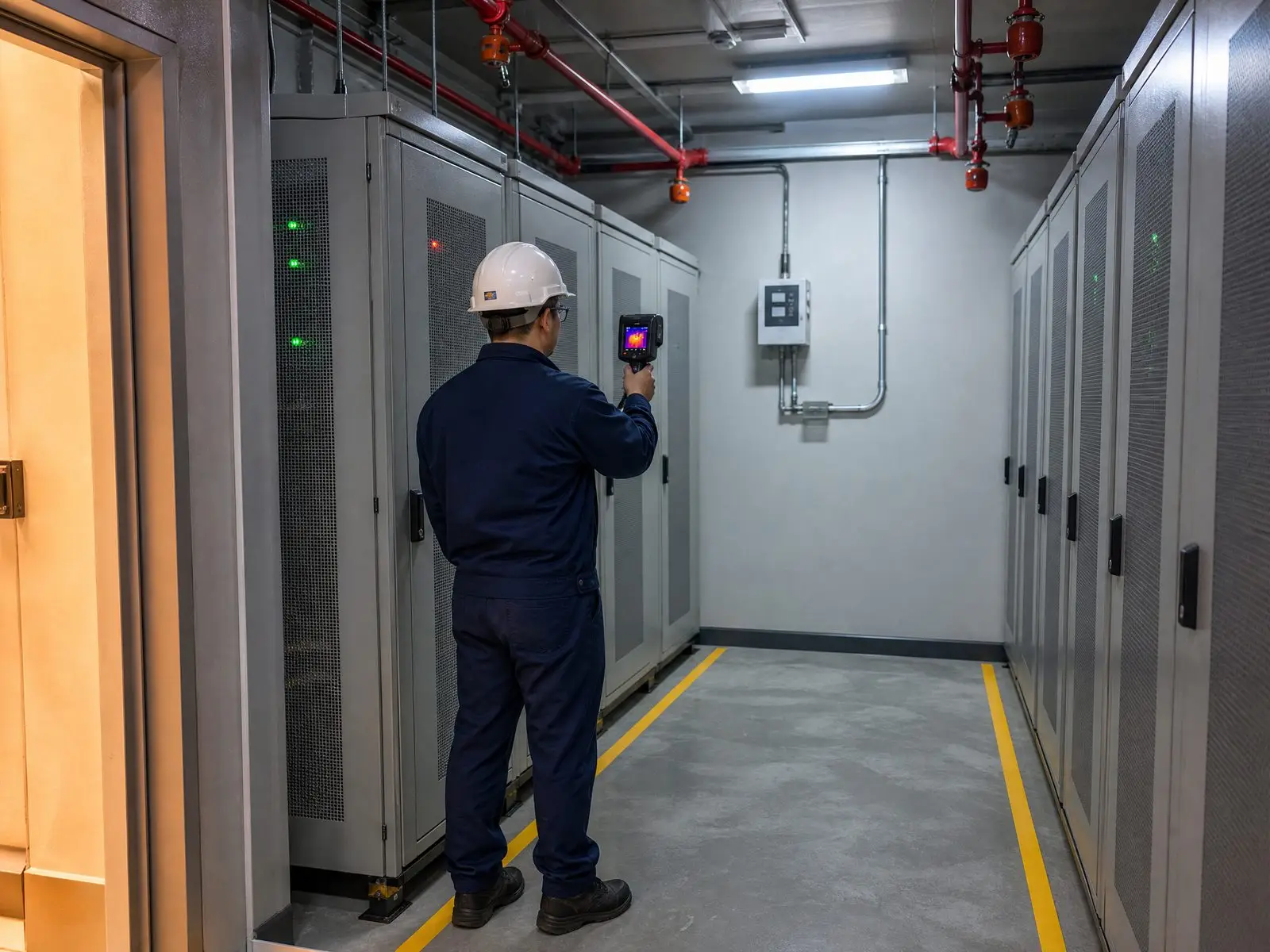
- Cover page: edition number, issue date, and the model designation. If it says fifth edition and your AHJ has adopted the 2026 code cycle, ask whether a UL 9540A Edition 6 report exists for that model before going further.
- Configuration table: how many units were tested, at what spacing, indoor or outdoor, stacked or in a row. Compare it with your single-line drawing, not the sales deck.
- Instrumentation summary: whether heat release, gas generation, and deflagration were measured, and whether venting was assessed. Gas is what injures responders, not flame.
- Initiation method: how the failure was started. A test started by a single cell heater differs from one that assumes a developed fire.
- Conclusion language: look for what the report explicitly does not cover — the limitations section is usually the most honest page.
- Revision history: whether the report supersedes an earlier edition for the same model. Superseded reports circulate for years.
The grid side is a separate compliance stream. UL 1741 with Supplement SB is the inverter certification route that demonstrates IEEE 1547-2018 capability, including the ride-through and reactive power functions a utility requires before it allows export. A UL 9540 listing covers the inverter only when it was tested as part of that system. If you pair a separately sourced inverter with a battery cabinet, expect to document both, and expect interconnection review to ask who owns the settings. Our hybrid and grid-tie inverters ship with listing documentation and default profiles; the off-grid and hybrid inverter selection guide covers the sizing side.
Where the Practical Risk Sits for Importers and OEM Buyers
The commercial exposure is not usually a failed test. It is a test that passed for a different configuration than the one that ships, and a UL 9540A Edition 6 report is only as useful as its configuration table is honest. Importers who private-label a cabinet often inherit a report written for the factory’s own enclosure with a different fan layout, a different module count, or a different detection threshold. On paper the file is complete. On site, the AHJ compares the drawing to the tested configuration and the approval stalls — usually in the week the project is supposed to energise.
Two habits prevent most of this. Require the tested configuration as an appendix drawing that travels with the quotation, so sales and engineering cannot drift apart. And treat any post-test change as a compliance event rather than a manufacturing convenience — cell supplier substitution is the most common trigger, and the one most often handled informally. The OEM and ODM manufacturing process documents this handover for private-label programmes.
Residential products face a lighter version of the same problem: units sold through distribution are often installed by contractors who never see the test report, so the home energy storage systems range ships with a one-page clearance summary in the carton.
Frequently Asked Questions
Is UL 9540A the same as UL 9540?
No. UL 9540A is a test method for evaluating thermal runaway and fire propagation across cell, module, unit, and installation levels. UL 9540 is the product safety standard a system is certified to. A compliant project typically needs both: a UL 9540 listing for the product and UL 9540A data that matches the installation.
Does UL 9540A Edition 6 apply to residential batteries?
The edition applies to the test method as a whole. For residential BESS, UL Solutions states that unit-level testing is still required. The installation-level large-scale fire test becomes the deciding document when units are grouped, stacked, or installed indoors against shared construction.
Can we still submit an Edition 5 report?
That depends on the edition your AHJ has adopted and on what the project needs to demonstrate. Older reports remain valid evidence of what they tested. They do not address the developed-fire and post-deflagration scenario that the 2026 code cycle points to, so expect questions on multi-cabinet and indoor layouts.
Who actually requires this: the fire code or the utility?
Both, for different reasons. The fire code and AHJ govern installation and separation, and NFPA 855 cites UL 9540A as the large-scale fire test method. The utility governs interconnection and will ask for inverter listing and settings. Insurance underwriters frequently ask for the same documents again.
What if our site layout does not match the tested configuration?
You have three options: change the layout to match, use the report to support an alternative design through the AHJ, or commission project-specific testing. The first is cheapest, the second is common and legitimate, and the third is slow. Decide before the equipment order, not after.
The Takeaway
UL 9540A Edition 6 did not raise the bar on battery chemistry. It raised the bar on evidence about layouts — and for Ruihan Energy that means quoting a tested enclosure configuration, not a cabinet model. The suppliers who will clear 2027 permitting cycles without friction are the ones who can hand a buyer a tested configuration, a drawing that matches it, and a change-control statement that survives an engineering review. Everyone else will be explaining, in the week before energisation, why the file describes a cabinet that is not on the pad.
If you are specifying residential or C&I storage and want the documentation pack checked against your site layout, send us the project details and we will map the tested configuration to your drawing. Buyers comparing supply options can also start from our residential energy storage and LiFePO4 battery ranges.
This article is technical and regulatory guidance for equipment selection. It is not legal, permitting, or tax advice; confirm requirements with your authority having jurisdiction, utility, and licensed engineer.
Sources
- UL Solutions. UL 9540A Test Method for Battery Energy Storage Systems (BESS). Accessed 22 October 2026.
- NFPA. NFPA 855, Standard for the Installation of Stationary Energy Storage Systems — 2026 edition. Accessed 22 October 2026.
- NFPA. Errata 855-26-1, Table 9.7.6. Issued 13 October 2025.
- U.S. Energy Information Administration. U.S. small-scale solar generation has quadrupled in the last decade. 16 October 2026.
- U.S. Energy Information Administration. PJM, ERCOT, and SWPP all set peak load records this summer. 15 October 2026.
- American Clean Power Association. Large-Scale Fire Testing for Battery Energy Storage Systems. May 2026.
- Electrical Construction & Maintenance. UL Solutions debuts new testing protocol for residential battery energy storage systems. 1 July 2024.
- Solar Power World. UL Solutions enhances fire testing for large-scale battery projects. 24 April 2026.