
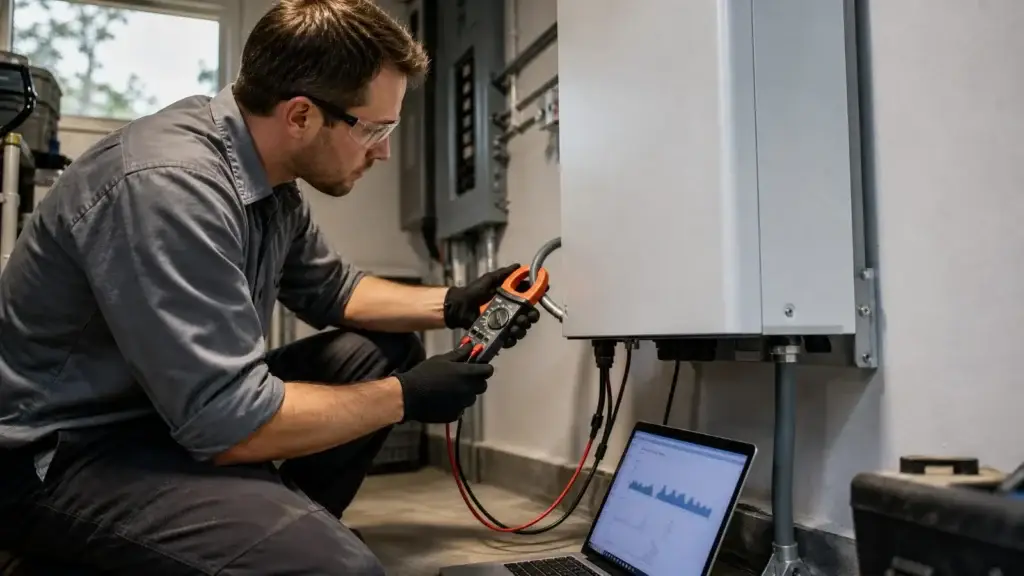
LiFePO4 cycle life has become a purchasing decision, not a datasheet footnote. With U.S. residential battery attachment at 49% and 30–35% of home batteries now enrolled in virtual power plant dispatches (pv magazine USA, 3 November 2026), storage is cycled for revenue, not only for outages. The cycle count on the brochure is rarely the one your warranty enforces. This guide separates what safety certification actually proves from what a performance claim must prove, and lists the documents to demand before signing a purchase order.
Why LiFePO4 cycle life moved to the top of the 2026 specification sheet
The U.S. residential market changed shape in 2026. Installation volume fell 19% year over year, yet roughly 1 GWh of residential storage was installed in the second quarter and the national attachment rate reached 49%, according to Ohm Analytics data presented at pv magazine USA Week 2026 (pv magazine USA, 3 November 2026). California NEM 3.0 projects attach storage at about 80%, and Texas storage installations rose 132% year over year, with standalone retrofits accounting for roughly 75% of that growth.
The second change is operational. Ohm Analytics estimates that 30% to 35% of residential batteries are enrolled in a VPP program, and Tesla reported 2.5 GW — nearly 5 GWh — of enrolled capacity plus more than 600 MW of coordinated dispatch in California last summer (pv magazine USA, 3 November 2026). A battery sold as outage protection is now a grid asset cycling on someone else’s schedule.
Every one of those dispatches is a cycle. When a battery only waits for an outage, calendar aging sets the clock and throughput barely matters. When it performs daily solar shifting plus a few dozen grid events a year, throughput becomes the dominant degradation driver — and the gap between a 6,000-cycle and an 8,000-cycle cell becomes replacement cost inside the warranty period. That is why LiFePO4 cycle life now sits next to price on the comparison sheet, and why our residential energy storage systems are specified around it.
UL 9540 and UL 1973 certify safety, not staying power
The most common procurement misunderstanding in this category is documented in the standards themselves.
UL 1973 covers battery systems for stationary applications such as PV, wind and UPS duty, evaluating the system’s ability to withstand simulated abuse conditions under the manufacturer’s stated charge and discharge parameters. Section 1.6 is explicit: it “does not evaluate the performance (i.e. capacity measurements under various discharge conditions) or reliability (i.e. capacity measurements under various environmental conditions) of these devices” (UL 1973, Edition 3, 25 February 2022). A UL 1973 listing is a safety credential, not a degradation forecast.
UL 9540 works one level up. It covers the energy storage system as an integrated assembly — at minimum a storage function plus a protective function — and evaluates the compatibility and safety of the components combined into it, including AC and DC architectures and ancillary modes such as voltage support, frequency regulation, volt-var, capacity reserve and energy shifting (UL 9540, Edition 3, published 28 June 2023, revised 7 March 2025). The standard ties permitted energy capacity to fire-test evidence: residential systems are limited to 20 kWh unless they pass the UL 9540A unit-level test, non-residential systems to 50 kWh unless they pass the installation-level test, with no ceiling where cell-level criteria are met, or in remote outdoor locations more than 30.5 m (100 ft) from exposures.
A UL 9540 listing tells you the system may be installed safely under NFPA 70 and NFPA 855, and how much energy is permitted in a given location. It says nothing about how much energy the same system will deliver in year eight. Grid-interconnection compliance sits in a separate document — the inverter side is covered in our UL 1741 SB interconnection checklist.
| Document | What it actually verifies | What it does not verify |
|---|---|---|
| UL 1973 (Ed. 3, 2022) | Battery system withstands simulated abuse under the manufacturer’s stated charge/discharge parameters | Capacity retention, cycle endurance, reliability over time (excluded by scope, clause 1.6) |
| UL 9540 (Ed. 3, 2023; rev. 2025) | System-level integration and compatibility; permitted energy capacity by test level; installation instructions | Throughput, degradation rate, warranty economics |
| UL 9540A | Thermal runaway fire propagation behaviour at cell, module, unit and installation level | Anything about usable life or efficiency |
| IEC 61427-1 / -2 | Endurance cycling methods and general requirements for renewable-energy storage (off-grid PV; on-grid) | Site-specific duty cycle, unless the test profile matches your application |
| Manufacturer cycle-life report | The claim itself: depth of discharge, C-rate, temperature and end-of-test retention | Independence, unless the lab and report are third-party and traceable |
The five numbers behind every LiFePO4 cycle life claim
A cycle count is meaningless without its test conditions: two suppliers can both print “6,000 cycles” and mean very different things.
| Variable | How it moves the number | What to demand in writing |
|---|---|---|
| Depth of discharge (DoD) | Deeper swings consume more of the cell’s usable life per cycle; a rating at 80% DoD does not transfer to 95% DoD operation | The DoD window tested, and the DoD window the warranty permits |
| Charge and discharge C-rate | Higher currents raise internal heating and lithium plating risk on charge, especially below 10 °C | Test C-rate for both directions, plus the maximum continuous rate at which the warranty stays valid |
| Ambient temperature | Cell aging accelerates with sustained heat; a chamber run at 25 °C understates ageing in a garage or a Texas mechanical room | Chamber setpoint and whether it is cell, module or cabinet ambient |
| End-of-test retention | The same cycle count looks better if the test stops at 70% of nameplate instead of 80% | The retained-capacity threshold and the measurement method (C-rate, temperature, cut-off) |
| SOC operating window | Holding cells at a high state of charge for months raises calendar fade; wide windows trade life for usable kWh | Allowed SOC band, rest strategy, and any derating applied above a stated temperature |
These variables interact: 6,000 cycles at 80% DoD, 0.5C and 25 °C to 70% retention is not equivalent to 6,000 cycles at 90% DoD, 1C and 35 °C to 80% retention, even though the headline figure is identical. When you specify a LiFePO4 battery, the test conditions belong in the technical annex, not a marketing PDF.
Duty-cycle math: from backup-only to VPP dispatch
LiFePO4 cycle life is consumed by throughput, and throughput follows how the system is operated. The table converts stated assumptions into equivalent full cycles per year — arithmetic, not field data — so a rating can be compared with a ten-year workload.
| Operating pattern | Assumed daily duty | Equivalent full cycles per year | Ten-year total |
|---|---|---|---|
| Outage backup only | ~10 full discharges per year, shallow | ~10 | ~100 |
| Daily solar self-consumption | 1 full cycle per day | 365 | 3,650 |
| Daily shifting + 40 VPP events at 50% DoD | 1 cycle + 20 equivalent cycles per year | ~385 | ~3,850 |
| Commercial two-cycle arbitrage | 2 full cycles per day | 730 | 7,300 |
Two conclusions follow. A 6,000-cycle rating is comfortable for a decade of daily residential shifting and tight for two-cycle commercial operation, where rated life can be exhausted before the term ends. And throughput caps matter as much as cycle counts: a 10 kWh pack cycling once a day moves 3,650 kWh a year — 36.5 MWh over ten years — which is what a megawatt-hour clause actually measures.
VPP participation adds a quality dimension on top of quantity. Third-party verification presented by the Connecticut Green Bank found that FranklinWH and Tesla fleets achieved participation rates above 90% during requested utility dispatches, while competing OEMs registered below 70% (pv magazine USA, 3 November 2026). For an aggregator that gap is revenue; for a buyer it is evidence of how well the battery, inverter and controls hold setpoints under real dispatch, and whether the vendor can produce the event logs a capacity claim depends on. Systems built for this duty are described in our home energy systems range.
How to verify LiFePO4 cycle life claims before you order
Ask for the test report, not the summary line. A usable report identifies the cell model and supplier, the module series/parallel configuration, the BMS firmware version, the enclosure thermal design, chamber temperature, both C-rates, the DoD window, the retained-capacity threshold and measurement method, cycles completed, and the run date. If the shipping SKU uses a different cell, BMS or thermal path than the tested unit, the report describes a product you are not buying.
For renewable-energy duty the closest comparable protocols are IEC 61427-1, covering secondary batteries for photovoltaic off-grid applications, and IEC 61427-2, covering on-grid electrical energy storage and its test methods. Both are endurance-cycling frameworks rather than pass/fail marks, which makes them useful for comparison: you can see whether the profile resembles your site’s charge and discharge pattern or a laboratory cycle no installer will reproduce.
Second-life modules need their own evidence trail. UL 1974, Evaluation for Repurposing or Remanufacturing Batteries (Edition 2, 2023), exists because a module leaving a vehicle or an early project carries no verifiable duty history. If repurposed cells are proposed, ask for the UL 1974 evaluation and a retained-capacity test on the specific lot.
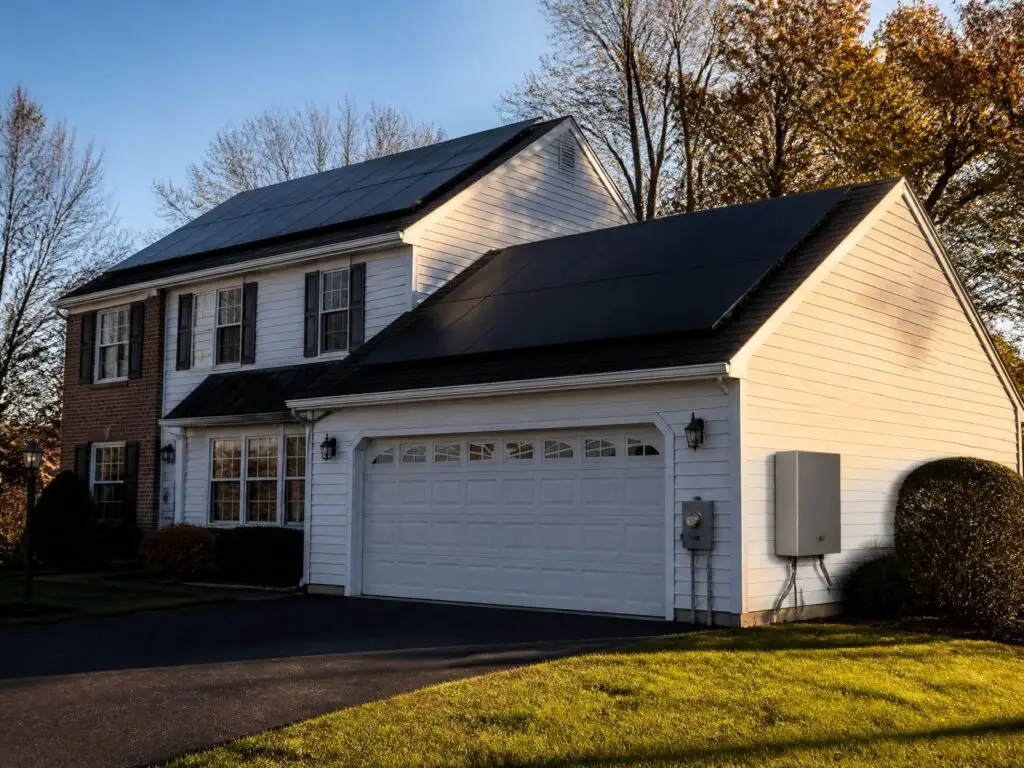
Red flags repeat: a cycle count with no temperature stated; a retention threshold that shifts between datasheet and warranty; a report whose part number differs from the quoted one; “lab tested” with no laboratory named; a warranty promising years while capping throughput below what the site will cycle.
The warranty clauses that decide your ten-year economics
LiFePO4 cycle life is enforced through warranty language, which is where projects quietly lose money. Six clauses carry most of the risk.
| Clause | What to ask for | Why it matters |
|---|---|---|
| Retained capacity threshold | The percentage of nameplate guaranteed at the end of term, and the test conditions used to measure it | A threshold measured at a gentle C-rate and 25 °C can be unreachable at the actual site |
| Throughput cap | The megawatt-hour limit, and whether VPP events and backup discharges count toward it | A year-based term with an unstated throughput cap may be void after three summers of dispatch |
| SOC window | The permitted operating band and the penalty for exceeding it | Marketers sell usable kWh; warranty engineers count cycles inside a narrower band |
| Temperature limits | Derating thresholds and whether the limit is ambient or cell-level | An unventilated garage or a metal cabinet in direct sun can void coverage without any visible fault |
| Augmentation | Whether adding modules mid-term is allowed, how capacity is recalculated, and who performs the work | Augmentation is the standard fix for a shortfall; if it voids the warranty, the fix is unavailable |
| Claims and transfers | BMS data retention period, who pays freight and labour, proration method, and transferability on sale or VPP enrollment | Most disputes are evidentiary, not technical; the fleet that cannot produce logs loses |
On commercial projects these clauses meet financing. If a lender’s model assumes a ten-year life and the throughput cap is reached in year eight, the shortfall becomes an equity problem, not a maintenance item. That is one reason quotes for what looks like identical capacity vary so widely — the assumptions behind them are covered in our breakdown of commercial battery storage cost per kWh. C&I systems for two-cycle duty are specified through our commercial energy system line, where warranty schedules follow the dispatch profile.
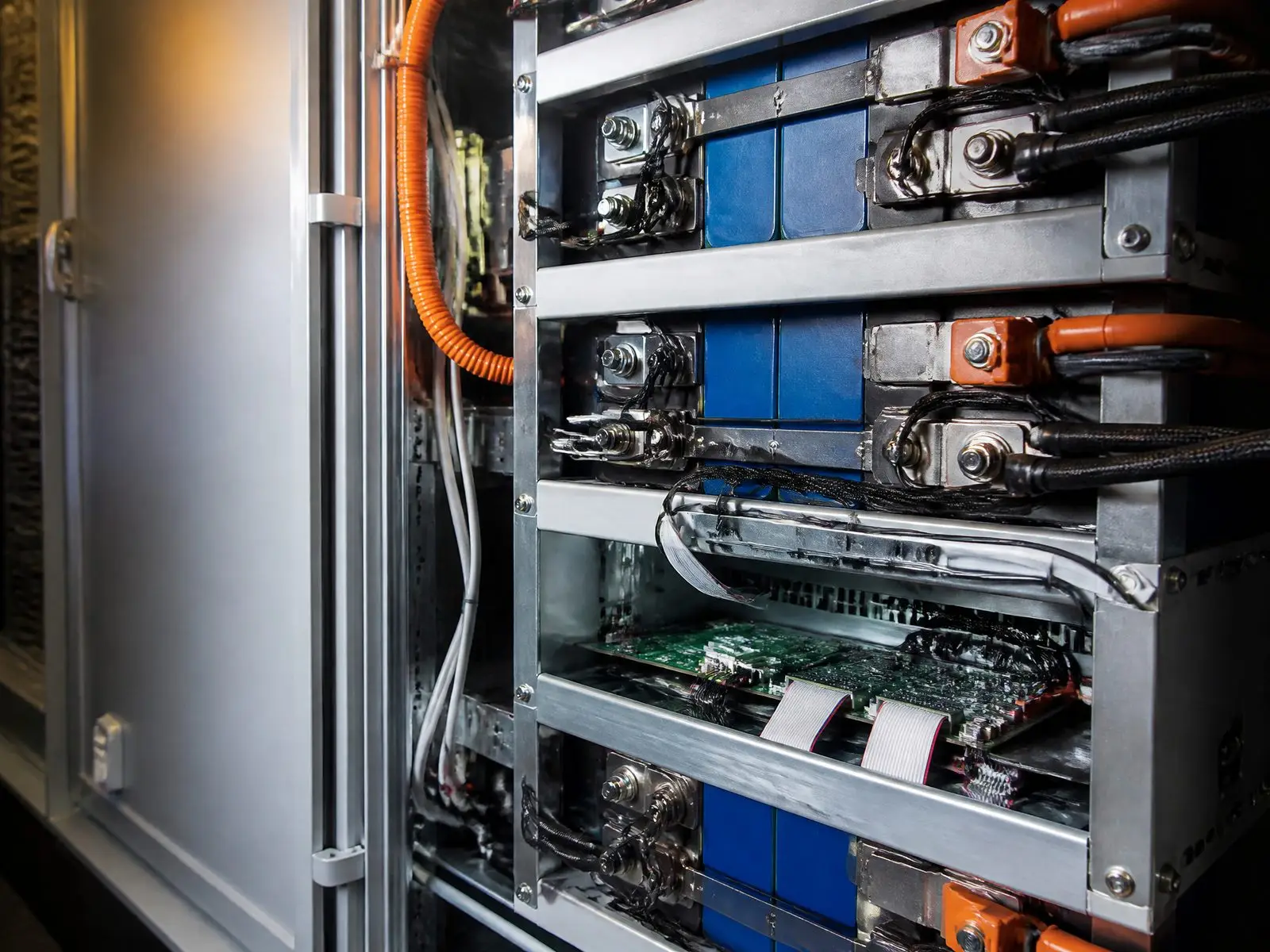
A buyer’s verification checklist
Use this list as a gate before issuing a purchase order; each item must be answerable with a document.
- System listing: UL 9540 certificate for the exact model, with permitted capacity and installation conditions.
- Module listing: UL 1973 certificate for the battery system inside the assembly, with edition and date.
- Fire-test evidence: UL 9540A summary showing the test level achieved and how it maps to your siting.
- Interconnection: UL 1741 SB / IEEE 1547 compliance for the inverter, plus the utility’s approved settings.
- LiFePO4 cycle life report: third-party or accredited-lab report stating DoD, C-rate, temperature, retention threshold and cycle count.
- Endurance protocol: IEC 61427-1 or 61427-2 report where the application is renewable-energy cycling.
- Warranty schedule: retained capacity by year, throughput cap in MWh, SOC band, temperature limits and derating.
- Augmentation terms: cost, lead time, form-factor continuity for the warranty term, and effect on coverage.
- Data access: BMS telemetry export, retention period and format, so a future claim is evidenced.
- Change control: written commitment that cell, BMS or thermal changes trigger a new test report, not a silent substitution.
What this means for distributors and OEM buyers in 2027
The signal is unambiguous: storage is sold against a revenue model now, not an outage model. With 49% national attachment, 80% in NEM 3.0 California projects and a third of home batteries in dispatch programs, the differentiator is no longer “does it have a battery” but “does the battery still perform in year eight.” Distributors carrying documentation-poor products inherit that risk long after the factory is paid.
For private-label and OEM programmes the response is to fix the document pack at specification stage: cycle-life test conditions in the technical annex, warranty schedules matched to the dispatch profile, and a change-control clause so a mid-series cell or BMS substitution cannot silently invalidate the data. Our OEM/ODM manufacturing process is built around that handover, including the reports a distributor needs locally; multi-state partners can review terms through our wholesale and distribution channel.
The inverter market went through the same discipline when smart-inverter requirements became mandatory: vendors that produced certificates and settings files on request won the projects. Cycle life is following that path.
Frequently asked questions
How long do LiFePO4 batteries actually last in home storage?
Duration is an output, not an input. A pack cycled once a day at moderate temperature inside its stated SOC window can plausibly reach a ten-year term at the guaranteed retention level; the same pack at two cycles a day in a hot enclosure consumes its rated cycles far sooner. Compare the retention threshold and throughput cap against your own duty cycle, not a generic lifespan claim.
Does UL 9540 certification prove LiFePO4 cycle life?
No. UL 9540 certifies integrated system safety and component compatibility, and sets permitted energy capacity from UL 9540A fire-test results. UL 1973, covering the battery system, excludes performance and reliability evaluation by scope. Safety listing and cycle-life evidence are separate documents; request both.
What does 6,000 cycles mean for a solar battery?
It means 6,000 cycles under the conditions named in the test — a defined depth of discharge, C-rate, temperature and end-of-test retention. At one full cycle per day that is roughly sixteen years of equivalent cycling; at two per day, roughly eight. Without stated conditions the number cannot be used for sizing or supplier comparison.
How many cycles per year does a VPP-enrolled battery run?
Start with the daily solar-shifting cycle, then add the equivalent cycles created by dispatch events. Forty events a year at 50% depth of discharge adds about twenty equivalent full cycles — modest alone, but events stress the system at times and rates the daily cycle does not, and generate the logs a warranty claim depends on. Confirm the warranty counts them.
Should I size storage for 70% or 80% end-of-warranty retention?
Size for the retention level the warranty guarantees, and run the economics at the lower figure if the supplier quotes both. A design that only works at 80% retention has no margin when the site runs hotter or cycles harder than modelled. Confirm the measurement method before treating the threshold as a design input.
The bottom line: safety certification tells you a system can be installed, while cycle-life evidence tells you whether it will still be worth owning at the end of the term — the difference between a warranty you can enforce and a datasheet you cannot. Incentive and programme figures above are market context, not tax, legal or investment advice.
If you are specifying LiFePO4 storage and want the test reports, listings and warranty schedule reviewed against your actual duty cycle, request a quote and our engineers will work from your load profile rather than a headline cycle count.
Sources
- pv magazine USA, “Storage-first models and VPP integration define post-ITC solar market,” 3 November 2026 — pv-magazine-usa.com
- UL Standards & Engagement, ANSI/CAN/UL 1973, Batteries for Use in Stationary and Motive Auxiliary Power Applications, Edition 3, 25 February 2022 (scope, clause 1.6) — shopulstandards.com
- UL Standards & Engagement, ANSI/CAN/UL 9540, Energy Storage Systems and Equipment, Edition 3, 28 June 2023, revised 7 March 2025 — shopulstandards.com
- UL Standards & Engagement, UL 1974, Evaluation for Repurposing or Remanufacturing Batteries, Edition 2, 2023 — shopulstandards.com
- Standards Council of Canada, IEC 61427-1:2013, Secondary cells and batteries for renewable energy storage — photovoltaic off-grid applications; IEC 61427-2:2015 covers on-grid applications — scc-ccn.ca
- U.S. Energy Information Administration, “The share of solar generation with co-located battery storage is increasing,” Today in Energy, 30 October 2026 — eia.gov