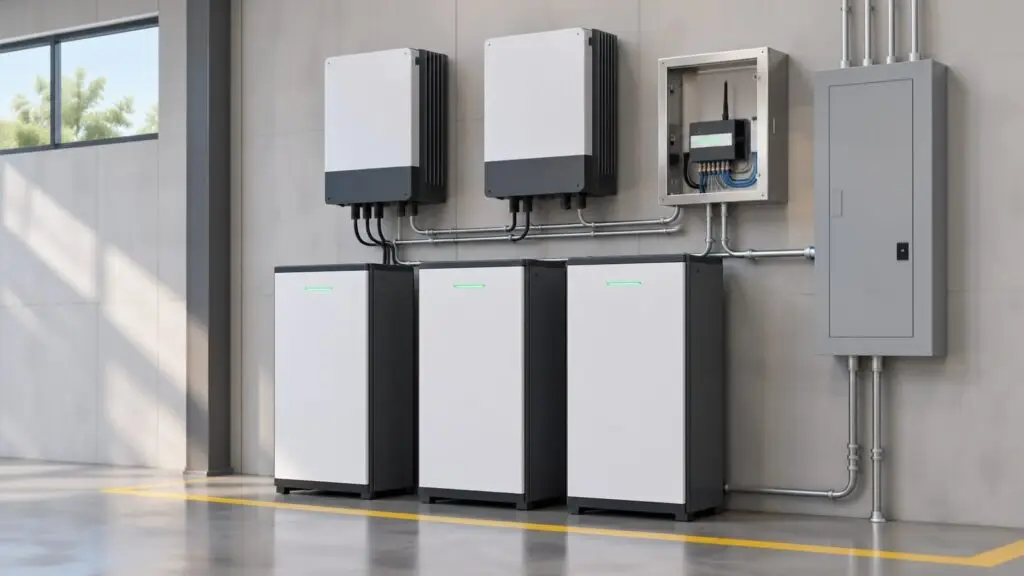
On November 1, 2026, ISO New England began accepting registrations for DER aggregations as small as 100 kW, and any 5 MW aggregation at a single node must register as a standalone resource (ISO-NE, 2026). That sentence decides what a battery project is worth in New England, and whether your hardware, metering and communications survive a market audit. This guide covers the registration rules, the protocol stack, and the documents a supplier must hand an aggregator.
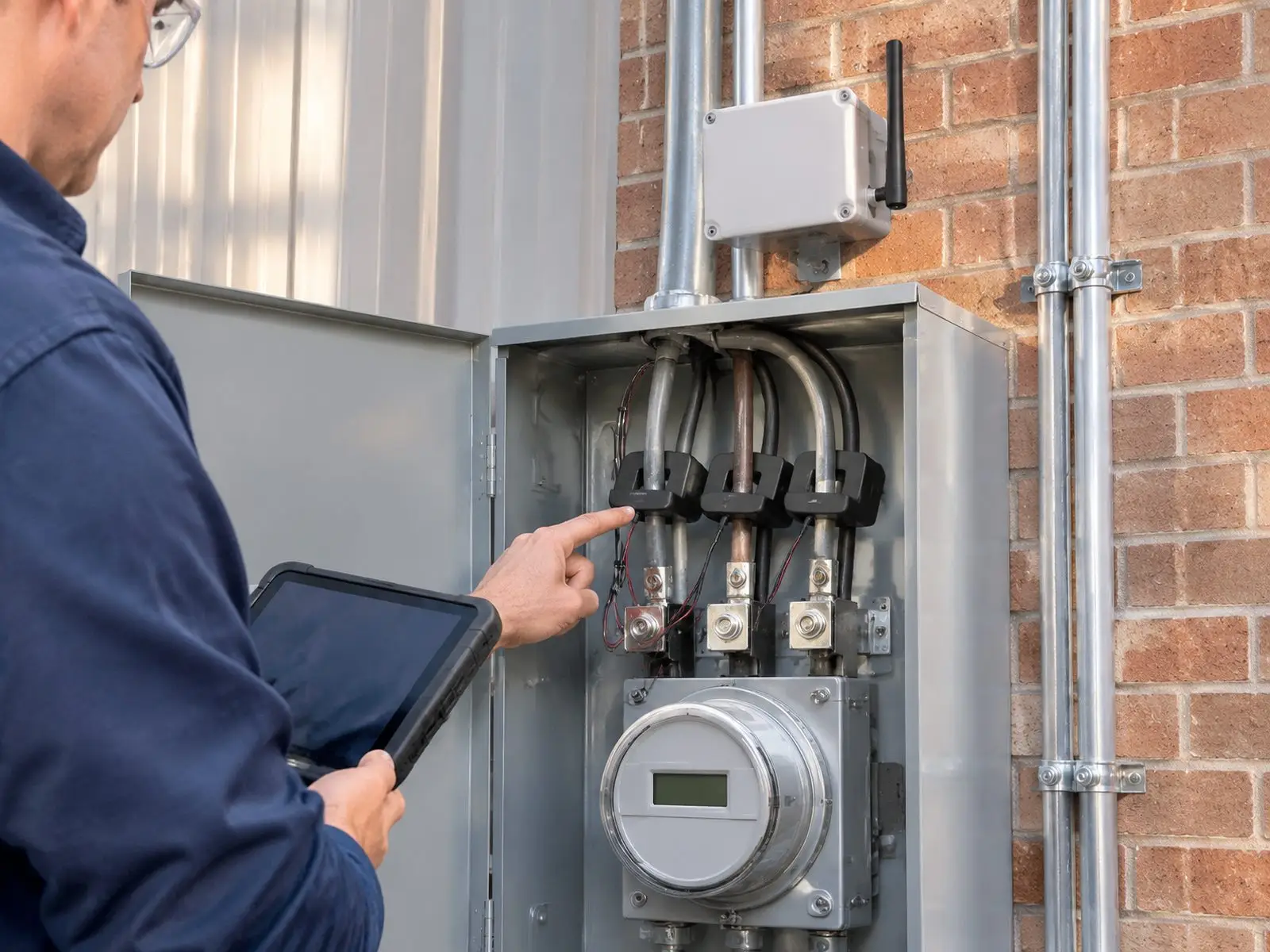
What FERC Order No. 2222 Actually Requires of a Battery
The Federal Energy Regulatory Commission issued Order No. 2222 on September 17, 2020, in Docket No. RM18-9-000, and clarified it in Order No. 2222-A (March 18, 2021) and Order No. 2222-B (June 17, 2021). The rule does not create a federal battery program. It forces each regional transmission organization and independent system operator to rewrite its tariff so that a DER aggregation can bid into markets designed for power plants.
FERC’s explainer lists what those tariff changes must cover. Aggregations must be allowed down to 100 kW. Each RTO must define the locational boundaries within which resources can be bundled, the metering and telemetry requirements that make the bundle measurable, and the coordination process between the RTO, the DER aggregator, the distribution utility and the local regulatory authority. RTOs must also write rules for simultaneous participation, so a battery is not paid twice for the same megawatt-hour through a retail program and a wholesale bid.
Two consequences matter commercially. The market participant is the aggregator, not the site owner: a factory or a homeowner keeps its retail account and sells the flexibility of its battery through a contract. And not every U.S. grid is covered — ERCOT sits outside FERC jurisdiction and runs its own aggregated DER pilot through the Public Utility Commission of Texas, which is why Texas registration timelines never appear in a FERC compliance table. The primary text is in the FERC Order No. 2222 explainer.
How Small Can a DER Aggregation Be?
The floor is 100 kW, and it limits what RTOs may demand rather than describing a target. In practice, one 100 kW commercial cabinet or a pair of 50 kW hybrid inverters can seed a market-registered DER aggregation, provided the site has a controllable setpoint, a revenue-grade meter and a communications path the aggregator can reach on demand.
ISO New England adds the constraint that catches most portfolios. A single resource, or an aggregation, of 5 MW or more at one node must participate as a standalone resource or through a more geographically limited aggregation, so a developer cannot quietly bundle five 2 MW sites behind one node and call it distributed. ISO-NE also defines seven participation models for DERs, from settlement-only aggregations to continuous storage facilities, and its alternative technology regulation model carries a 0.1 MW minimum.
For a battery supplier, that changes the specification conversation. The question is no longer only how many kilowatt-hours fit in a cabinet, but at which node, under which participation model, and with which telemetry. The same 200 kWh cabinet can be a compliant aggregator member in one model and ineligible in another.
The Order 2222 Registration Calendar by Market
The table lists, market by market, when a DER aggregation can register and be dispatched, and the aggregation floor that applies. “Live” means the market operator has opened registration and settlement for aggregations; it does not mean every program in that market accepts batteries. Milestones are those published in FERC’s Order No. 2222 explainer and ISO New England’s project page updated November 4, 2026.
| Market (RTO/ISO) | Energy & ancillary services live | Capacity market live | Minimum aggregation (kW, Order 2222 floor) |
|---|---|---|---|
| CAISO | Complete since November 2024 | n/a (no centralized capacity auction) | 100 |
| ISO-NE | November 1, 2026 | Forward Capacity Auction 19, February 2026 | 100, with a 5 MW per-node cap |
| NYISO | End of 2026 | End of 2026 (full implementation) | 100 |
| PJM | February 1, 2028 | February 1, 2027, for the 2028/2029 capacity year | 100 |
| MISO | Phase 1 by June 1, 2027 | Phase 2 by June 1, 2029 | 100 |
| SPP | Second quarter of 2030 | Second quarter of 2030 | 100 |
| ERCOT | Outside FERC jurisdiction; separate ADER pilot | n/a | Set by Texas pilot rules |
Read the table as a booking calendar, not a capability statement. PJM’s capacity market opens a full year before its energy market, so a PJM battery that is technically ready in 2026 has no energy-market revenue path until February 2028, and SPP buyers have roughly three and a half years before distributed aggregation becomes a revenue line. The commercial pressure to build aggregation-ready hardware now comes from ISO-NE and NYISO, not from the whole country.
The timing is not abstract. U.S. small-scale solar generation quadrupled in a decade, from 18,812 GWh to 92,979 GWh (EIA, October 16, 2026), and over 16% of new utility-scale solar capacity added in 2026 is co-located with operable battery storage, against 2% in 2017 (EIA, October 30, 2026). That installed base is the pool aggregators may now bid, which is why behind-the-meter storage timelines and market registration dates have to be planned together. Summer peaks explain the urgency on the other side of the meter: PJM, ERCOT and SPP each set hourly load records in 2026 (EIA, October 15, 2026), and the U.S. Department of Energy’s Liftoff series treats virtual power plants as a resource-adequacy lever rather than a demo program (energy.gov, January 2025).
Rule: an RTO may not require a DER to be larger than 100 kW to join an aggregation, but a 5 MW block sitting at one node is treated as one resource and must register as a standalone unit or a geographically limited aggregation (FERC Order No. 2222; ISO-NE, 2026).
Threshold: 100 kW minimum aggregation, 5 MW per-node cap, and 0.1 MW minimum for the alternative technology regulation model in ISO-NE. A site below 100 kW is not disqualified from a virtual power plant; it is disqualified from being the only member of a wholesale DER aggregation.
Apply the rule before you quote. If a customer’s portfolio is four 1.2 MW sites fed from one substation, the aggregator may register them as a single 4.8 MW resource with one dispatch signal rather than four independent assets.
How Does a Battery Qualify for a Virtual Power Plant?
Four conditions have to be true at the same time, and a missing item is usually why a site is dropped from a portfolio rather than fixed.
Capacity. The aggregation must clear the market floor, and each member must have a firm, measurable contribution. A 100 kWh cabinet with a 20% reserve floor contributes 80 kWh of usable flexibility, not 100.
Controllability. The inverter must accept an external setpoint and report actual output. A battery that only runs a self-consumption schedule is a customer asset, not a market resource.
Telemetry. The aggregator needs continuous visibility of state of charge, power and availability in a format its platform can ingest. This is the requirement FERC pushed into RTO tariffs, and the one most often solved by a gateway rather than by the battery itself.
Permission and dual participation. The site must be allowed to sell wholesale services while keeping its retail account, and any retail program incentive has to be reconciled so the same megawatt-hour is not compensated twice.
A utility virtual power plant and a wholesale DER aggregation are not the same product. A utility VPP typically pays for enrolled capacity and event response under a state or utility program; a wholesale aggregation settles in an RTO market and is dispatched by the market operator. Both rely on the same physical capability, which is why a battery specified for one is usually biddable in the other, and why commissioning documentation ends up as the deciding evidence.
Where IEEE 2030.5 Ends and OpenADR Begins
Communications is where aggregation readiness claims are easiest to make and hardest to verify. In California the requirement is explicit: Rule 21 requires that, by default, DERs within investor-owned utility territory use the IEEE 2030.5-2018 networking standard in the manner described in the SunSpec Common Smart Inverter Profile, and SunSpec certifies products to that profile through authorized test labs (SunSpec Alliance, 2026). At the local level, SunSpec Modbus remains the freely available device interface.
The OpenADR Alliance argues for a layered reading of that stack. In its OpenADR 3 and DER Management white paper (version February 2026), the Alliance states that the common assumption IEEE 2030.5 must run across the entire pathway end to end is not necessarily correct, and positions OpenADR 3 as the program and orchestration layer above CSIP-certified inverter control. That is a vendor-consensus position rather than a regulatory ruling, so treat it as architecture guidance, not compliance evidence.
What is concrete is the service set an aggregator expects from a fleet. OpenADR’s documentation of the SunPower virtual power plant implementation lists four services in production use: registering the client with the server, receiving events targeted to specific resources, relaying customer opt-outs back to the utility, and reporting continuous telemetry on battery and site performance. A supplier who can answer which of those four are native, and which need a third-party controller, is already ahead of most quotes in this segment.
Metering and Telemetry: Where Registrations Stall
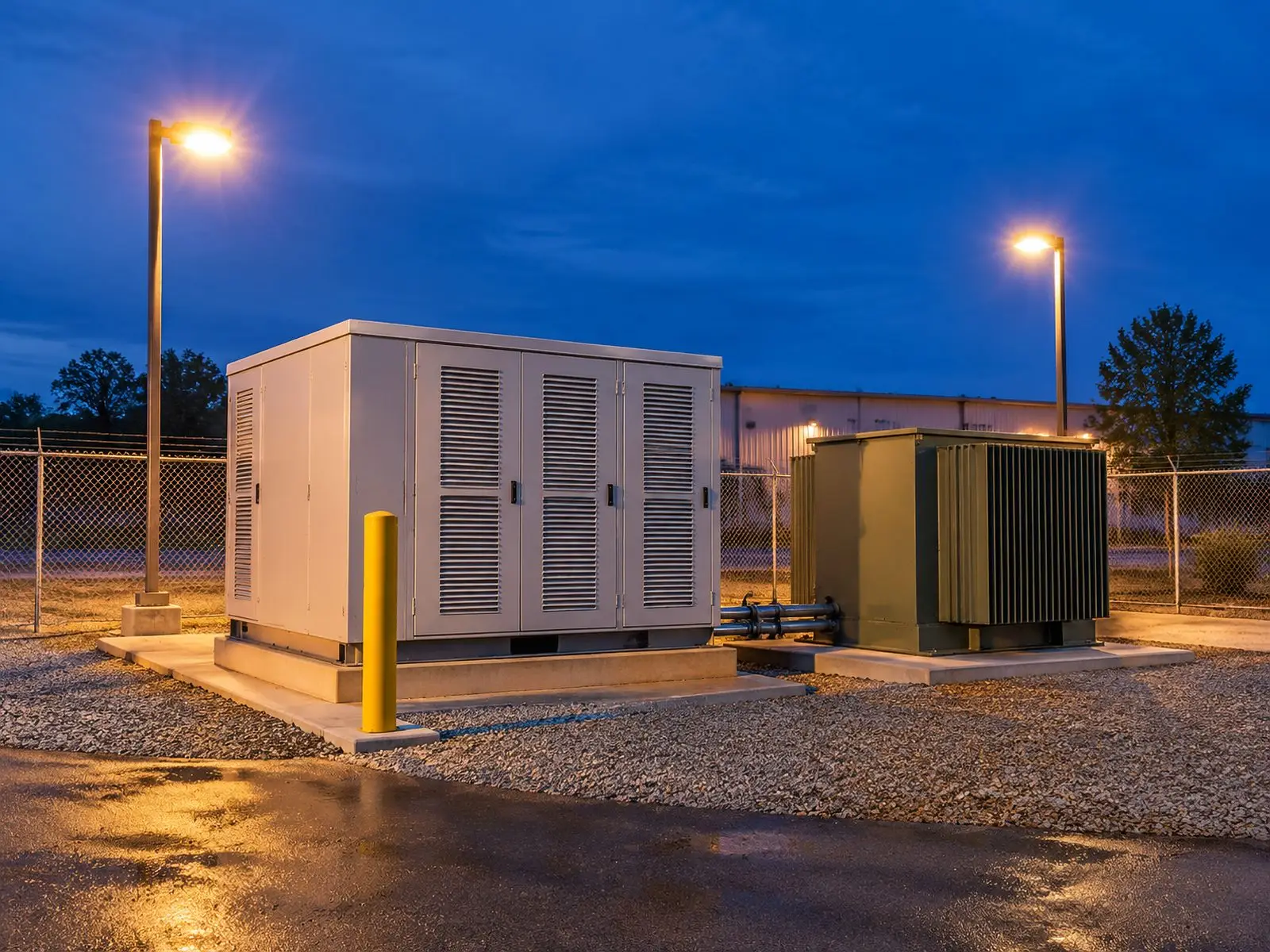
Order No. 2222 pushed metering and telemetry into RTO tariffs for a reason: an aggregation is paid on measured output, so the measurement has to satisfy the market operator, not the site owner. In ISO New England, registration runs through the customer and asset management system and the Ask ISO channel, and new aggregation assets go through an eligibility review of up to 60 days before activation, which cannot occur earlier than two business days after the current business day. Deactivation follows a five-business-day floor.
The pattern that survives review is unglamorous: revenue-grade metering at the point of interconnection, current transformers sized for the actual conductor, a gateway on a dedicated cellular link rather than the customer’s Wi-Fi, and an asset record that matches the nameplate in the incentive paperwork. When a site fails review, it is usually because meter data cannot be tied to a specific asset at a specific node, not because the battery underperformed.
Check the operator’s readiness page before promising a customer a revenue date — ISO-NE’s FERC Order No. 2222 project page, last updated November 4, 2026, lists the system changes, report retirements and registration channel a portfolio has to use.
Pre-Registration Checklist
Each line below is a document or a setting, not a promise.
- Nameplate and usable capacity recorded separately, with the reserve floor stated in kWh.
- Node or aggregation zone identified, and the 5 MW per-node test applied to the portfolio.
- Participation model chosen from the market operator’s list, with its minimum size checked.
- Inverter setpoint interface documented, including the register map or API used for external dispatch.
- Protocol support declared per interface: CSIP over IEEE 2030.5, OpenADR, SunSpec Modbus, or a vendor cloud.
- Revenue-grade meter and current transformer schedule issued, with the meter tied to the asset ID.
- Dedicated communications path specified, with a fallback if the site network is down.
- Telemetry point list agreed with the aggregator: state of charge, power, availability, fault state, timestamp.
- Warranty language confirmed for market-driven cycling, including annual throughput and event frequency.
- Dual-participation position confirmed in writing with the retail program administrator.
Items 4 through 8 are the ones a battery manufacturer can answer alone. Items 1 through 3 and 9 through 10 need the site owner and the aggregator in the same conversation, which is why an early distribution partnership often shortens a timeline more than a hardware upgrade does.
What Buyers Should Ask Before Signing
The registration rules do not favor one chemistry or cabinet format. They favor documentation. A 30 kW residential inverter and a 500 kW commercial cabinet face the same three questions: can it take an external setpoint, can it report telemetry in a usable format, and can the supplier produce protocol and metering evidence without a six-week engineering detour.
That is why the specification work happens before the purchase order. For projects heading into ISO-NE or NYISO in 2027, fix the participation model first, then the metering plan, then the inverter and battery pairing. A hybrid inverter with a documented Modbus map and a declared OpenADR path is worth more in an aggregation than a marginally cheaper unit with a closed cloud. For commercial and industrial sites, a cabinet-based C&I storage system already specified for demand-charge management usually has the meter, the gateway and the dispatch interface; what it often lacks is the commissioning paperwork an eligibility review asks for.
Residential portfolios are the opposite case: the hardware is simple and the complexity sits in aggregation. A LiFePO4 battery system with a documented reserve floor and a cellular gateway is a viable member of a 100 kW aggregation, but only if the aggregator can reach it without the homeowner’s cooperation on event day. None of this is legal, interconnection or tax advice; confirm the current rule version with the market operator and your aggregator before signing.
If you are specifying storage for a portfolio that will be aggregated in 2027, start from the market rules rather than the price sheet. Send us the node, the participation model and the site count, and we will return a configuration with the metering, gateway and protocol documentation your aggregator will ask for — request a quote.
Frequently Asked Questions
What is a DER aggregation and how is it different from a virtual power plant?
A DER aggregation is the market construct created by FERC Order No. 2222: a bundle of distributed resources, at least 100 kW in total, that an aggregator registers as a single participant in an RTO market. A virtual power plant is the operating model — software that dispatches many devices as one. A VPP can serve a utility program without entering a wholesale market, and a DER aggregation can be built from assets nobody markets as a VPP.
How small can a battery be and still join a wholesale aggregation?
FERC requires RTOs to accept aggregations as small as 100 kW, so an individual battery can be far smaller. A single 20 kWh residential battery qualifies only as a member of a bundle that clears 100 kW. The binding constraint is usually the aggregator’s minimum portfolio size and its telemetry cost per site, not the FERC floor.
Does a battery need IEEE 2030.5 to be aggregated?
Not everywhere. California Rule 21 requires IEEE 2030.5-2018 in the manner described by the SunSpec CSIP for DERs in investor-owned utility territory, which makes CSIP certification the practical entry ticket there. In other markets, an OpenADR path or a vendor API behind a qualified gateway can satisfy the aggregator, provided telemetry and dispatch evidence survive review.
What happens if a site is 5 MW at a single node?
Under ISO New England’s implementation, a resource or aggregation of 5 MW or more at one node must participate as a standalone resource or through a more geographically limited aggregation. The portfolio is registered as one larger asset with one dispatch signal, and the metering plan has to support settlement at that node rather than per site.
How long does registration take in ISO New England?
ISO-NE opened DERA registration on November 1, 2026. Its published process includes an eligibility review of up to 60 days, with activation no earlier than two business days after the current business day. Budget a quarter from first submission to first dispatch, and treat metering evidence as the critical path.
Sources
- Federal Energy Regulatory Commission, Order No. 2222 explainer: Facilitating Participation in Electricity Markets by Distributed Energy Resources (Order issued September 17, 2020, Docket No. RM18-9-000; timelines as published).
- ISO New England, FERC Order No. 2222: DER Aggregations Participation in Wholesale Markets, last updated November 4, 2026.
- SunSpec Alliance, IEEE 2030.5 / CSIP Certification, 2026.
- OpenADR Alliance, Distributed Energy Resources, V2G, and OpenADR, plus the OpenADR 3 and DER Management white paper, version February 2026.
- U.S. Energy Information Administration, The share of solar generation with co-located battery storage is increasing, October 30, 2026.
- U.S. Energy Information Administration, U.S. small-scale solar generation has quadrupled in the last decade, October 16, 2026.
- U.S. Energy Information Administration, PJM, ERCOT, and SWPP all set peak load records this summer, October 15, 2026.
- U.S. Department of Energy, New reports from Pathways to Commercial Liftoff, including the Virtual Power Plants update, January 10, 2025.
Market and regulatory rules described here reflect the sources above as of November 19, 2026. This article is not legal, interconnection or tax advice.