
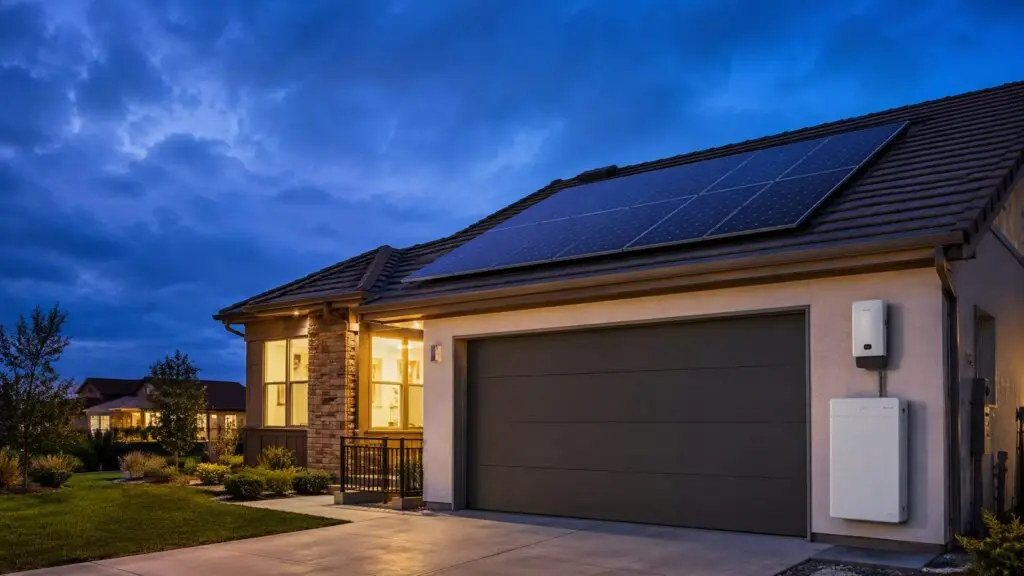
Short answer: the 30% federal residential solar tax credit (Section 25D) is no longer available for systems placed in service after December 31, 2025. Storage did not stop working — it lost its consumer subsidy. Commercial and third-party-owned projects can still claim the Section 48E investment credit, and the US battery fleet passed 52 GW in mid-2026. The 2026 playbook is commercial-grade economics, not tax-credit marketing.
The 2026 storage market in five numbers
The policy reset landed in the middle of the largest storage buildout the grid has ever seen. The International Energy Agency’s Global Energy Review 2026 reports that 108 GW of new battery storage was deployed worldwide in 2025, roughly 40% more than in 2024, with installed capacity now eleven times the 2021 level.
The United States is a smaller but faster-moving slice of that total. According to the US Energy Information Administration’s Preliminary Monthly Electric Generator Inventory (August 7, 2026), utility-scale battery capacity stood at 43.6 GW at the end of 2025, then grew by another 8.3 GW in the first six months of 2026 to reach nearly 52 GW. That is an average annual growth rate of 70% over three years.
| Metric | Value | Source |
|---|---|---|
| Global battery storage additions, 2025 | 108 GW (+~40% year over year) | IEA, Global Energy Review 2026 |
| Global installed capacity vs. 2021 | 11x | IEA, Global Energy Review 2026 |
| US utility-scale storage, end of 2025 | 43.6 GW | EIA, Aug 7, 2026 |
| US utility-scale storage, June 2026 | ~52 GW (+8.3 GW in H1) | EIA, Aug 7, 2026 |
| US capacity planned, H2 2026 / 2027 / 2028 | 14 GW / 26 GW / 14 GW | EIA, Aug 7, 2026 |
Two things follow from those numbers. First, storage is now a mainstream grid asset, not an experiment — which means buyers compare systems on cost per kWh, cycle life and warranty, not on novelty. Second, the behind-the-meter segment can no longer lean on a 30% federal discount to close a sale. Every remaining dollar of value has to come from the equipment and the way it is dispatched.
What actually changed on January 1, 2026
Section 25D, the Residential Clean Energy Credit, paid 30% of the cost of qualified property installed from 2022 through December 31, 2025. The IRS states plainly that the credit “is not available for any property placed in service after December 31, 2025.” Battery storage technology qualified under the same section, provided the unit had a capacity of at least 3 kWh, and the credit had to be claimed for the tax year in which the property was installed — not the year it was purchased.
What that means in cash terms: a 10 kWh home battery installed for $8,000 in 2025 could generate a $2,400 federal credit. The same system installed in 2026 generates nothing at the federal level for a homeowner who pays cash or takes a loan.
Three things did not change, and they are where 2026 demand actually sits:
- State and utility programs. Rebates, SGIP-style storage incentives and time-of-use rates are set locally and remain the main residential lever.
- Backup value. Outage protection, critical-load coverage and resilience spending are unaffected by federal tax law.
- The commercial credit. Section 48E still applies to energy storage technology placed in service after December 31, 2024 — which is why installers and distributors pivoted their pipeline toward commercial hosts and third-party ownership.
What still qualifies: Section 48E in plain English
The Clean Electricity Investment Credit replaced the old ITC for property placed in service after 2024. Per the IRS, the base credit is 6% of qualified investment, multiplied by five (up to 30%) when prevailing wage and registered apprenticeship requirements are met. Two adders matter for storage projects:
- +10 percentage points for domestic content (steel, iron and manufactured products meeting the threshold).
- +10 percentage points for siting in an energy community.
The phase-out begins in the later of 2032, or the year US power-sector greenhouse gas emissions fall to 25% of 2022 levels. Energy storage technology is explicitly eligible. For solar and wind projects, by contrast, the One Big Beautiful Bill Act tightened timelines — solar and wind generally must begin construction by July 4, 2026 to claim Section 45Y or 48E credits, according to the Tax Law Center at NYU Law.
That asymmetry is the single most important commercial fact of 2026: a standalone or solar-paired battery on a commercial site has a longer runway than the solar array it sits next to.
| Buyer scenario | Federal pathway | Realistic 2026 outcome |
|---|---|---|
| Homeowner, cash or loan purchase | Section 25D expired | No federal credit; value comes from backup, TOU arbitrage and state programs |
| Homeowner under lease or PPA | Third-party owner may claim Section 48E | Credit economics can be passed through as lower monthly pricing |
| Commercial or industrial host, owned system | Section 48E | 30% with prevailing wage and apprenticeship, plus domestic content and energy community adders |
| Distributor or dealer holding inventory | No credit on equipment purchase | Credit accrues to the party that owns the placed-in-service asset, not the reseller |
This is not tax advice, and every project should be reviewed by a qualified tax professional. But the direction of travel is clear: the credit has moved from the kitchen table to the balance sheet.
The compliance layer most buyers miss: FEOC and material assistance
Since the start of 2026, Section 48E and 45Y claims carry prohibited foreign entity (FEOC) restrictions. On February 12, 2026 the IRS issued Notice 2026-15, providing interim guidance and safe harbors on what counts as “material assistance” from a prohibited foreign entity, as analyzed by Holland & Hart. Practically, that turns a tax question into a supply-chain documentation question.
For anyone importing cells, modules, BMS boards or inverter power electronics, three artifacts now decide whether a project’s credit survives an audit:
- A bill of materials with country-of-origin at the component level — not just final assembly location.
- Supplier declarations on ownership and control, signed at the entity level rather than the factory level.
- Contract clauses that shift responsibility if a sub-tier supplier is later designated.
A certificate of origin is no longer sufficient evidence on its own. Distributors that ask for this paperwork before the PO — rather than after the incentive claim — are the ones avoiding clawbacks in 2027.
How the economics shift for four buyer types
Homeowner paying cash
Without the 30% credit, payback stretches. The system has to be justified by outage protection, time-of-use spread and any state rebate. In markets with wide TOU differentials and frequent outages, a well-sized 10–15 kWh system still clears; in low-outage, flat-rate markets, it usually does not. Selling backup and rate arbitrage honestly beats selling an expired tax story.
Homeowner under lease or PPA
Third-party ownership keeps investment-credit economics in play. The installer becomes the taxpayer, which means the installer now needs the documentation stack described above — and needs to price the residual risk of a failed claim into the contract.
Commercial and industrial host
This is the clearest 2026 opportunity. A 30% credit with prevailing wage compliance, plus domestic content and energy community adders, can reach well above the residential rate that expired. Pair it with demand-charge reduction and a 10–15 year asset life, and the internal rate of return usually beats a residential retrofit. Sizing discipline matters more than capacity: an oversized cabinet that never cycles is a 20-year liability.
Distributor or installer buying inventory
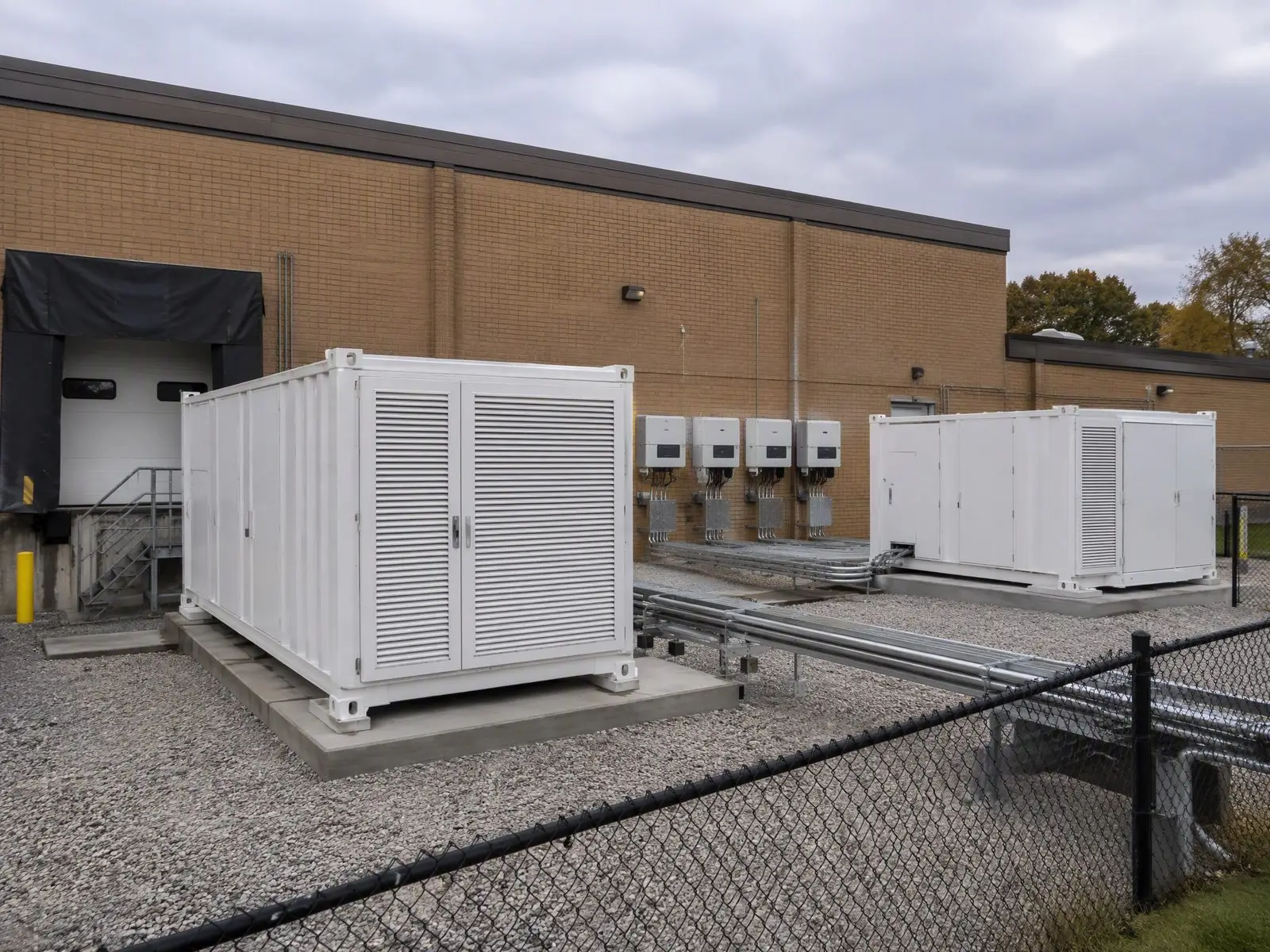
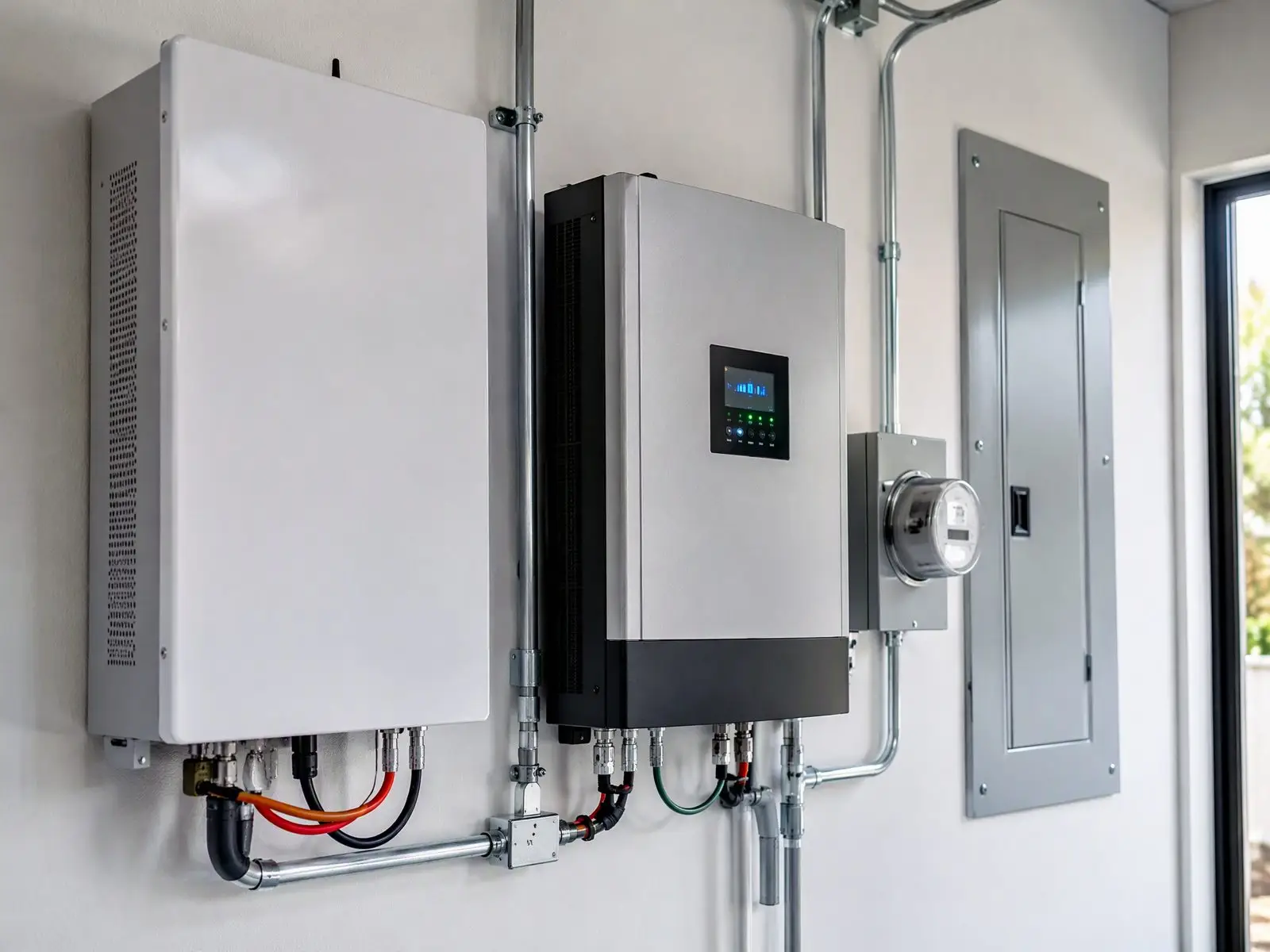
Inventory is not an incentive event. What changed is the customer: fewer residential cash buyers, more commercial hosts and third-party owners. Distributors that rebalance stock toward commercial-grade cabinets, three-phase hybrid inverters and stackable high-voltage batteries will move product faster than those holding residential wall-mount SKUs built for a subsidy that no longer exists.
A 2026 storage specification checklist
When the subsidy stops doing the selling, specification quality becomes the differentiator. Ten items worth verifying before any PO:
- UL 9540 system listing and UL 9540A cell-level thermal runaway test data.
- UL 1741 SB / IEEE 1547 compliance for grid-support functions and interconnection approval.
- Round-trip efficiency stated at the system level, not just the cell level.
- Backup transfer time under 20 ms if sensitive loads are on the critical panel.
- Usable depth of discharge and cycle warranty expressed in MWh throughput, not just years.
- Temperature derating curves for the actual installation site, including garage and outdoor cabinets.
- Communications: Modbus, SunSpec and OpenADR support for VPP and demand-response enrollment.
- Hybrid or AC-coupled architecture matched to whether the site is a new build or a retrofit.
- Certification pack: datasheets, test reports, UN 38.3 transport documents and country-of-origin data.
- Spare parts and firmware support commitment in writing, with a named regional contact.
Items 9 and 10 are the ones that fail audits and service calls. They are also the cheapest to fix at the sourcing stage and the most expensive to fix after installation.
What this means for sourcing and lead times
The demand has shifted, not disappeared. IEA’s data shows global deployment accelerating; EIA’s queue shows 54 GW of US capacity planned through 2028. That combination keeps pressure on LFP cell allocation and on the certification labs that test system-level compliance.
For importers and installers, three practical consequences:
- Order against a specification, not a price sheet. With FEOC documentation in play, a supplier that cannot produce a component-level BOM is a tax risk, not a bargain.
- Lock commercial SKUs earlier. Three-phase hybrid inverters and stackable high-voltage batteries are the segments absorbing the residential shift; allocation tightens first at the module level.
- Keep a domestic staging option. Projects that must hit a placed-in-service date cannot absorb a six-week ocean delay. Regional warehousing turns a schedule risk into a line item.
Ruihan Energy builds the equipment this shift depends on — LiFePO4 battery systems, hybrid and off-grid inverters, home energy systems and commercial and industrial storage — and ships with the certification documentation pack that incentive claims now require. For volume programs, wholesale and distribution and OEM/ODM manufacturing both start from the specification, not the catalog.
FAQ
Can I still claim the solar battery tax credit in 2026?
Not under Section 25D. The IRS confirms the residential credit is unavailable for property placed in service after December 31, 2025, including battery storage of 3 kWh or more. Commercial projects can still claim the Section 48E credit for energy storage placed in service after December 31, 2024.
Is a home battery still worth buying without the credit?
It depends on what it replaces. Where outages are frequent or time-of-use rates are wide, backup plus daily arbitrage can still produce a defensible payback. Where neither applies, the honest answer is that the system is a resilience purchase, not an investment.
Does the 30% commercial credit apply to a home office battery?
Business-use allocation rules apply, and partial business use changes the calculation. The IRS treats business use of a residence case by case, so this needs a tax professional rather than a rule of thumb.
What documentation do I need for a 48E storage claim?
Placed-in-service evidence, invoices, system specifications, prevailing wage and apprenticeship records if you are claiming the multiplied rate, domestic content calculations if you claim that adder, and a component-level bill of materials for the foreign entity rules.
Do imported batteries still qualify for the credit?
Eligibility now depends on the foreign entity and material assistance rules rather than on the country of final assembly alone. IRS Notice 2026-15 provides interim guidance and safe harbors; the practical test is whether your supplier can document the sub-tier supply chain.
The bottom line
The expiry of Section 25D did not shrink the storage market — the US fleet grew from 43.6 GW to roughly 52 GW in six months, and global additions hit 108 GW. What changed is who the credit serves and what a sales conversation has to prove. In 2026 the winning argument is a commercial-grade specification, a documented supply chain and a dispatch strategy that pays for itself without a federal discount.
If you are re-specifying a residential or commercial line for the post-25D market, request a quote and we will send the specification sheet and certification pack for the SKUs you are evaluating.
Sources
- US Energy Information Administration, Battery storage capacity averaged 70% growth over the last three years, August 7, 2026.
- International Energy Agency, Global Energy Review 2026 — Technology: Battery storage, 2026.
- Internal Revenue Service, Residential Clean Energy Credit, 2026.
- Internal Revenue Service, Clean Electricity Investment Credit, 2026.
- Holland & Hart, New IRS Guidance: Foreign Entity Material Assistance for Clean Energy Tax Credits, February 16, 2026.
- Tax Law Center at NYU Law, Navigating OBBBA: phaseouts, prohibited foreign entity rules and other new rules, July 11, 2025.