
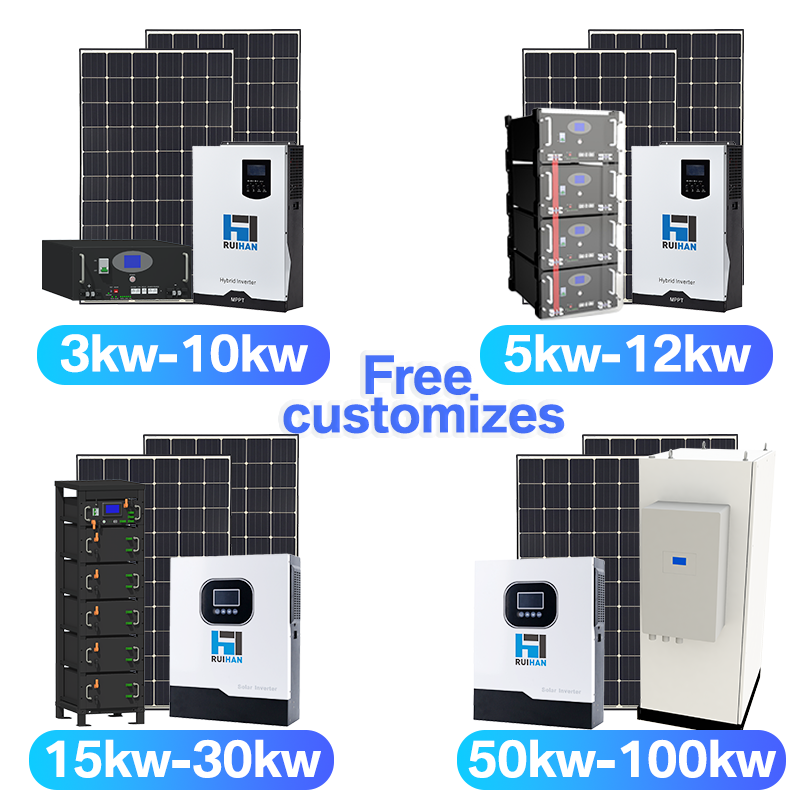
One of the core questions in business energy management is, “How much electricity can a commercial battery storage system store?” In fact, its storage capacity is not a fixed value, but rather flexibly customized based on system configuration and business needs. It is typically measured in kilowatt-hours (kWh) (1 kWh is the energy required to continuously supply power at 1 kilowatt of power for 1 hour), ranging from tens of kWh to thousands of kWh, precisely matching the energy usage scenarios of businesses of different sizes.
I. Matching by Business Size: Capacity Selection from “Tens of kWh” to “Thousands of kWh”
The capacity design of commercial battery storage systems is entirely based on the actual energy needs of businesses. Different capacity solutions correspond to different business sizes:
1. Small Businesses/Facilities: Tens of kWh, meeting basic needs
Suitable for convenience stores, small offices, community clinics, etc., with typical capacities of 30-80 kWh.
Practical Value: 1.Storing Low-Cost Grid Electricity During Off-Peak Hours:Stores low-cost grid electricity during off-peak hours and releases it during peak daytime hours, reducing electricity costs. It also serves as an emergency backup power source, supporting critical facilities such as refrigerators, point-of-sale (POS) systems, and lighting systems for 4-6 hours, preventing business interruptions due to power outages.
2. Medium-Sized Enterprises:Hundreds of kWh, balancing efficiency and cost. Suitable for chain supermarkets, medium-sized factories, hotels, etc., with typical capacities of 200-800 kWh.
Practical Value: Achieves a 20%-30% reduction in electricity costs through “off-peak electricity storage + peak discharge,” and can also store some clean electricity from self-built solar panels, reducing dependence on the grid. During power outages, it can support the operation of cold storage, central air conditioning, and core production lines for 8-12 hours, minimizing downtime losses.
3.Large Industrial Parks/Parks:Thousands of kWh, supporting large-scale energy consumption. For large manufacturing plants, industrial parks, data centers, etc., capacities can reach 1000-5000 kWh or even higher.
Practical Value: It meets the high-load electricity demands of industrial applications, such as supporting one-third of a production line’s daily electricity consumption, or storing the full daily power generation of a megawatt-level solar power plant, achieving 100% self-consumption of clean electricity; simultaneously, it serves as a peak-shaving reserve resource for the power grid, ensuring uninterrupted operation of data centers, precision manufacturing equipment, and other applications during grid fluctuations, thus enhancing energy supply resilience.
II. Core Basis for Capacity Selection: 3 Key Dimensions to Define Needs
Enterprises do not need to blindly pursue “large capacity,” but rather determine suitable capacity based on the following 3 points to maximize cost-effectiveness:
Peak Energy Consumption and Duration: Calculate the peak daily power (kW) and duration of the enterprise’s electricity consumption. For example, a peak of 100kW lasting for 2 hours requires a basic capacity of approximately 200kWh.
Backup Power Targets: Clearly define the list of equipment that needs to be supported during power outages and their operating duration. For example, a data center needs to support the core servers for 24 hours, requiring a capacity that matches the total power of the equipment × 24 hours.
Renewable Energy Installed Capacity: If solar/wind power equipment is included, the capacity should be designed based on “average daily power generation × energy storage ratio (usually 70%-90%)” to avoid wasting clean energy.
III. Case Study: How can a 192kWh system serve a medium-sized enterprise? Taking a 192kWh commercial energy storage system for a medium-sized food processing plant as an example, its application value clearly demonstrates the matching of capacity and demand:
Energy Storage Scenario: During off-peak hours at night (10:00 PM – 6:00 AM), electricity is drawn from the grid for charging at a price of only 0.3 yuan/kWh, 0.5 yuan/kWh lower than the peak daytime price;
Electricity Consumption Scenario: During daytime production hours (8:00 AM – 6:00 PM), the stored energy is released, reducing daily electricity costs by approximately 800 yuan, resulting in annual savings of over 290,000 yuan;
Backup Scenario: In the event of a sudden power outage, it can support the operation of cold storage (for storing raw materials) and packaging lines for 6 hours, preventing losses exceeding 100,000 yuan due to food spoilage and production delays.
Whether it’s a small system of tens of kWh or a large solution of thousands of kWh, the core value of commercial battery energy storage systems lies in “on-demand customization”—allowing businesses to meet their current energy needs at a reasonable cost while also reserving capacity for future expansion (such as increasing production capacity or upgrading to renewable energy), truly achieving flexibility and sustainability in energy management.