
Power Solutions for Agricultural Machinery
Auxiliary and backup power for combines, tractors, balers and sprayers. Systems are sized from a measured load list on the machine – cab electronics, lighting, controllers and telemetry – and ship with the charging, protection and connecting hardware required.
- 2500-5000WCold-start assist power class
- 2201-5120WhPortable pack capacity range
- 6,000+Cycles on Grade A LiFePO4 cells
- 24hEngineering response to quotes
Power problems in the field are integration problems
When a machine stops mid-pass, the cost is not the battery. It is downtime inside a window that opens once a year, and most problems we are asked to correct trace back to the same short list.
- Cab loads are taken from the brochure, not measured, so displays, lights and telemetry add up to more draw than expected
- The start battery is treated as a general power source, though its job is cranking the engine, not running tools
- Vibration, dust, wash-down and temperature swings are never converted into enclosure and connector requirements
- The charging path is chosen before anyone confirms the machine alternator can carry the extra load
- Spare packs and connectors are ordered after the season opens, when the dealer has no buffer left
Three safe ways to connect an auxiliary pack to a machine
There is no single correct way to put a battery on a machine. The right method depends on whether the pack must help start the engine, whether the machine charges it, and how the circuit is grounded.
1. Direct parallel connection to the start battery
The simplest method and the one with the most caveats. A pack paralleled onto the start battery shares its charging voltage and ground path, so a difference in state of charge between the two produces current flow between them. It needs its own protection and suits only packs that match the start battery nominal voltage.
2. DC-DC charging with an isolated stage (recommended)
Our preferred arrangement, and what we recommend for combines, tractors and sprayers facing seasons of daily work. A DC-DC charger draws from the machine circuit and delivers a controlled charge profile to the auxiliary LiFePO4 pack, so the two systems regulate separately and the pack never sees raw alternator voltage.
3. Dual-battery isolation system
Where the auxiliary pack must also feed machine electronics, an isolation system keeps the two banks apart until a defined voltage threshold is met, then ties them together under control. The operator keeps critical circuits alive while the ability to crank is protected.
What a complete agricultural power package includes
We supply agricultural power as a matched package rather than a battery on its own, so the pack, the charging stage and the connecting hardware are specified together.
- LiFePO4 battery module sized from the measured load list instead of catalog wattage
- Integrated BMS with cell balancing, over-current and low-temperature charge protection
- DC-DC charging stage that isolates the auxiliary bank from the machine circuit
- Sealed cable assemblies and high-current connectors in the 60-350A class
- Vibration-tolerant mounting hardware and strain relief for the pack and its cabling
- Monitoring access for the fleet owner and the dealer service team
Recommended power products for agricultural machinery
Three products cover most agricultural enquiries we receive, from a portable pack that travels between machines to the connectors that hold the circuit together. All can carry your brand.
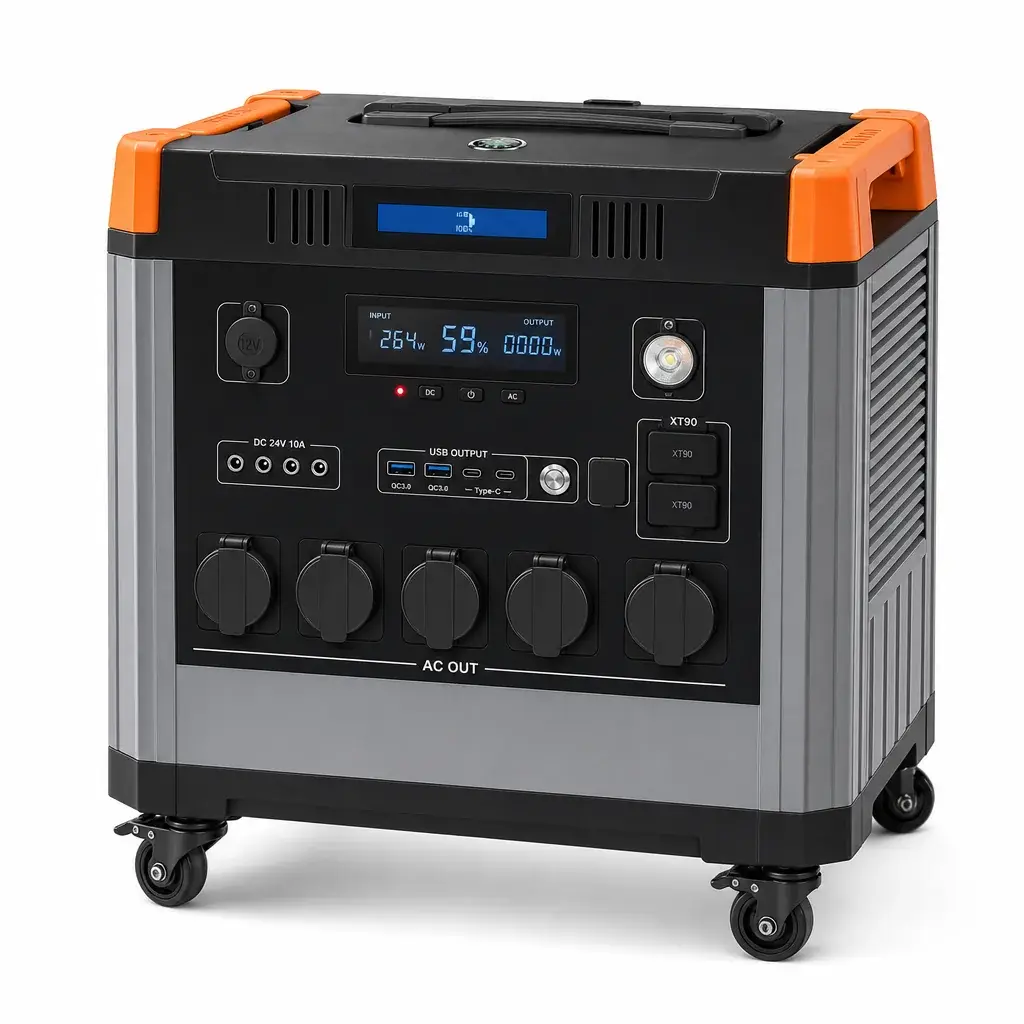
2500-5000W / 2201-5120Wh
BS-ABS15 Portable Power Station
Portable pack in the 2201-5120Wh range for cold-start assist and field service work. Roll it to the machine and recharge between jobs.
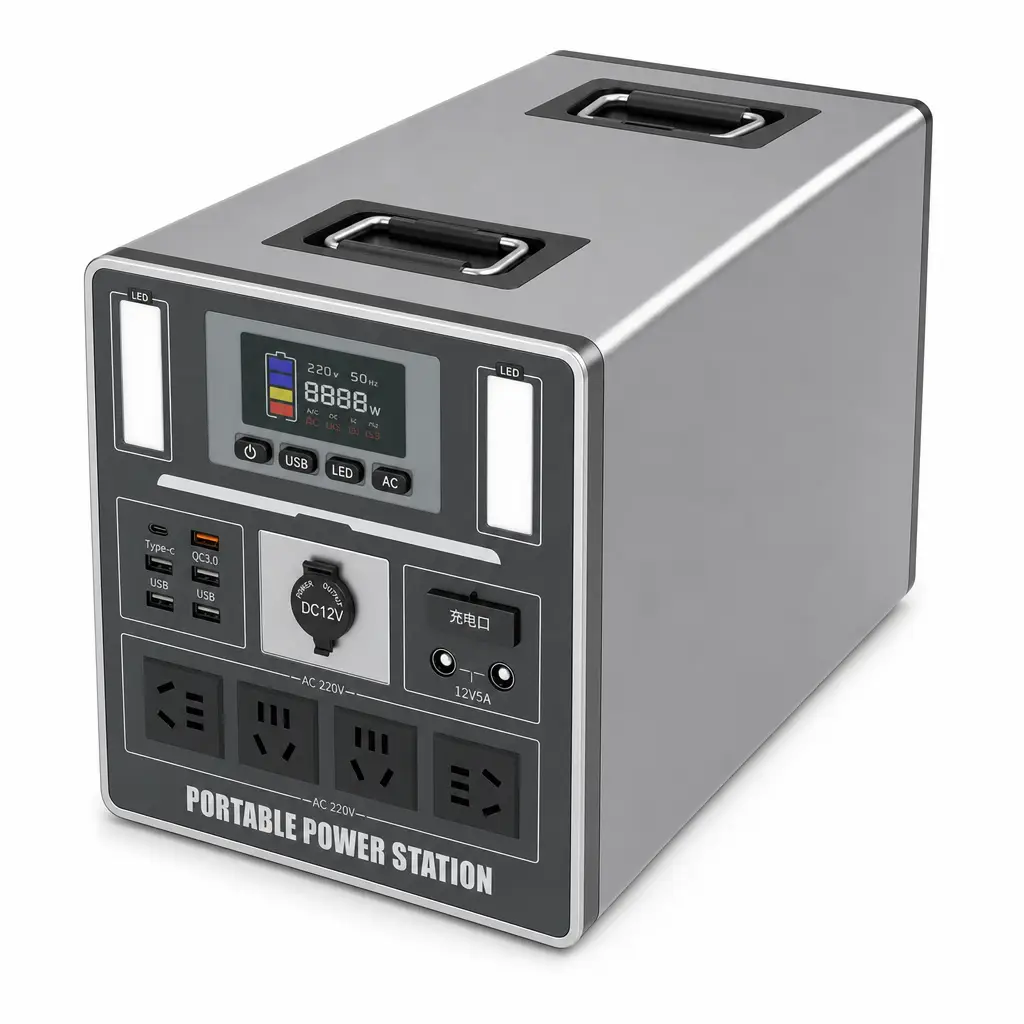
3000W / 3000-5000Wh
T-25T 3000W Portable Power Station
Three-kilowatt class unit for field service tools, diagnostics and longer yard duty cycles, with reserve for a workshop bench between visits.
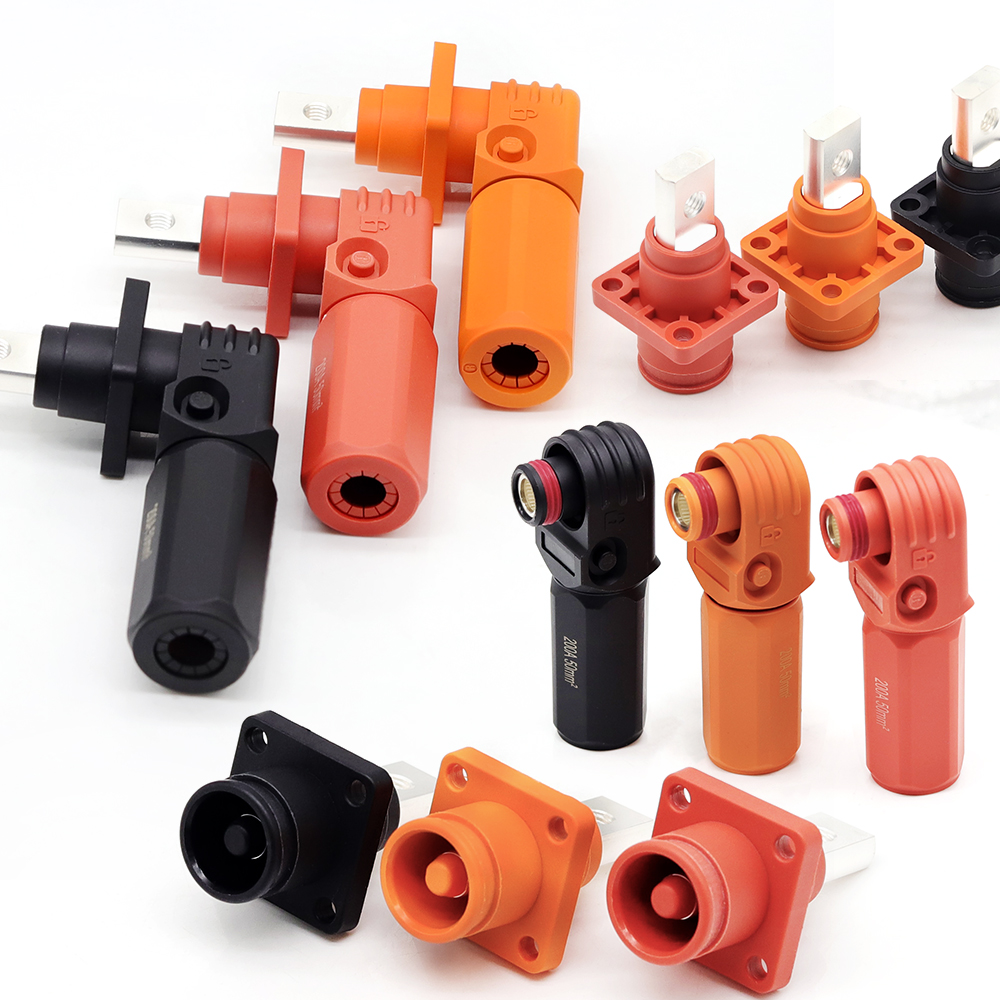
60-350A / ESS wiring
Energy Storage Battery Connectors
High-current connectors for the auxiliary battery circuit in 60A, 100A, 200A and 350A ratings, so a service team can break the pack safely during maintenance.
Sizing guidance for your first proposal
The table below is the starting point our engineers use when a dealer sends a machine and its loads. Treat it as a first estimate, then confirm it against measured current draw before quoting.
| Machine duty | Suggested power band | Typical capacity |
|---|---|---|
| Cab electronics, lighting and controllers | 300-500W | 288-445Wh |
| Cold-start assist for diesel engines | 2500-5000W | 2201-5120Wh |
| Field service tools and diagnostics | 3000W | 3000-5000Wh |
| Telemetry, sensors and remote monitoring | 200-500W | 288-445Wh |
Vibration, dust and temperature: what the field does to a lithium system
A pack that performs on a bench has not yet met a working machine. Agricultural duty adds continuous vibration, conductive dust, wash-down water and wide temperature swings, and each has a design answer.
- Vibration loosens terminal hardware, so mountings use vibration-tolerant fixings and every cable run carries strain relief
- Conductive dust reaches any open connector, so enclosures and connector seals are chosen for the working environment
- Charging below freezing damages lithium cells, so low-temperature cut-off is handled by the BMS
- Wash-down and humidity require sealed assemblies and routing clear of spray paths
- Storage between campaigns needs a defined state of charge and a pre-season check
The harvest window does not move
Every other consideration gives way to one constraint: when the crop is ready, the machine has to run. That shapes what a dealer holds in stock and what a service team must do in the field.
- Spare packs and connectors held locally, so a failure during the window becomes a same-day swap
- Common connector ratings stocked across the 60-350A class, because one missing part can idle a machine
- Service teams trained on the charging path, since most field faults trace back to wiring
- Stock positioned before the season, when lead times are predictable
- A documented charging and storage routine for every machine
Why distributors and installers buy from Ruihan
We are an OEM/ODM manufacturer and wholesale supplier, not a retail reseller. That means engineering support while a load list is still being written, and terms built for distribution business.
- Grade A LiFePO4 cellsRated for 6,000+ cycles under our manufacturing specification.
- Certified productionISO 9001 and ISO 14001 manufacturing, with CE, FCC, UN38.3 and RoHS compliance across the range.
- Full portfolio, one supplierPortable power stations, LiFePO4 batteries, inverters and all-in-one systems from 200W to 5000W+.
- OEM and ODM supportYour branding, packaging and documentation on production runs.
- Volume pricing tiers50-100, 100-500 and 500+ unit tiers for distribution programmes.
- Reliable deliverySamples in 2-3 weeks, 95%+ on-time shipment rate and a 24-hour response window on enquiries.
Frequently asked questions
How can an auxiliary power pack be integrated with a machine electrical circuit safely?
We recommend a DC-DC charger with an isolated stage, so the pack gets a controlled charge profile and alternator load stays limited. Direct paralleling to the start battery suits only protected packs on a matching nominal voltage.
Can a LiFePO4 pack withstand the vibration and dust of field work?
It can, when the installation is designed for it. Our packs use Grade A LiFePO4 cells with an integrated BMS, vibration-tolerant mounting, strain relief on every cable run, and sealed enclosures and connectors.
Can the machine itself charge the auxiliary pack?
Yes, through the machine circuit, though not by wiring the pack straight to the alternator in every case. A DC-DC charging stage charges the auxiliary bank under a controlled profile and limits the current the alternator supplies.
What are the MOQ and lead times for dealer samples?
Volume pricing starts at the 50-100 unit tier, with further tiers at 100-500 and 500+ units. Samples are typically ready in 2-3 weeks and enquiries are answered within 24 hours.
Which supply voltage do you build for, and which markets do you serve?
Our standard export configurations are built for 220V/50Hz markets in Europe, Africa and Southeast Asia. For North American projects, contact our engineers with your requirements so the correct configuration can be confirmed for your order.
Send the machine model, its load list and your target volumes – our engineers will return a sized configuration and wholesale pricing within 24 hours.