
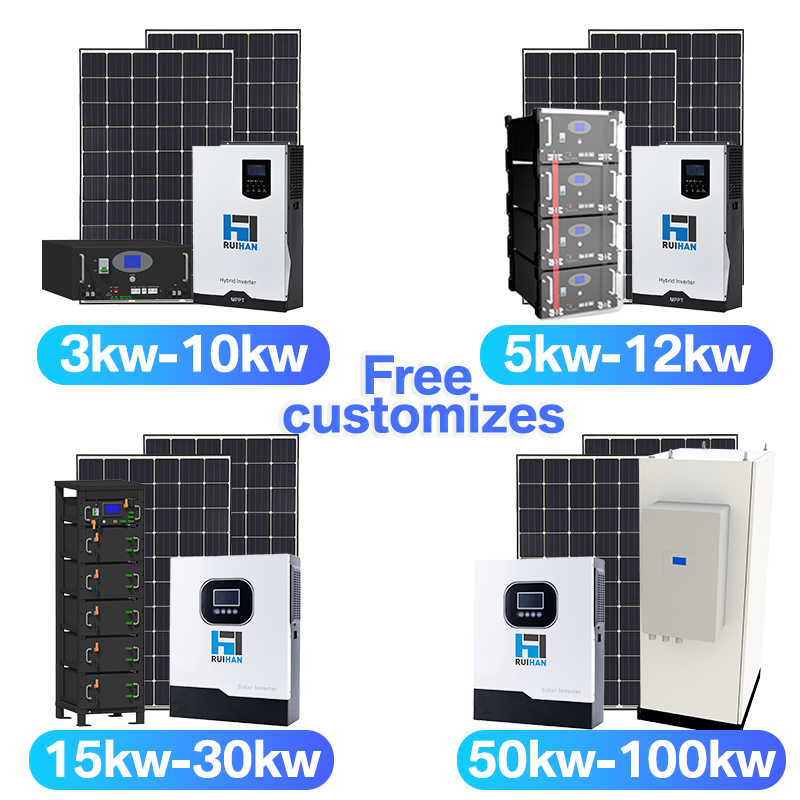
A new star in power conversion equipment has arrived—the RH-DX 500W pure sine wave inverter is now available, designed to solve power supply challenges in home and vehicle scenarios with stable performance and versatile compatibility.
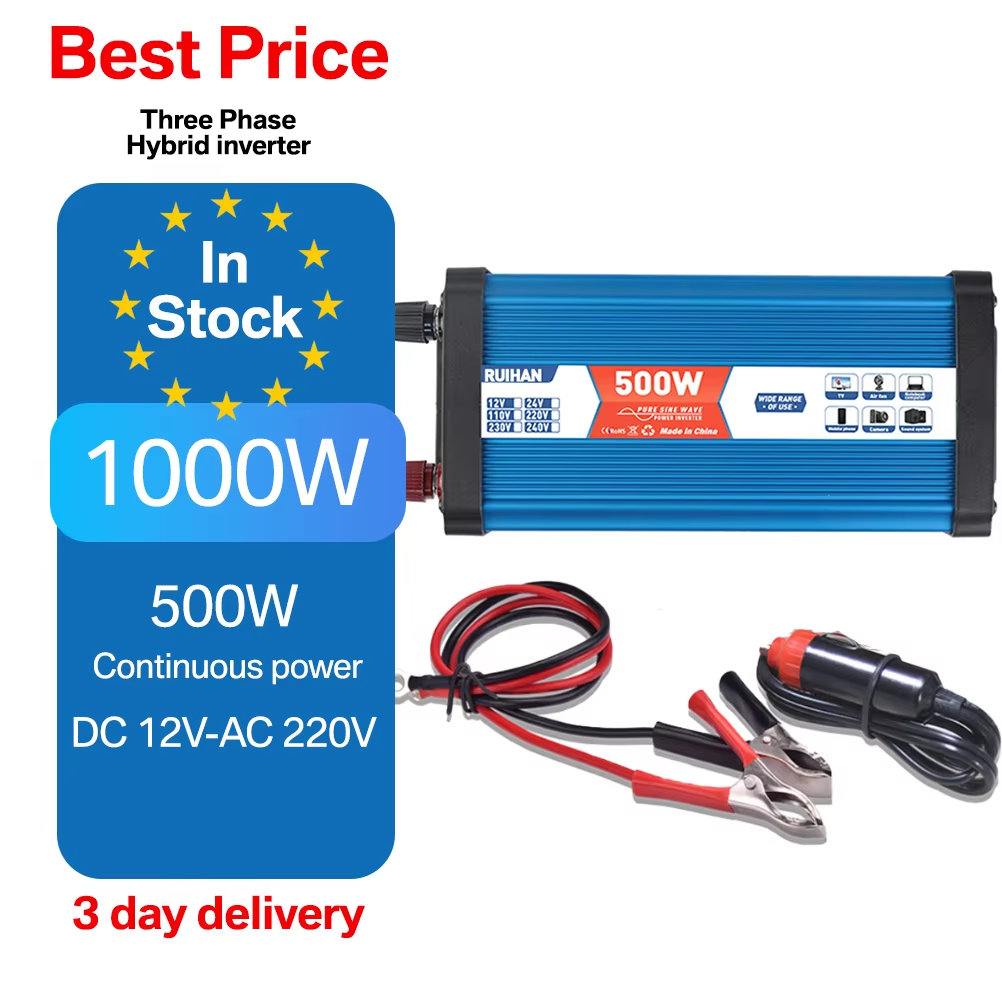
Core Specifications: Reliable Power Conversion for Multiple Scenarios
As part of the RH-DX inverter series (covering 300W-16000W), the 500W model stands out for its balance of power and portability. It features DC 12V/24V input and AC 110V/220V ±10% output, with a 50/60Hz ±3Hz frequency to match global power standards. The pure sine wave output ensures safe operation of sensitive devices like laptops, routers, and small household appliances, avoiding damage from unstable waveforms.
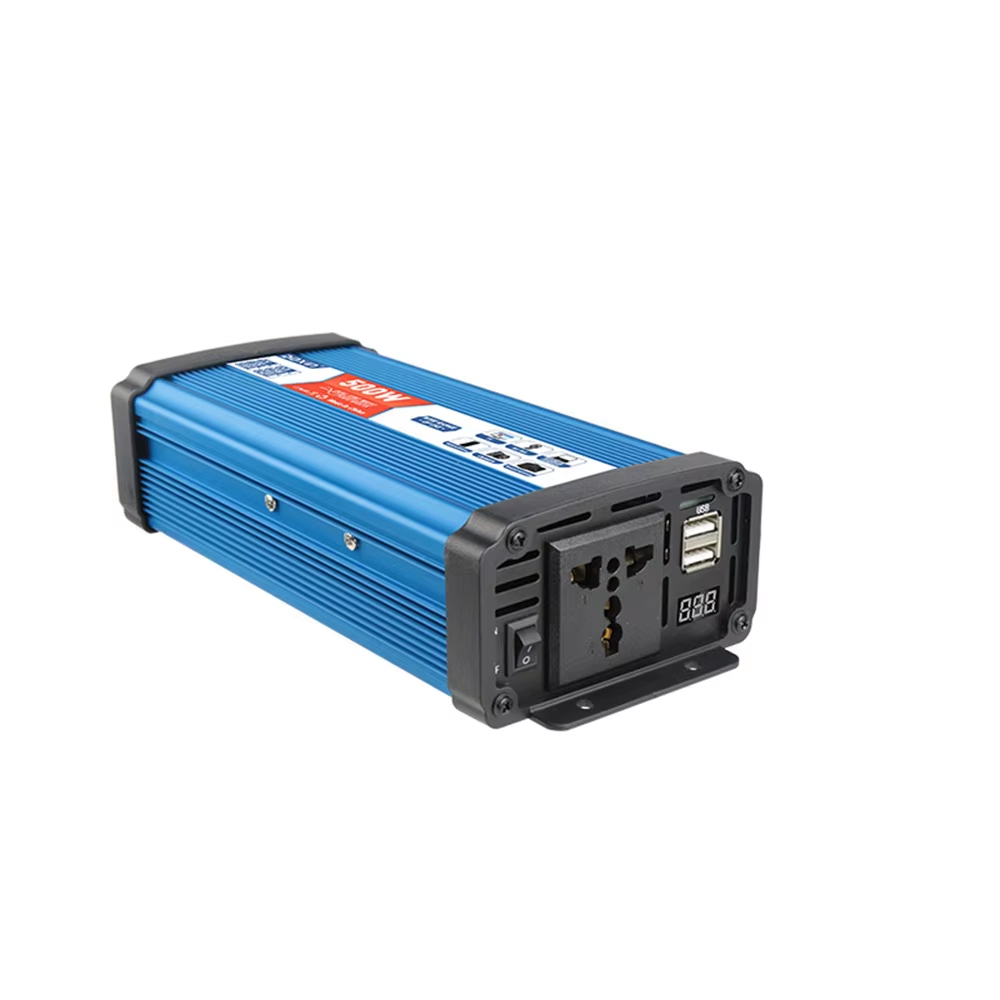
With 500W continuous power and 1000W peak power, it easily handles temporary high-power demands of devices like mini-fridges or power tools, making it ideal for both daily use and emergency backup.
Application Highlights: Home & Vehicle Scenarios Fully Covered
This inverter shines in diverse usage scenarios:
✅ Vehicle Use: Powers laptops, camping lights, and small kitchen appliances during road trips or camping, turning cars/RVs into mobile power stations.
✅ Home Backup: Serves as emergency power for routers, lights, and medical devices during power outages, ensuring basic life needs.
✅ Outdoor Work: Supports power tools and communication equipment in remote locations without grid access.
The compact design allows easy storage in car trunks or home cabinets, while multiple protection functions (overload, short circuit, overvoltage protection) guarantee safe operation in various environments.
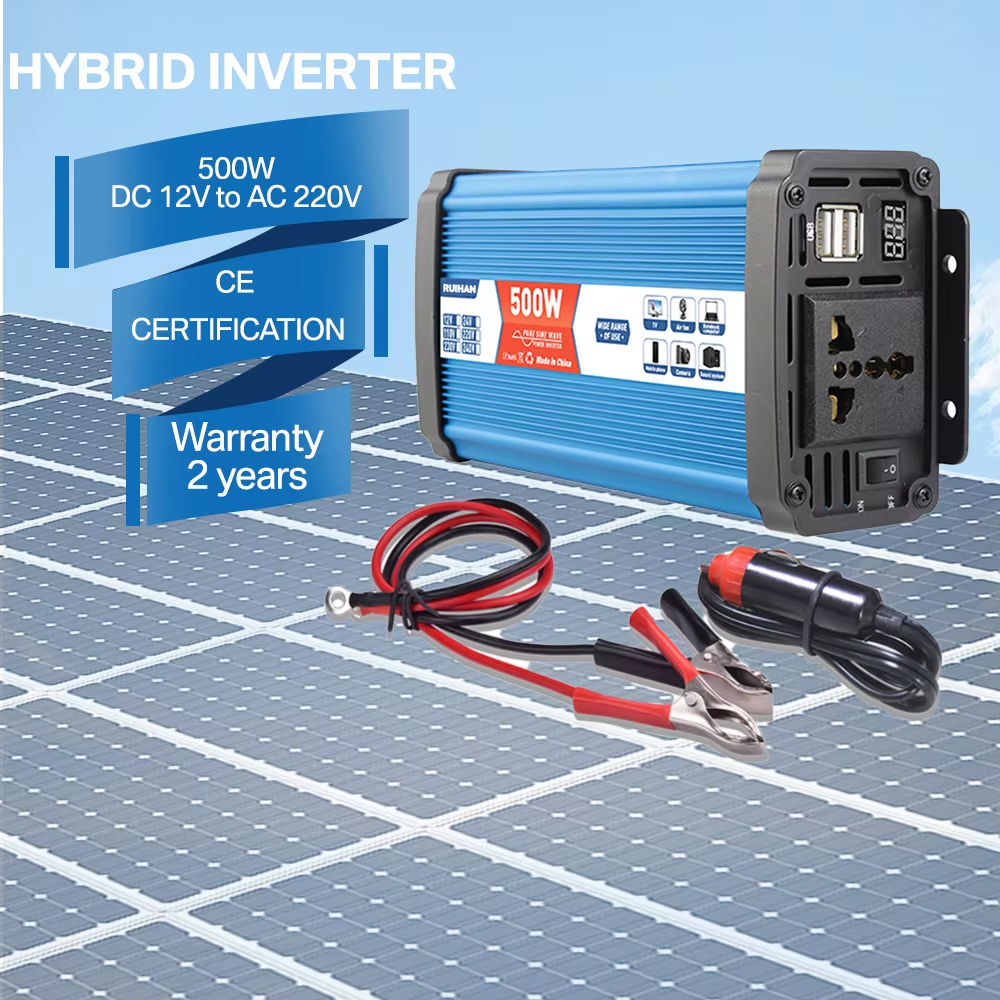
Series Advantages: Scalable Power for Growing Needs
Beyond the 500W model, the RH-DX series offers scalable options from 300W to 16000W, catering to needs from small household devices to industrial equipment. All models maintain pure sine wave output and wide voltage compatibility, ensuring consistent performance across the range.
Whether for daily travel, home backup, or outdoor activities, the RH-DX 500W inverter delivers reliable power conversion, bridging the gap between DC power sources and AC devices.
What “pure sine wave” actually changes for the loads you run
A 500 W inverter is easy to describe and harder to specify well. The number that matters most after wattage is waveform. Utility power arrives as a smooth 50 or 60 Hz sine wave, and most appliances are designed around that assumption. A modified sine wave — the cheaper stepped approximation — still lights a bulb and charges a phone, but it changes how other loads behave. Motors run warmer, because the harmonics add iron and copper losses. Transformer-based equipment can buzz audibly. Some switched-mode power supplies, laser printers and audio equipment either derate or refuse to start at all. Medical devices and variable-speed compressors are the least tolerant of the whole group.
Pure sine output, with total harmonic distortion held low across the load range, keeps those loads inside their design envelope. That is why the RH-DX 500W is specified as pure sine rather than modified sine: the loads it is aimed at — laptops, routers, small kitchen appliances, power tools, medical equipment — are exactly the loads that notice the difference. If you only ever run resistive loads such as an incandescent lamp, waveform barely matters. As soon as a motor, a compressor or a sensitive power supply is on the circuit, it does.
Sizing the 500 W model so it does not trip on start-up
Continuous and peak ratings answer two different questions. The 500 W continuous figure is the load the unit can hold indefinitely; the 1,000 W peak figure covers the first moments after switch-on. Most loads sit comfortably inside the continuous rating but spike at start: an induction motor can draw several times its running current for a fraction of a second, a fridge compressor cycles on with a surge, and a brushed power tool pulls hard on the first trigger squeeze.
- Add up the continuous wattage of everything you intend to run at the same time.
- Keep the total at or below 500 W with headroom — around 400 W is a comfortable ceiling for continuous duty.
- Check the largest single load’s start-up behaviour separately, against the 1,000 W peak.
- Treat anything with a heating element — kettles, heaters, hair dryers — as a resistive load that sits at its rated wattage for the whole run, not just at start.
If two loads can start at the same moment — a fridge and a microwave, for example — stagger them. Sequencing costs nothing, while a nuisance trip costs a reboot of everything downstream.
The 12 V side is where most installations actually fail
Most inverter complaints trace back to the DC side rather than the AC side. A 500 W AC load draws roughly 42 A from a 12 V battery before conversion losses; allowing for efficiency, the real figure sits nearer 45–50 A. That current has to travel through cable, terminals and a fuse, and every one of those is a resistive element working against you.
- Cable: size for current and length together, not current alone. A short run of thick cable outperforms a long run of thin cable every time.
- Fuse: protect the cable, not the inverter. The fuse belongs at the battery end, close to the terminal, so that a short anywhere along the run still clears.
- Terminals: torque matters. A loose terminal is a hot terminal, and heat at a connection is the single most common cause of “the inverter keeps cutting out”.
- Voltage drop: at 12 V, half a volt is more than 4% of the supply. Long, thin runs make the low-voltage cutoff fire early — the battery is fine, the wiring is not.
This is also the reason 24 V variants exist within the same series. Doubling system voltage halves the current for the same power, and everything downstream — cable gauge, fuse rating, terminal heat — gets easier.
Pairing the inverter with lead-acid or LiFePO4
The inverter does not care which chemistry feeds it, but the settings and the protection scheme do.
- Lead-acid (flooded, AGM, gel): usable capacity is limited by depth of discharge, so plan on roughly half the nameplate being available for regular cycling. Voltage also sags under load, which means a heavily loaded battery can reach cutoff before it is genuinely empty.
- LiFePO4: a flatter discharge curve and deeper usable capacity, but the BMS will disconnect on over-current. Check that the BMS continuous rating exceeds the inverter’s peak draw with margin — a 100 A BMS on a 500 W inverter is comfortable, a 40 A BMS is not.
- Cutoff coordination: match the inverter’s low-voltage disconnect to the battery’s own protection. If the inverter cuts off well below the BMS threshold, the BMS becomes the thing that trips, and the failure looks like an inverter fault when it is not.
- Bank hygiene: never mix old and new cells, or different chemistries, in the same series string. Imbalance shows up later as premature cutoff under load.
Installation checklist for vehicle and backup use
In a vehicle: mount the unit where air moves and the fan is not blocked, because inverters derate on heat long before they fail. Keep the run from battery to inverter short; if the battery sits under the bonnet, run a dedicated fused feed through a grommet rather than tapping an existing circuit. Do not exceed the alternator’s spare capacity when charging while driving. Keep the AC output on a proper outlet instead of splicing into the vehicle loom, and fasten the unit down — a loose inverter is both a shock and a fire risk in a collision.
At home as backup: put the inverter and battery where they can be reached without moving furniture in the dark. Label which circuits are actually backed up, because the most common post-outage complaint is “I thought the fridge was on it”. Test under load twice a year rather than only checking that the outlet has voltage, and keep the DC fuse accessible — a fuse you cannot reach is decoration.
Field failures worth designing out
Across returns and support tickets, a small number of causes explain most of them:
- Reverse polarity on first connection — the most destructive mistake and the easiest to prevent, by checking terminal markings against the battery before the fuse goes in.
- Loose or undersized DC cabling — heat, voltage drop and nuisance shutdowns.
- Inductive loads sized by running watts alone — the start-up surge trips the unit.
- Blocked ventilation in enclosed cabinets — thermal derating first, shutdown later.
- Mixed battery banks — imbalance that presents as premature low-voltage cutoff.
None of these are exotic. All of them are cheaper to prevent at installation than to diagnose in the field, which is why the checklist above is worth working through once rather than after the first shutdown.
How to verify a unit after it arrives
Incoming inspection takes about twenty minutes and settles most disputes before they start. Confirm the nameplate voltage and frequency variant against the purchase order, since 110 V and 220 V versions are visually similar. Measure no-load current draw to confirm the unit is not running hot at idle. Then load it in two steps: a resistive load first, to confirm the waveform and output voltage hold, and an inductive load second, to confirm the peak rating is real rather than a datasheet number. Note fan behaviour under load — a fan that never speeds up is a fan that will not save the unit in summer. Finally, record the serial number against the test result, so that a warranty claim six months later can be traced to a specific production batch instead of a general impression.
Where the 500 W model fits in the series
The RH-DX series runs from 300 W to 16,000 W. For a laptop, a router and a few lights, the 500 W model is more than enough, and the unit stays small enough to live in a cupboard or a boot. When loads grow — a pump, a microwave, a compressor — step up within the series rather than stacking inverters in parallel. The DC wiring, fuse rating and battery sizing all scale with total power, and one properly sized unit is far easier to protect than two that share a battery and confuse each other’s cutoff logic.
Typical loads on a 500 W inverter
Ratings only become useful when they are matched to real appliances. The table below shows typical running draw and the start-up behaviour that decides whether a load fits inside the 1,000 W peak window.
| Load | Typical running draw | Start-up behaviour | Fits the 500 W model? |
|---|---|---|---|
| Laptop, router, LED lamps | 45–90 W combined | None to speak of | Yes, with wide margin |
| Mini-fridge / cooler | 60–100 W | Compressor surge, several times running draw | Yes — but start it alone |
| Drill / small power tool | 300–800 W | Hard surge on trigger pull | Only the smaller end of the range |
| CPAP / small medical device | 30–60 W | None, but waveform sensitive | Yes — confirm with the device maker |
| Kettle / hair dryer / heater | 1,500–3,000 W | Resistive, flat and immediate | No — step up the series |
Two rows in that table explain most of the disappointment people have with small inverters. A kettle is honest about its load and simply too big; a drill is dishonest, because the label says 400 W and the first half-second pulls far more. Sizing on the label alone is how a unit that is “rated for it” ends up shutting down in use.
Frequently asked questions
Can a 500 W inverter run a refrigerator?
A full-size domestic refrigerator will not run on 500 W. A mini-fridge or cooler of roughly 60–100 W running draw can, provided the compressor’s start-up surge stays inside the 1,000 W peak and nothing else is switched on at the same moment. Let the fridge start first, then add the small loads.
How long will a 500 W inverter run on a 12 V battery?
Work from usable watt-hours, not nameplate capacity. A 100 Ah 12 V lead-acid battery holds about 1,200 Wh in theory, but only around half of that is usable on a regular basis, so roughly 600 Wh — about an hour of continuous 500 W output before conversion losses. A LiFePO4 pack of the same nominal capacity gives you more usable energy because its depth of discharge is deeper, and its voltage holds up better under load.
Can I connect it straight to a car battery?
Yes, with a fuse at the battery terminal and cable sized for the 45–50 A the unit can draw at full load. Do not run the inverter from a cigarette-lighter socket for anything beyond light loads — those circuits are fused well below that current. If you are drawing power with the engine off, watch the battery voltage; a flat starter battery is the most common vehicle installation mistake.
Why does the inverter shut down when a power tool starts?
Because the start-up surge exceeded the 1,000 W peak, or the DC side could not deliver the current without a voltage drop. Both look identical from the outside: the unit cuts out for a second and comes back. Check the cable and terminals first, then the tool’s actual surge. If the tool genuinely needs more than the peak rating, no amount of wiring will fix it — move up the series.
Is pure sine wave necessary for a CPAP machine?
For most CPAP units a pure sine output is the safer choice, because the device contains a motor and electronics that were designed around mains-quality power. Check the manufacturer’s guidance for your specific model, and note that heated humidifiers add a resistive load on top of the base draw — often more than the machine itself.
What is the difference between 12 V and 24 V versions?
For the same output power, a 24 V system draws half the current of a 12 V one. That means thinner cable, a smaller fuse rating, less heat at the terminals and less voltage drop over distance. If the installation run is long or the unit will run near full load for hours, 24 V is the easier system to build correctly.
References: UL Solutions — UL 458, power converters and inverter systems for land vehicles and marine craft · IEC — IEC 62109, safety of power converters for use in photovoltaic power systems · IEA — Batteries and Secure Energy Transitions (2024)
Visit [https://ruihanenergy.com/product-category/power-inverter/] to obtain technical documents and quotes,The professional team will provide you with a one-stop solution!
Reviewed by the Ruihan engineering team · Last updated November 2026