
Portable Power for Field Work
Silent battery power for crews working away from mains: corded tools, work lights, instruments and site cabins. Units are sized from a real duty cycle – not from catalog wattage – and supplied with the charger, solar input and output set your market actually uses.
- 192Wh-5.1KWhPortable capacity range
- 100W-5,000WPure sine wave inverter class
- 4,000+Cycles on our LiFePO4 models
- 24hEngineering response to quotes
Most field power plans fail at the runtime stage
A unit that looks generous on a quotation sheet can still stop a crew before lunch. In the enquiries we handle, four assumptions account for most disappointing first deployments – and all four can be settled before the order is placed.
- Sizing on inverter watts instead of usable watt-hours, so a tool that draws its rating continuously drains the unit far sooner than expected
- Ignoring start-up surge, which on compressors, pumps and induction motors can pull two to three times the running current for the first moments
- Planning a recharge strategy that does not exist on site, when there is no mains supply and no one has checked whether solar input matches the daily duty cycle
- Assuming every output is the same, when a 12V DC port, a USB port and a 220V AC outlet have completely different limits and duty ratings
What a complete field power setup includes
We supply field power as a matched package so that the unit, its charger, its solar input and its output set are commissioned together rather than assembled from parts that do not agree with each other. Every configuration is built around the same six elements.
- LiFePO4 battery bank on the C, T, BS and K series, sized from the duty cycle rather than from the headline wattage
- Pure sine wave inverter so corded tools, chargers and instruments run without the derating that modified sine wave output causes
- Matched charger supplied with the unit, using the connector the model was designed around
- Solar input through MPPT, so a folding panel can top the unit up between shifts without mains power
- Output set chosen for the market: 220V, or dual 110V/220V where the site and the export build require it
- Work lighting on the models that carry it, so a unit doubles as the light source for late shifts
Recommended field power configurations
Three tiers cover the majority of field enquiries we receive. Each can be supplied under your own brand for distribution and contracting projects.
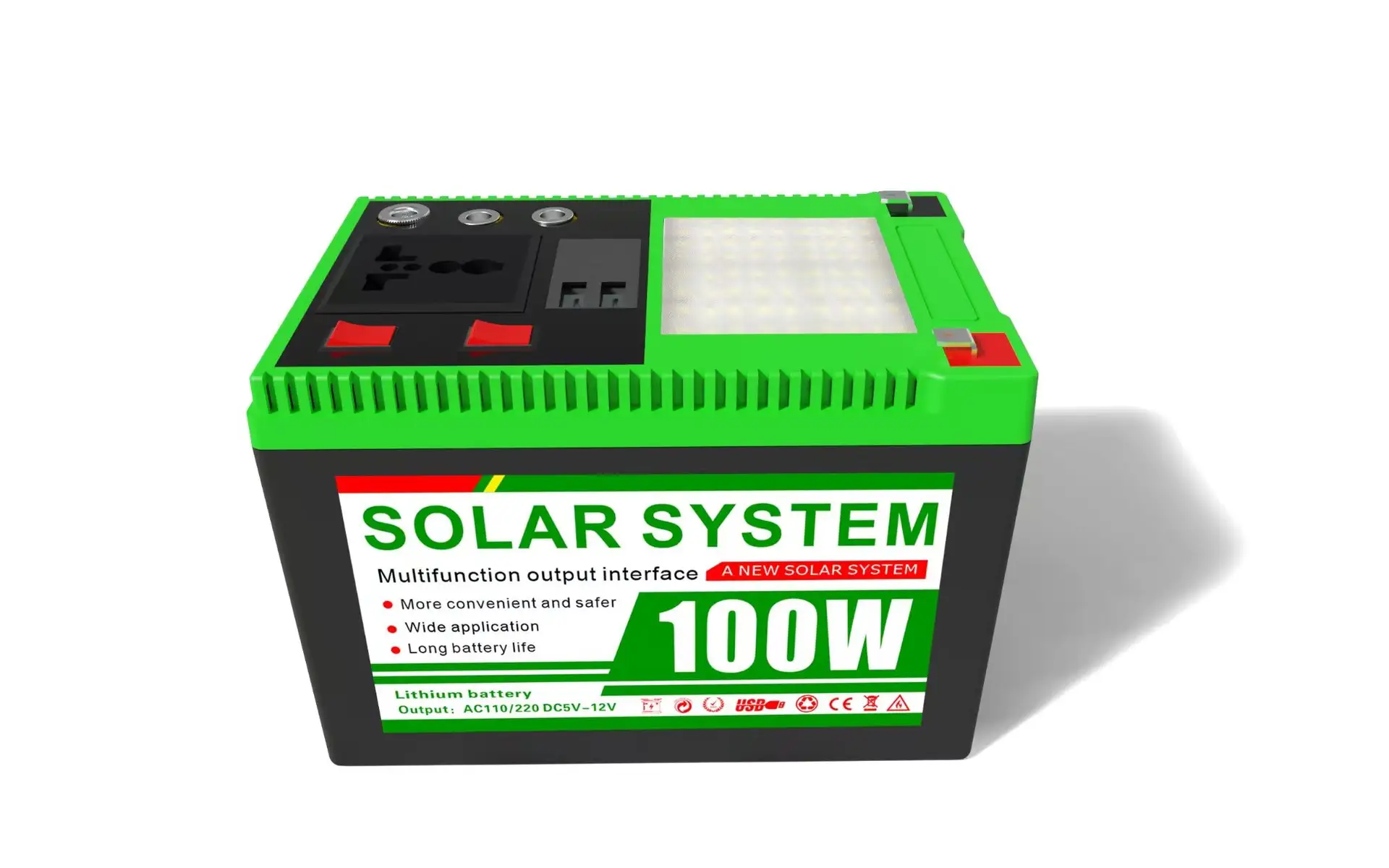
192Wh · 100-300W
Carry Units for Single-Tool Work
Compact LiFePO4 units at 2.2kg to 3.1kg for inspection rounds, instruments and one corded tool at a time, with 220V pure sine wave output plus 12V and USB charging.
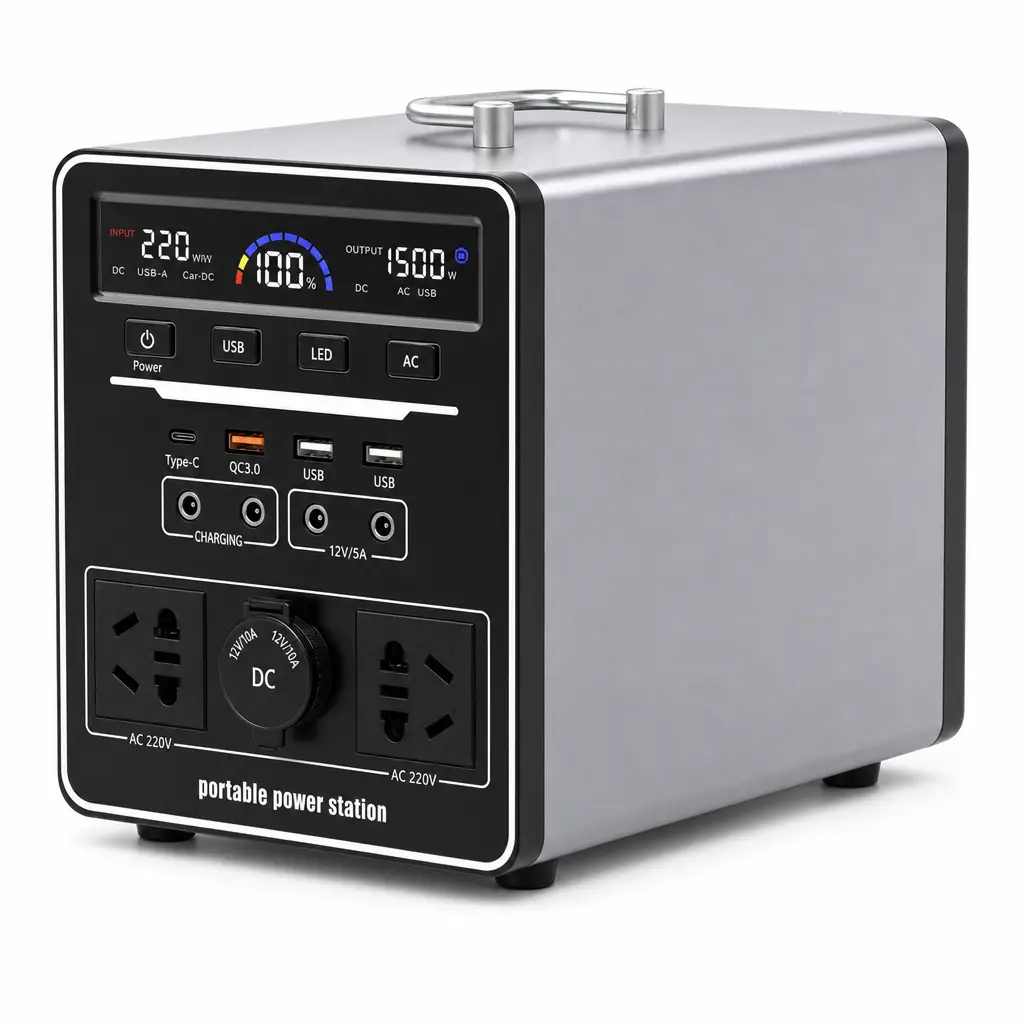
400-800Wh · 500W
Mobile Workshop Units
Mid-range builds for crews running tools and lighting through a full shift, with multiple 220V outlets and MPPT solar input for between-shift top-up.
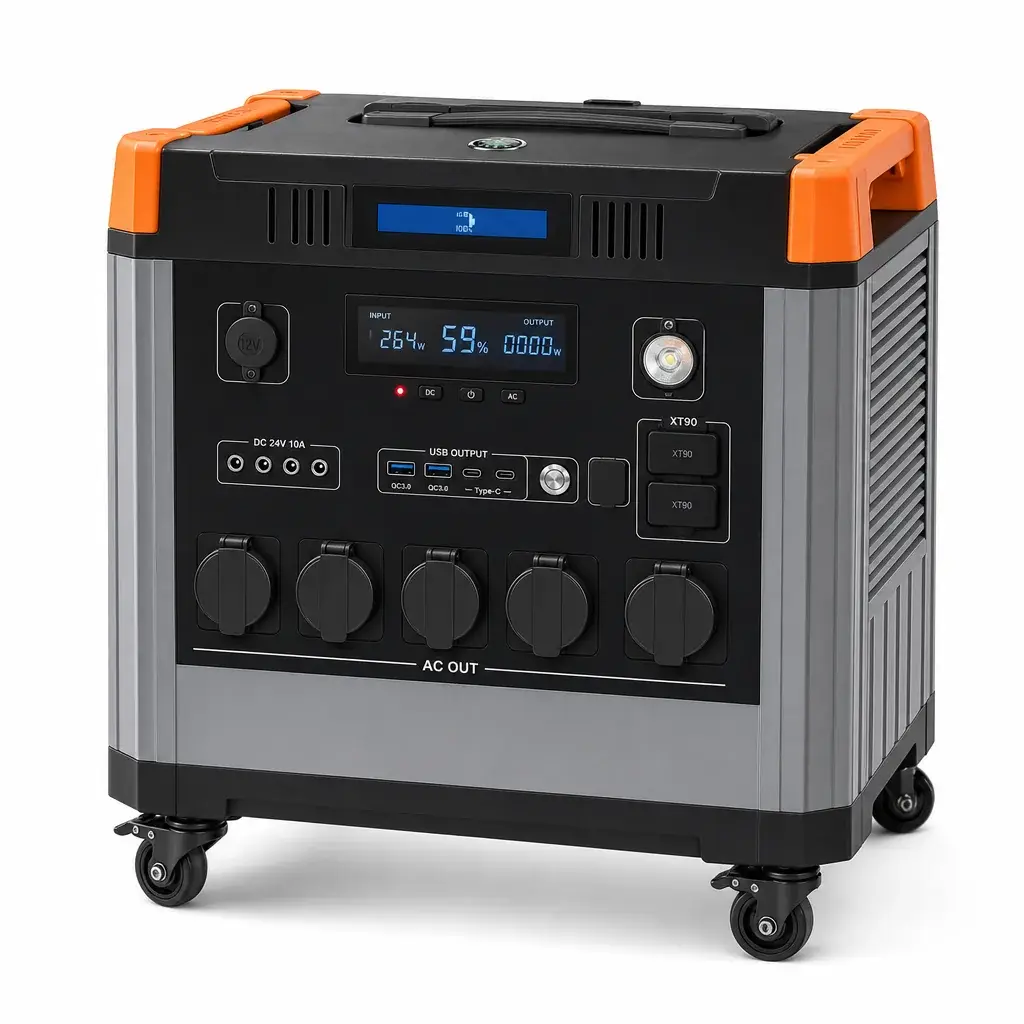
2,201-5,120Wh · 2,500-5,000W
Site Power Stations
Higher-capacity stations for cabins, lighting rigs and short high-draw bursts, with five AC outlets and 24V DC output on the largest models.
Sizing guidance for your first quotation
The table below is the starting point our engineers use when a contractor sends over a duty cycle. Treat it as a first estimate and confirm against actual start-up surge and daily consumption before quoting.
| Daily field requirement | Suggested capacity | Typical loads |
|---|---|---|
| Under 1 KWh / day | 192-400Wh | Hand tools, instruments, lighting, phone and radio charging |
| 1-4 KWh / day | 800Wh-2KWh | Corded tools, work lights, laptops, small compressors |
| 4-10 KWh / day | 3-5KWh | Site cabins, lighting rigs, short high-draw bursts |
Carrying, recharging and protecting the unit on site
Field power is only as useful as its handling routine. These are the practical points our engineers raise with contractors before a first order.
- Weight runs from roughly 2.2kg on the smallest carry unit to about 66kg on a 5,000W station, so anything above the mid tier should be treated as wheeled or two-person equipment
- Solar top-up works between shifts where the panel input window matches the unit; the smaller models accept 18V-80V, while the largest accept 60V-450V for series-connected arrays
- Battery type differs across the range, so duty cycle and cycle life should be confirmed per model rather than assumed across the line
- On the series built for switching duties, transfer to backup is fast enough that connected equipment keeps running through the changeover
- Units that carry work lighting can serve as the site light source as well as the supply, which removes a separate lighting circuit from the kit list
What to send us for a sized quotation
The faster the inputs arrive, the faster a workable configuration comes back. These five items are enough for a first engineering response, usually within 24 hours.
- Tool and appliance list with running watts, start-up surge and how many hours each runs per shift
- Whether the site has mains, a generator or neither, and how long the unit can be taken out of service for charging
- Output requirements: 220V only, or dual 110V/220V for the destination market
- Target market and plug standard, so the export build meets local requirements
- Order quantity and timeline, so pricing lands on the right volume tier
Why distributors and contractors buy from Ruihan
We are an OEM/ODM manufacturer and wholesale supplier, not a retail reseller. That means engineering support at the specification stage and commercial terms built for project and programme business.
- Field-grade battery rangePortable stations from 192Wh to 5,120Wh, with pure sine wave output across the line.
- Certified productionISO 9001 and ISO 14001 manufacturing, with CE, UN38.3 and RoHS documentation supplied with the order.
- Full portfolio, one supplierPortable power stations, LiFePO4 batteries, inverters and all-in-one systems from 100W to 5,000W class.
- OEM and ODM supportYour branding, packaging and documentation on production runs.
- Volume pricing tiersLayered pricing for distribution and contracting programmes.
- Reliable deliverySamples in 2-3 weeks, mass production 30 days after deposit, and a 24-hour response window on enquiries.
Frequently asked questions
Can these units replace a generator on a field site?
For lighting, instruments, laptops and corded hand tools, yes – and they run without fuel, exhaust or noise. For sustained high-draw loads such as large compressors or welding over long periods, the honest answer is that a battery station covers the duty cycle only if the capacity is sized for it. Send us the tool list with running hours and we will tell you which tier fits and where a generator remains the right tool.
How is a unit recharged where there is no mains supply?
Through the solar input on models that carry one. The compact units accept an 18V-80V array, while the largest stations accept 60V-450V for series-connected panels. Where the site has intermittent mains, the supplied charger brings the unit back to full between shifts. We size the array against your daily consumption rather than leaving you to guess the panel wattage.
What is the difference between the carry, T and BS ranges?
Capacity and weight, mainly. The carry units sit at 192Wh and roughly 2kg to 3kg for single-tool work. The T range runs from 400Wh up to 5,000Wh with multiple 220V outlets and, on the larger models, twin work lights. The BS stations start at 2,201Wh and reach 5,120Wh with five AC outlets and 24V DC output, for cabin and lighting duty.
Can a 220V tool run at its rated wattage continuously?
The inverter in each unit is rated for continuous output, and the output is pure sine wave, so tools and chargers behave as they would on mains. The limit is the battery, not the inverter: runtime is usable watt-hours divided by actual draw. That is why we ask for running hours per shift rather than only the tool wattage.
What documentation ships with an order?
Certification documents are provided with every order, including UN38.3 for lithium battery transport, alongside CE and RoHS documentation for the applicable markets. Our production holds ISO 9001 and ISO 14001 certification. If your market needs additional documentation, tell us the destination at quotation stage and we will confirm what can be supplied.
Send your tool list and target volumes – our engineers will return a sized configuration and wholesale pricing within 24 hours.