
Emergency Backup Power Solutions
Backup power is judged by two numbers: how fast the load is picked up when the grid drops, and how long it can stay up. We size emergency systems from the critical load list – clinics, telecom nodes, retail sites and essential home circuits – and supply them with switching, protection and connector hardware included.
- 11KW / 24KWhWhole-house backup class
- 288-5120WhPortable station capacity range
- 6,000+Cycles on Grade A LiFePO4 cells
- 24hEngineering response to quotes
Most backup projects fail on duration, not on wattage
A system that looks strong on a quotation sheet can still disappoint in the first real outage. In the enquiries we handle from contractors, distributors and facility operators, the same mistakes account for most of the failures.
- Peak wattage is quoted while the hours the load must run are never defined
- Critical loads are listed from memory, so the circuit that matters most is discovered during the first outage
- Switchover is assumed to be automatic, when the installation still needs someone to move a plug or breaker
- Generator fuel dependence is accepted without checking whether fuel can reach the site during an outage
- Batteries are left at an unknown state of charge, so a pack full last season is not full today
What a complete emergency backup package includes
We ship emergency backup as a matched package, so inverter, battery bank, transfer arrangement and wiring are commissioned as one system rather than assembled from mismatched parts.
- LiFePO4 battery bank sized from the critical load list and the required runtime
- Inverter with pure sine wave output and a defined switchover time
- Integrated BMS with cell balancing, over-current and temperature protection
- Transfer arrangement, automatic or manual, matched to how the site is operated
- Monitoring access so the operator can check state of charge before an outage
- Connectors, protection and cabling rated for the working current of the installation
Switchover time sets the design, not the peak rating
Two sites with identical load lists can need different hardware once the acceptable gap in supply is defined. The first question is not how many watts a site draws, but how long its loads tolerate being off.
UPS-class transfer
Where the load cannot tolerate an interruption – clinic monitoring, network nodes, point-of-sale terminals and refrigeration controllers – the supply has to move to the battery without a break the equipment can detect. That defines the transfer hardware and the way critical circuits are separated from the rest of the installation.
Manual transfer
Where a brief interruption is acceptable, a manual arrangement is simpler, cheaper and easier to maintain. Lighting, tool circuits, pumps and non-critical refrigeration can wait for an operator to move a plug or breaker. The trade-off is that somebody has to be on site when the supply fails.
Where the two meet
Most mature projects use both: a UPS-class path for the circuits that must not blink, and a manual or portable arrangement for everything else, which keeps the battery bank smaller and the cost proportionate.
Fuel, fuel-free and the honest trade-off
Generators and battery systems solve different halves of the same problem, and most emergency plans use both. The choice comes down to logistics, maintenance and where the equipment sits.
- A generator depends on fuel being delivered during the event, and an outage interrupts fuel logistics as well as power
- A generator needs scheduled maintenance and load testing, which a battery system does not
- A battery system carries a defined energy budget and stops when it is spent, so runtime matters more than peak output
- A battery system can be installed indoors and started silently, which matters for clinics and residential areas
- Portable stations can be redeployed between sites, while a fixed installation protects one site
Maintenance and storage when nothing happens
Emergency equipment spends almost all of its life idle, and that idle time is where most failures are created. A short routine keeps a system dependable.
- Store at a defined state of charge rather than fully charged or fully empty
- Check or cycle the pack on a routine schedule so the BMS reports real health
- Keep connectors clean and dry, and inspect terminals before the season
- Record each check, because an unrecorded test is indistinguishable from no test
- Verify that the transfer arrangement still operates, since that is the part that fails silently
Recommended emergency backup configurations
Three configurations cover most emergency backup enquiries we receive, from a whole-house installation to a station that fits in a service vehicle. All can carry your brand for projects and distribution.
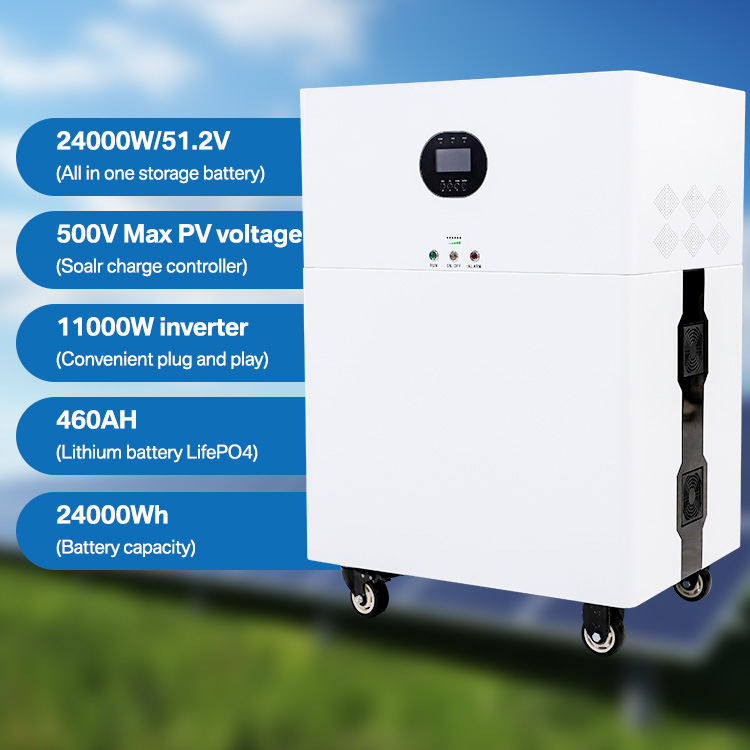
11KW / 24KWh
11KW 24KWh All-in-One System
Whole-house backup where the load has to stay online through an extended outage. Inverter, LiFePO4 bank and BMS arrive as one enclosure, with PV input to recharge between events.
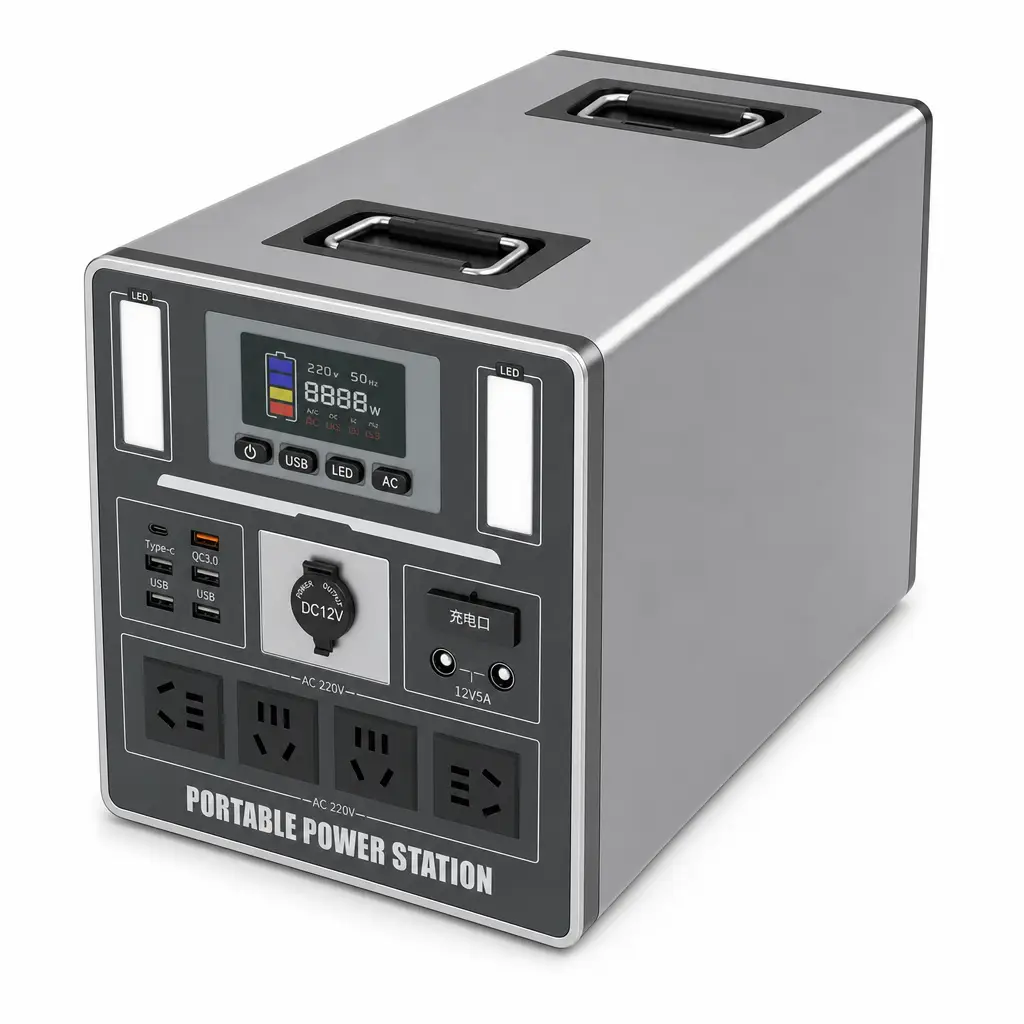
3000W / 3000-5000Wh
T-25T 3000W Portable Power Station
Wheelable unit for clinics, retail sites and response teams that need backup in minutes, with three-kilowatt class output and a pure sine wave supply.
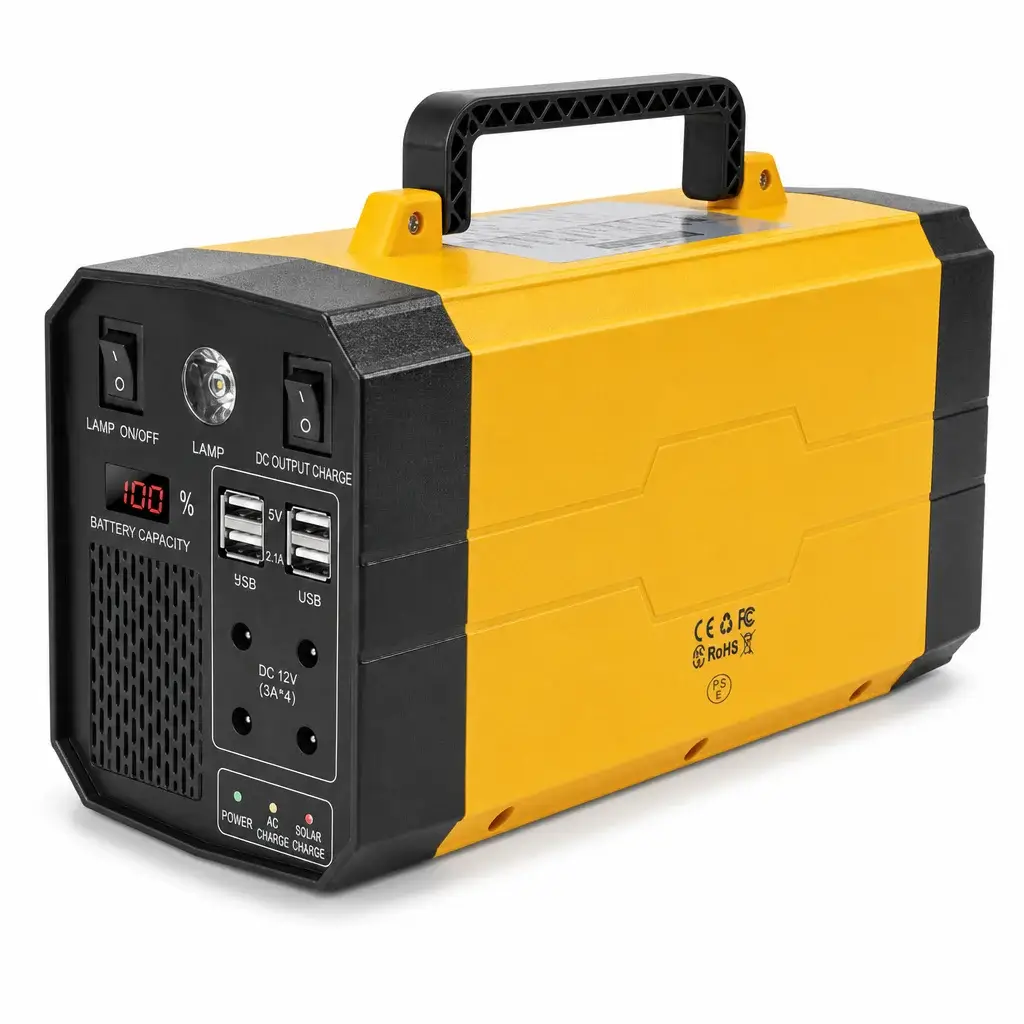
300-500W / 288-445Wh
300W-500W Portable Power Station Series
Compact series in the 18-40Ah class for routers, communications, lighting and small instruments, where a full installation is not justified.
Sizing guidance for your first proposal
The table below is the starting point our engineers use when a contractor sends a site description. Treat it as a first estimate, then confirm the runtime against the real critical load list.
| Site type | Typical outage duration to cover | Suggested category |
|---|---|---|
| Clinic and pharmacy critical equipment | 4-12 hours | Whole-house class system (11KW / 24KWh) |
| Communication and network nodes | 4-8 hours | 3000W portable station (3000-5000Wh) |
| Retail checkout and refrigeration | 2-6 hours | 2500-5000W portable station (2201-5120Wh) |
| Essential home circuits | 2-4 hours | 300-500W station (288-445Wh) |
Why distributors and installers buy from Ruihan
We are an OEM/ODM manufacturer and wholesale supplier, not a retail reseller. That means engineering support at the specification stage and terms built for distribution business.
- Grade A LiFePO4 cellsRated for 6,000+ cycles under our manufacturing specification.
- Certified productionISO 9001 and ISO 14001 manufacturing, with CE, FCC, UN38.3 and RoHS compliance across the range.
- Full portfolio, one supplierPortable power stations, LiFePO4 batteries, inverters and all-in-one systems from 200W to 5000W+.
- OEM and ODM supportYour branding, packaging and documentation on production runs.
- Volume pricing tiers50-100, 100-500 and 500+ unit tiers for distribution programmes.
- Reliable deliverySamples in 2-3 weeks, 95%+ on-time shipment rate and a 24-hour response window on enquiries.
Frequently asked questions
How do I work out the outage duration a site actually needs?
Start from the critical load list rather than the building. List each circuit that must stay live, its running watts and the hours it must run, then multiply and add. The sum is the usable energy the battery bank has to provide.
Can a fuel-free battery system replace a generator completely?
For defined loads over defined periods, yes, and it removes fuel logistics and most scheduled maintenance. For sites that must run for days with heavy loads, a generator remains part of the answer, because a battery system carries a finite energy budget.
How should a system be stored and maintained when it sits idle for months?
Keep the pack at a defined state of charge rather than fully charged or empty, check it on a routine schedule so the BMS reports real state of health, keep connectors clean and dry, and test the transfer arrangement.
Should I choose a portable station or a fixed installation?
Choose portable when the outage is occasional, when the backup has to move between sites, or when installation work is not practical. Choose a fixed installation when one site needs continuous protection or a UPS-class switchover.
What are your MOQ, sample and lead time terms?
Volume pricing starts at the 50-100 unit tier, with further tiers at 100-500 and 500+ units. Samples are typically ready in 2-3 weeks and enquiries are answered within 24 hours.
Send your critical load list, the runtime you need and your target volumes – our engineers will return a sized configuration and pricing within 24 hours.